- Summits
- Sponsorship
- Retreats
- Media Opportunities
- News
- About
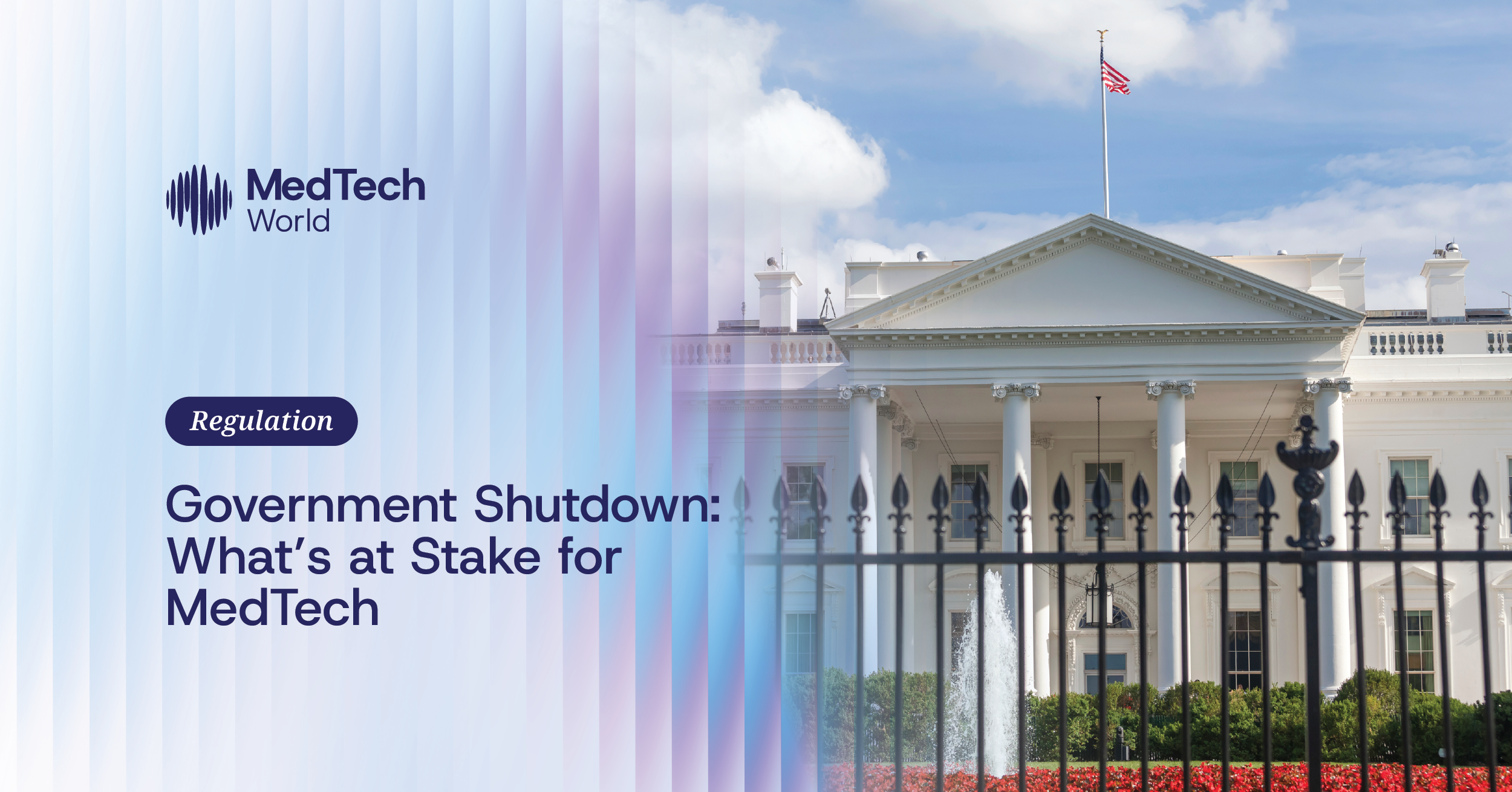
The medical technology sector thrives on stability: of research funding, regulatory approvals, and healthcare infrastructure. But in the United States, that stability has been disrupted. On September 29, top Democrats and Republicans met with President Donald Trump at the White House to strike a deal on budgeting and healthcare. The talks ended without resolution, and with no stopgap bill in place, the government has now entered a shutdown, bringing much of Washington to a halt.
For MedTech companies, investors, and innovators, the consequences are already beginning to ripple across the industry.
Since 1980, the U.S. has seen 14 shutdowns, with the longest in 2018 stretching for 34 days. Each one has frozen federal operations, leaving nearly 800,000 government workers without pay. But beyond politics, shutdowns have a direct impact on healthcare innovation, regulation, and patient access to life-saving technology.
The medical device industry relies heavily on government agencies like the Food and Drug Administration (FDA), the Department of Health and Human Services (HHS), the Centers for Medicare & Medicaid Services (CMS), and the National Institutes of Health (NIH). A shutdown disrupts all of them, slowing approvals, halting grants, and creating uncertainty at a time when steady progress is critical.
The FDA plays a frontline role in MedTech—approving devices, monitoring recalls, and ensuring imports meet safety standards. During a shutdown, the FDA continues essential functions like reporting recalls, tracking drug shortages, and screening imported medical products. Staffing is also expected to remain largely intact.
But not everything continues as normal. New medical device submissions and drug applications would grind to a halt. For startups and established firms alike, that means timelines for approvals extend indefinitely. In an industry where speed to market can determine success, even a short delay could prove costly.
The Department of Health and Human Services (HHS) employs about 80,000 workers; yet during a shutdown, nearly 32,000 would be furloughed. The consequences are sweeping.
Beyond healthcare-specific agencies, a shutdown affects the government’s ability to collect and analyze data, everything from public health metrics to safety information. That slowdown weakens the evidence base MedTech innovators and regulators rely on.
Even “essential” agencies that continue to function would feel the drag. Furloughed employees mean fewer hands to process applications, slower regulatory reviews, and backlog that persists long after a shutdown ends.
Requests from the public, including Freedom of Information Act (FOIA) submissions often used by companies and journalists to understand regulatory processes, would also be suspended.
For the MedTech industry, the looming shutdown is more than a political standoff; it’s a pause button on innovation, approvals, and patient access. Each day without resolution risks delaying not just new products but the larger momentum of healthcare progress.
As Washington races against the clock, the MedTech sector is left to prepare for uncertainty, hoping that, this time, negotiations don’t stall the future of medicine.
The conversation doesn’t end here. Join us at MedTech Malta 2025, taking place on 12–14 November, where global leaders, innovators, and policymakers will come together to address challenges like government disruptions, regulatory hurdles, and funding freezes while exploring new opportunities for healthcare advancement.
For more information, reach out to us at [email protected].