- Summits
- Sponsorship
- Retreats
- Media Opportunities
- News
- About
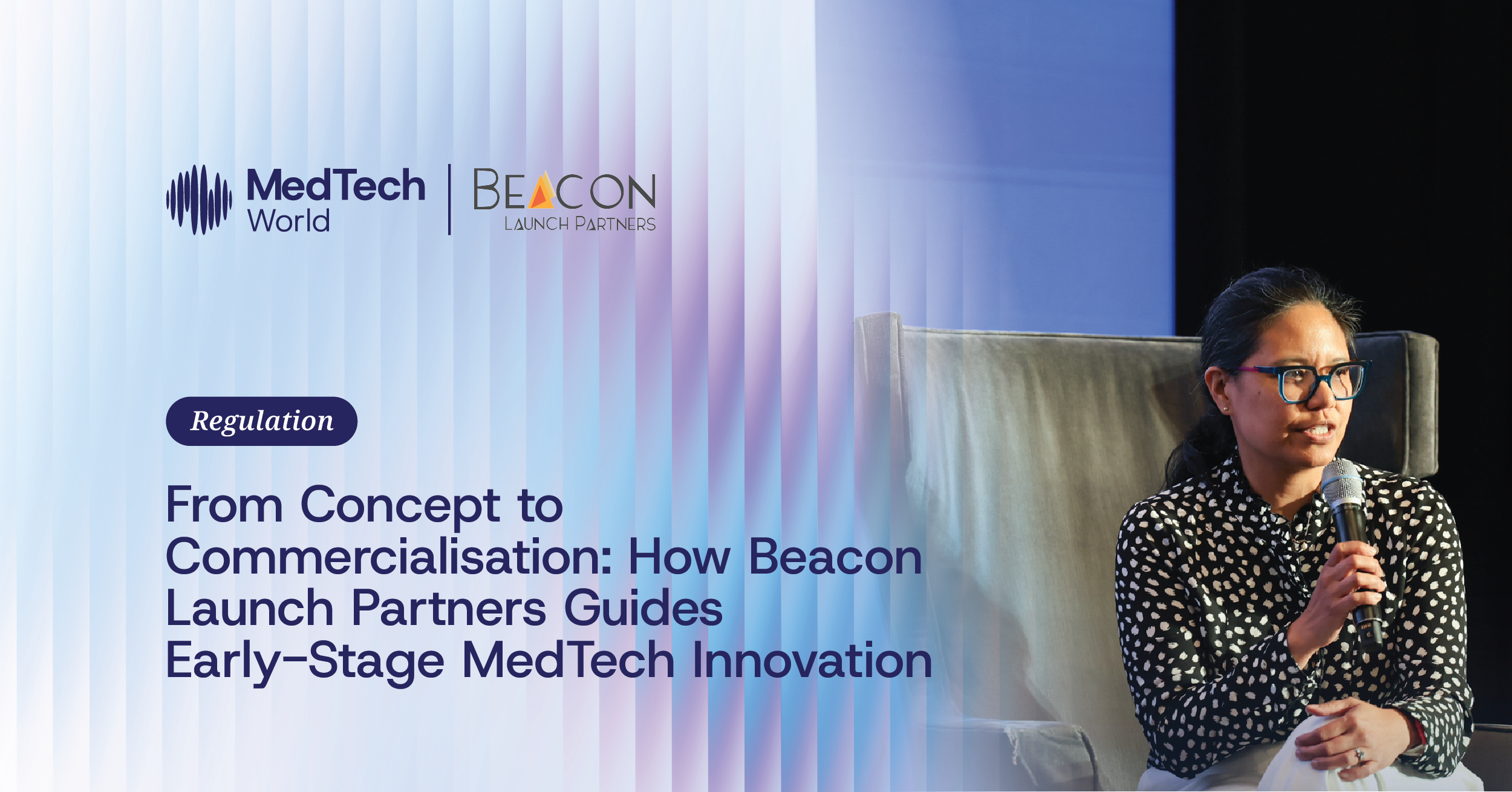
For many MedTech founders, the journey from an initial idea to a viable, regulated medical product can feel overwhelming. Beyond the science and technology, there are regulatory hurdles, market considerations, and the ever-present challenge of operating with limited resources. This is where product development partners play a vital role, bridging the gap between innovation and market readiness.
One such partner is Beacon Launch Partners, an end-to-end innovation consultancy dedicated to helping early-stage medical technologies move from concept to commercialisation. Founded with both personal conviction and industry insight, Beacon has carved out a niche in supporting MedTech entrepreneurs during their most critical phases of growth.
Beacon Launch Partners was established with a clear vision: to provide early-stage founders with the tools, frameworks, and guidance they need to succeed in a highly regulated space. The inspiration, as Managing Partner Mariel Fabro explains, is both personal and market-driven.
“Like so many in MedTech, our team carries personal experiences with healthcare—whether directly or through family and friends,” Fabro shared. “That motivates us to accelerate solutions that improve patient outcomes while easing the challenges healthcare professionals face.”

Drawing from a long history in MedTech start-ups, Beacon understands the obstacles young companies face—from under-budgeting and IP missteps to overlooking reimbursement strategies. Their tailored, lean framework ensures that founders can avoid these pitfalls while building confidence in their product’s clinical and commercial viability.
Beacon’s mission is rooted in addressing one of MedTech’s most persistent challenges: helping founders translate ideas into executable products while navigating regulatory frameworks. Their services span design, prototyping, clinical research, regulatory submissions, quality management systems (QMS), and commercialisation strategy.
Unlike many consultancies, Beacon emphasises early proof-of-concept and rapid iteration. By starting with minimally viable products (MVPs), founders can gather early market feedback, refine their designs, and steadily expand toward broader commercialisation strategies.
One of Beacon’s strengths lies in its ability to balance creative innovation with regulatory feasibility. Every design and development plan is explicitly mapped to quality frameworks and commercialisation goals. This ensures products are not only technologically sound but also capable of meeting regulatory expectations and addressing clinical needs.
Fabro notes, “We build in checks and balances—safety, efficacy, clinical application—while proving advanced features in pre-clinical models. That way, innovation stays grounded in scientific feasibility.”
Beacon has already contributed to several groundbreaking technologies:
With specialised expertise in cardiac, endovascular, catheters, and embedded systems, Beacon continues to operate at the intersection of hardware, software, and regulatory innovation.
Beacon’s multidisciplinary team of engineers, designers, regulatory experts, and clinicians enables a “one-stop shop” approach. This comprehensive oversight minimises outsourcing and allows startups to grow with cohesive, end-to-end support.
For investors, Beacon serves as both partner and safeguard—positioning early-stage companies to mitigate risk while maximising return on investment. As Fabro highlights, a key challenge is ensuring investors understand the nuances of regulated MedTech versus consumer products, particularly around compliance and burden of proof.

Looking ahead, Fabro sees several areas demanding founder attention:
For Beacon, events like MedTech Malta provide more than visibility. They offer a platform for early-stage innovators to gain recognition, connect with investors, and discover channels they might not otherwise access in conferences dominated by larger players.
“These venues create opportunities for collaboration and awareness across the community,” Fabro said. “They’re vital for start-ups looking to find their place within the MedTech ecosystem.”
When asked for her advice to founders preparing their first prototype, submission, or investor pitch, Fabro emphasised practicality:
And most importantly, she reminds founders that education is often part of the journey.
“Through our work, we’ve had to model and teach best practices for efficient product development. That’s why we’re committed to making our strategic methodology more widely available.”
Be part of the global conversation at MedTech Malta 2025 (12–14 November, Valletta), where early-stage innovators, investors, and product development partners like will gather to share insights, forge connections, and explore the future of medical technology.
Secure your place today by getting your tickets here.
For sponsorship, speaking, pitching opportunities, or to learn how you can get involved, reach out to us at [email protected].