- Summits
- Sponsorship
- Retreats
- Media Opportunities
- News
- About
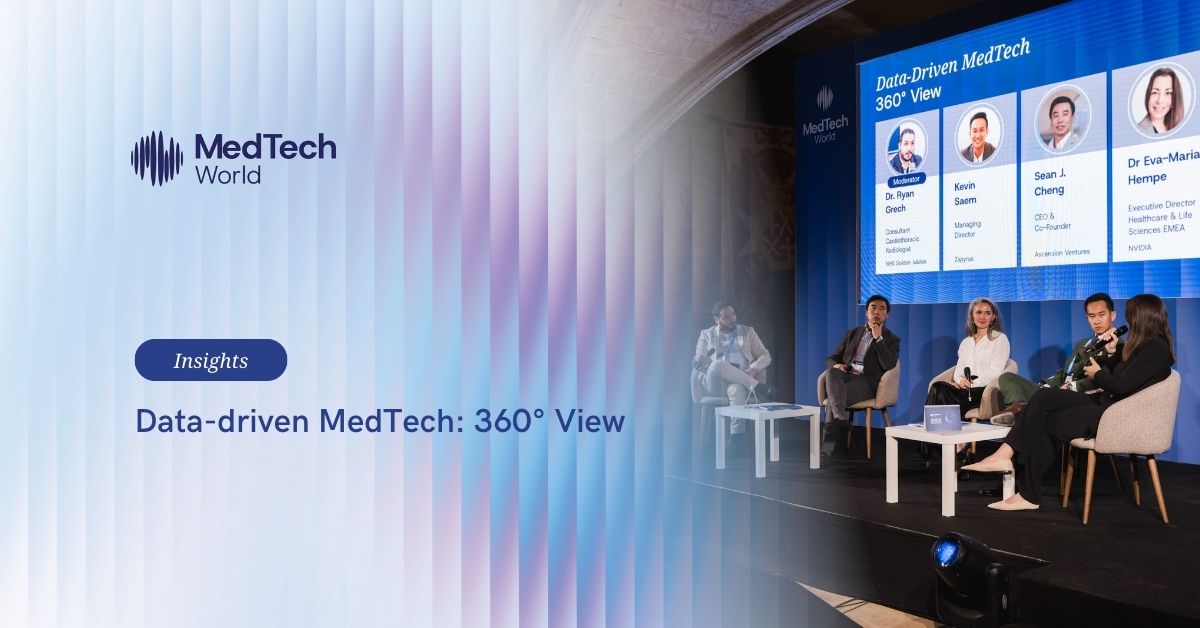
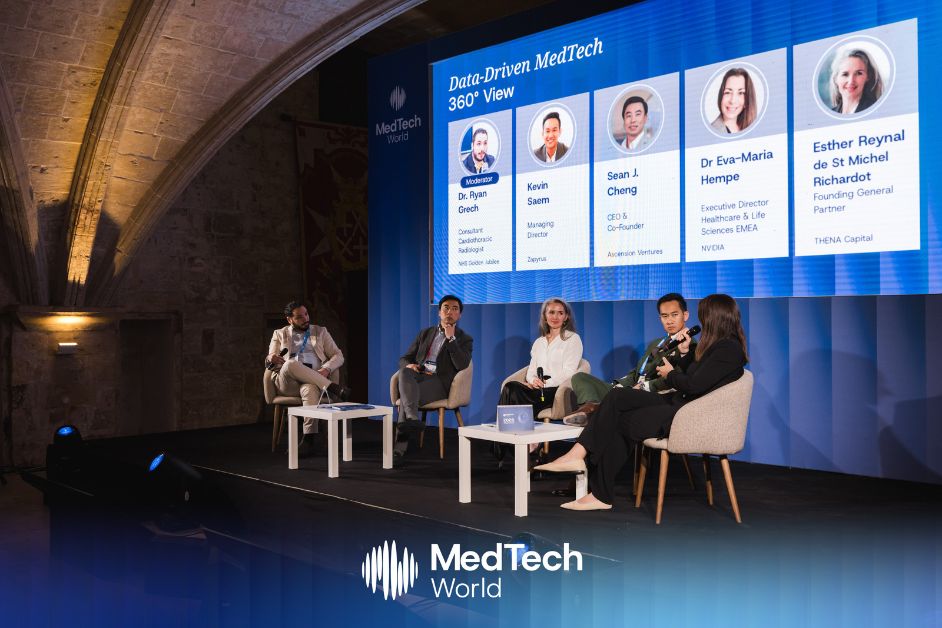
At MedTech Malta 2025, the panel “Data-driven MedTech: 360° view” tackled a question many in healthcare are quietly asking: how much of today’s MedTech momentum is translating into real-world impact, and how much is still aspirational?
Moderated by Dr. Ryan Grech, Consultant Cardiothoracic Radiologist at NHS Golden Jubilee, the discussion cut through hype to examine where data, AI, and infrastructure are already changing care, and where friction remains. With perspectives spanning clinical practice, venture investment, data intelligence, and computing infrastructure, the panel offered a grounded look at how data is shaping MedTech today.
Dr. Grech opened the session by anchoring the discussion in clinical reality. While technological capabilities are advancing at pace, healthcare adoption moves more slowly, shaped by regulation, workflow, and trust. The panel was invited to reflect on a deceptively simple question: what does data-driven MedTech actually mean in practice?
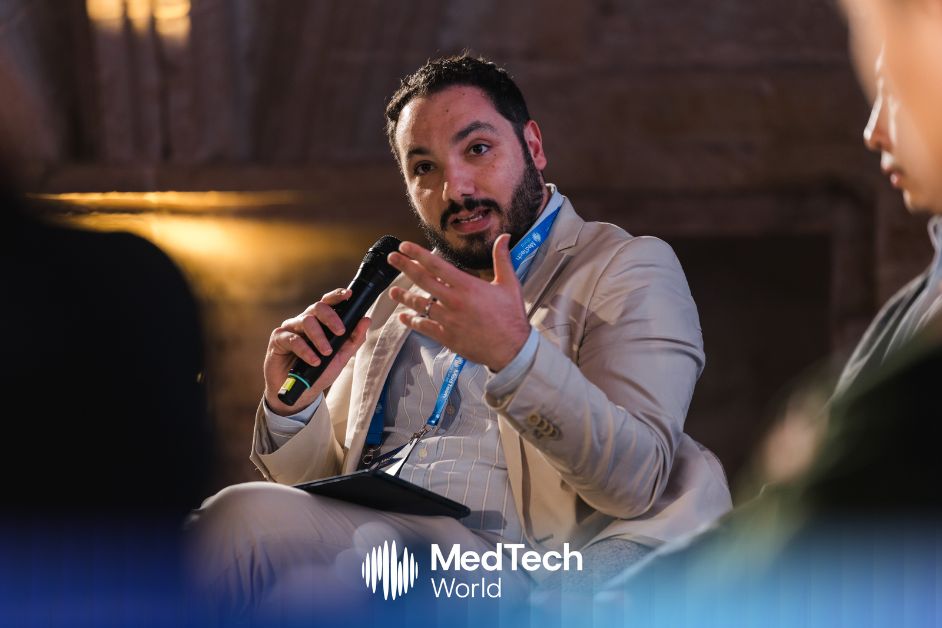
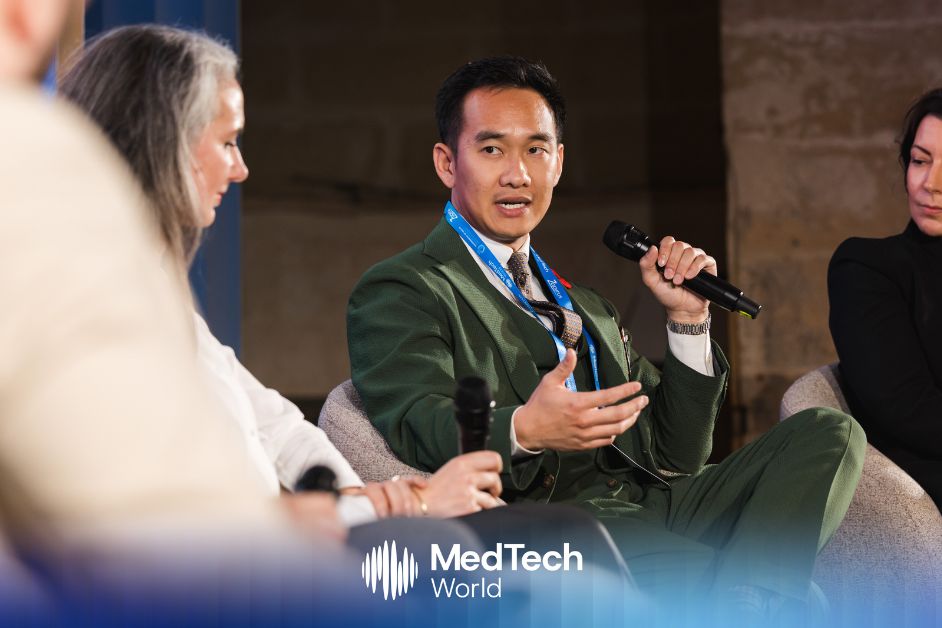
For Sean J. Cheng, Managing Director at Ascension Ventures, data-driven MedTech is inseparable from economics. Investing on behalf of major US health systems, his lens is pragmatic: does data improve outcomes and improve the way hospitals operate?
In the near term, Cheng sees data transforming clinical trials, making them faster, more adaptive, and more capital-efficient through approaches such as digital twins and dynamic trial design. Over the longer term, his focus shifts to robotics and automation across hospital operations, from surgery to logistics and revenue cycle management.
But he was clear about one thing: AI alone is not enough. For Ascension, any data-driven thesis must ultimately show up in margins, efficiency, or measurable operational gains. If it doesn’t, it’s noise.

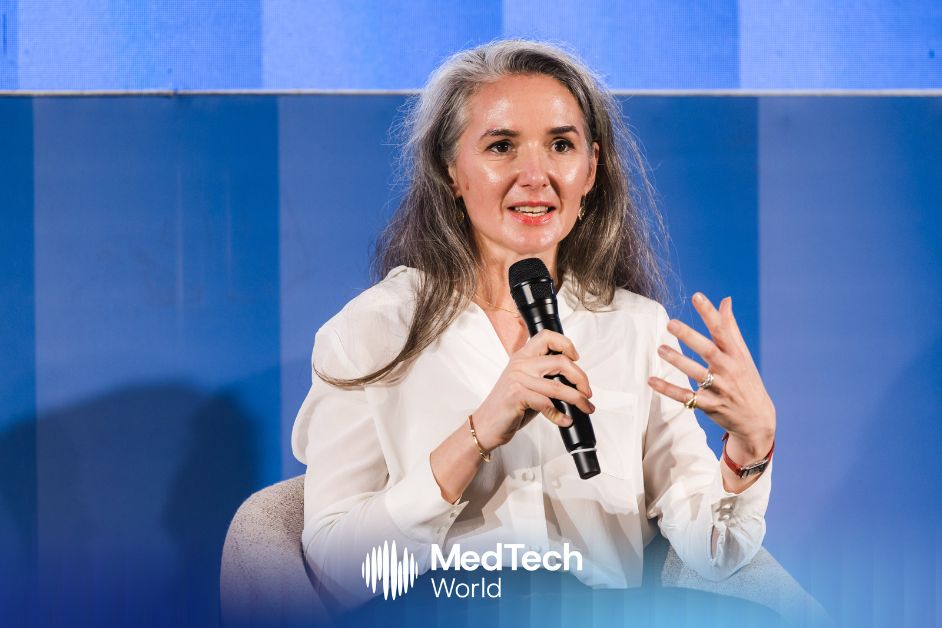
Esther Reynal de St Michel Richardot, Founding General Partner at THENA Capital, reframed the conversation. Regulated healthcare products, she argued, have always been data-driven—what’s changed is scale.
Access to larger datasets, combined with more capable AI tools, is opening new ways to improve patient experience across populations, not just individual use cases. For early-stage MedTech, the opportunity lies in using data not only for product development, but also to rethink how care is delivered and experienced.
At the same time, she cautioned against static models. As data-driven solutions move across geographies and populations, they must evolve continuously to avoid bias and remain clinically relevant.
Bringing a market-wide view, Kevin Saem, Managing Director at Zapyrus, shared data-backed insights into where adoption is genuinely accelerating.
Using longitudinal market analysis from the COVID period to today, Saem highlighted surgical robotics as the fastest-growing MedTech segment, a finding that surprised even him. Neuromodulation followed closely behind. By contrast, digital therapeutics showed the steepest decline, while point-of-care instrumentation and diagnostic imaging lagged expectations.
For Saem, this reflects a broader shift: data and AI are no longer standalone value propositions. The sectors gaining traction are those where data meaningfully integrates with hardware, workflows, and clinical decision-making. As MedTech moves further into the AI era, interpreting and acting on data becomes just as complex, and important, as generating it.
Representing the infrastructure layer, Dr. Eva-Maria Hempe, Executive Director Healthcare & Life Sciences EMEA at NVIDIA, focused on what makes data-driven MedTech possible at scale.
AI, she reminded the audience, rests on three pillars: data, compute, and algorithms. In healthcare, data scarcity and fragmentation remain major constraints. This is where accelerated computing, software-defined devices, and synthetic data come into play.
From augmented reality in robotic surgery to AI-assisted clinical decision support that shortens diagnostic journeys, Hempe illustrated that real-time data use is already feasible. The challenge is not capability, but distribution and adoption.
She also made a strong case for synthetic data, not as a replacement for real clinical data, but as a way to address privacy, bias, and edge cases where real-world data is limited or difficult to access.

When discussion turned to investment discipline, both Cheng and Hempe agreed: strong data strategies are evident in clinical validation, regulatory readiness, and clear use cases. Proprietary, well-sourced data, and a clear understanding of its limitations matter more than flashy AI claims.
Synthetic data, while useful in early development and training, still faces skepticism when it comes to late-stage clinical validation. As Cheng noted, when it comes to regulatory approval, real human data remains the gold standard.
On whether AI-driven MedTech is overheated, Esther Reynal de St Michel Richardot struck a balanced tone. While AI has undoubtedly lifted valuations, MedTech is not seeing indiscriminate enthusiasm. Specialist investors remain selective, focusing on companies that combine data-driven products with disciplined execution and regulatory clarity.
Dr. Hempe added a macro perspective: the real driver is not hype, but necessity. With global healthcare systems facing workforce shortages and rising demand, technology is increasingly about doing more with fewer resources, not expanding costs indefinitely.
In a closing lightning round, panelists converged on a few themes. Robotics and automation are likely to become mainstream, driven by labor constraints and maturing infrastructure. Superficial or performative uses of AI, however, are unlikely to endure.
What may quietly disappear? Physical artifacts—CDs for imaging, paper-based records, and manual data handoffs—relics of a system not designed for data at scale.
If there was one takeaway from the session, it was this: data-driven MedTech is neither a distant vision nor a solved problem. Progress is real, but uneven. The winners will be those who pair technical capability with clinical relevance, economic logic, and an honest understanding of healthcare constraints.
As Dr. Grech’s opening question suggested, much of the MedTech shift is happening, but its impact depends less on how advanced the technology is and more on how thoughtfully it is applied.
The discussions in Malta underscored that data-driven MedTech is moving from concept to implementation—but many of the toughest questions are still unfolding. These conversations will continue at MedTech World Middle East | Dubai, taking place from 11 to 13 February 2026, bringing together global MedTech leaders, clinicians, investors, and technology providers to examine how data, AI, and infrastructure are influencing healthcare delivery across regions. Reserve your slot and be part of the discussion.