- Summits
- Sponsorship
- Retreats
- Media Opportunities
- News
- About
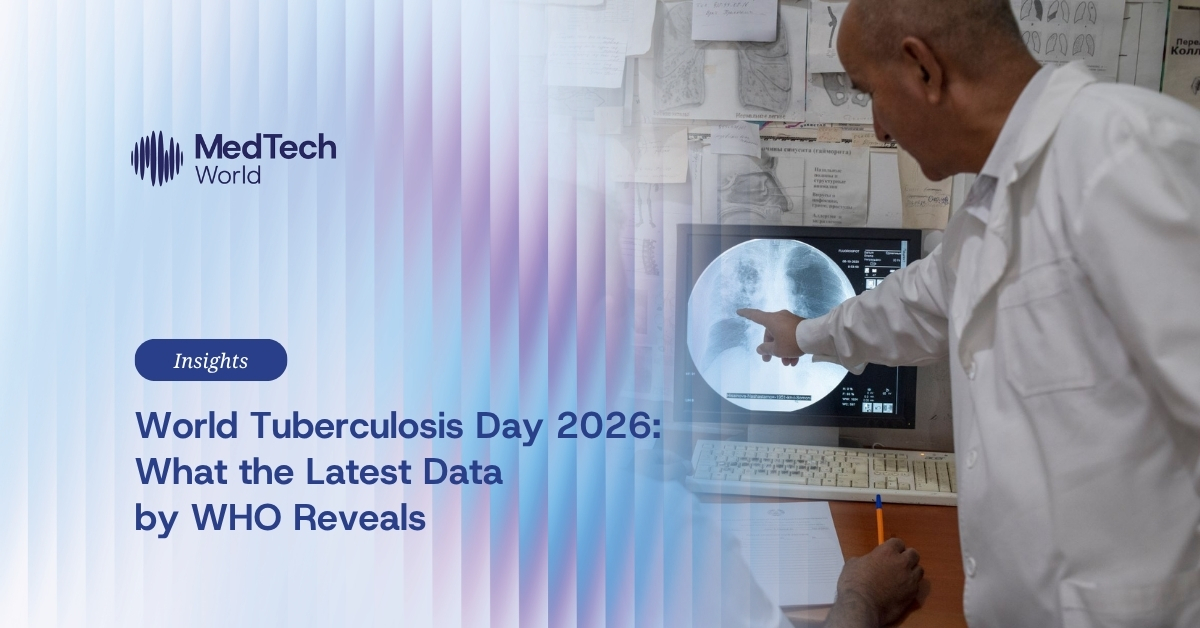
Every year, 10 million people fall ill with tuberculosis (TB). Despite being preventable and curable, TB continues to rank among the world’s deadliest infectious diseases, highlighting a persistent gap between global ambition and reality. As the world marks World TB Day 2026 under the theme ‘Yes! We can end TB!’, the latest data from the World Health Organization underscores both progress and the scale of the challenge that remains.
According to the Global Tuberculosis Report 2025, an estimated 10.7 million people developed TB in 2024, a slight decline from 10.8 million in 2023 but still above pre-pandemic levels. At the same time, 1.23 million people died from the disease, keeping TB among the leading causes of death globally and the top infectious killer. The decline in cases marks the first improvement since 2020, following years of disruption caused by COVID-19, suggesting that global TB responses are beginning to recover.
Yet, when measured against global targets, progress remains far too slow. Since 2015, TB incidence has declined by just 12%, well short of the 50% reduction milestone set for 2025. Similarly, deaths have fallen by 29%, missing the target of a 75% reduction. These figures point to a widening gap between commitments and outcomes, reinforcing the need for accelerated action if the world is to stay on track to end TB by 2030.
The burden of TB continues to be concentrated in a small number of countries. Around 87% of global cases occur in 30 high-burden nations, with countries such as India, Indonesia, the Philippines, China and Pakistan accounting for the majority. The disease also reflects broader social and economic inequalities. Most cases occur among adults, with men disproportionately affected, but women and children still represent a significant share. TB remains closely linked to factors such as poverty, undernutrition, HIV, diabetes and limited access to healthcare.
Efforts to improve diagnosis and treatment have yielded some gains, though gaps persist. In 2024, 8.3 million people were newly diagnosed with TB, representing about 78% of all estimated cases. While this indicates improved detection, it also means that millions remain undiagnosed or untreated. The use of rapid diagnostic tests is increasing, and treatment success rates remain relatively high for drug-susceptible TB. However, drug-resistant TB continues to pose a major challenge, with less than half of affected individuals receiving appropriate treatment.
Prevention, a key pillar of TB control, is expanding but still underutilized. In 2024, 5.3 million people at high risk received preventive treatment, including those living with HIV and close contacts of TB patients. While coverage is improving, it remains far below the levels needed to significantly reduce transmission. Scaling up preventive interventions will be essential to reversing the epidemic.
One of the most pressing barriers to progress is funding. Global investment in TB prevention, diagnosis and treatment reached $5.9 billion in 2024, only a fraction of the $22 billion annual target set for 2027. Funding for TB research is similarly constrained, limiting the pace of innovation. These shortfalls are further compounded by reductions in international donor support, placing additional pressure on countries with the highest burden of disease.
At the same time, scientific and technological advances offer a pathway forward. New tools, including AI-driven screening methods, improved diagnostics and shorter treatment regimens, are helping to expand access to care. There are also 18 TB vaccines currently in development, with several in late-stage trials. If successfully deployed, these innovations could significantly accelerate progress in the coming years.
The theme of World TB Day 2026— ‘Yes! We can end TB!’—is grounded in evidence. The tools to prevent, diagnose and treat TB already exist, and new ones are on the horizon. However, the data make clear that ending TB is not just a scientific challenge but a question of implementation. It requires stronger health systems, universal access to care, better social protection, and sustained political and financial commitment.
As highlighted by the WHO, the world is at a critical juncture. Progress has resumed after recent setbacks, but it remains fragile. World TB Day 2026 is both a reminder of what has been achieved and a call to close the gaps that persist. The path to ending TB is known, but without faster and more coordinated action, the goal will remain out of reach.