- Summits
- Sponsorship
- News
- About
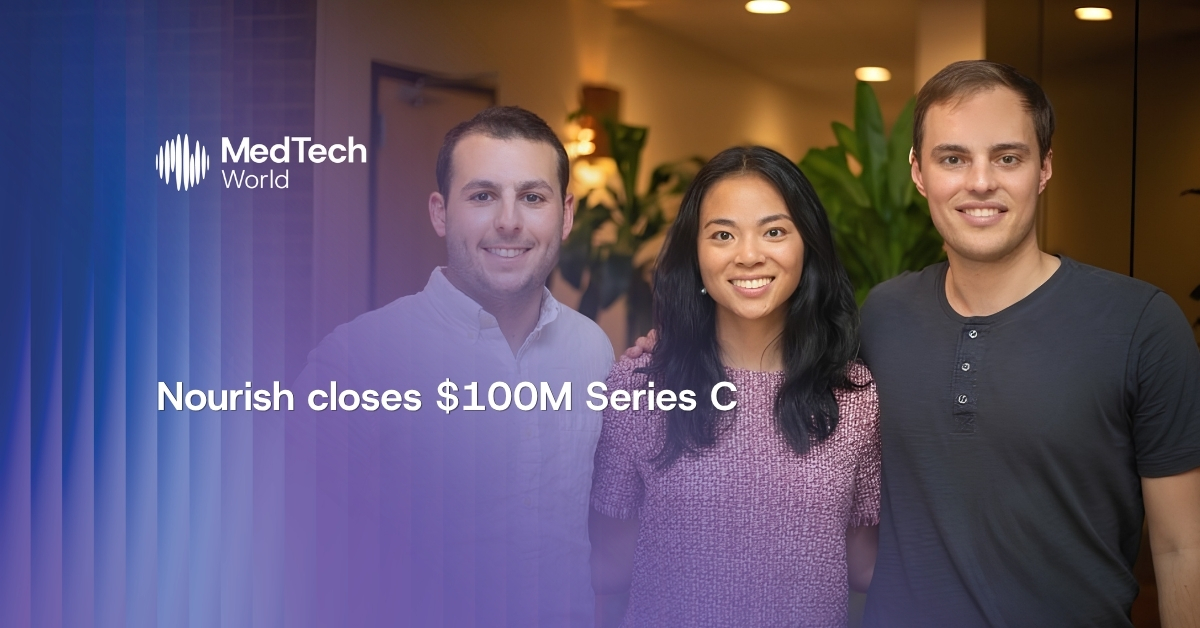
New York-based Nourish has closed a $100 million Series C round to expand its clinical network, deepen payer partnerships, and build out the AI infrastructure underpinning its metabolic care model.
The round was led by Menlo Ventures, with participation from Thrive Capital, Index Ventures, J.P. Morgan Growth Equity Partners, Maverick Ventures, Y Combinator, BoxGroup, Atomico, Daybreak and Operator Partners. The raise brings Nourish’s total funding to $215 million.
Founded in New York City, Nourish connects patients living with chronic conditions to a network of more than 10,000 registered dietitians via virtual consultations. Each patient receives a personalised care plan that can incorporate lab testing, GLP-1 prescribing and medication management, all coordinated through an AI health agent designed to support behaviour change and longitudinal care.
The company describes itself as an AI-native metabolic clinic, positioning the model not as a supplement to existing care pathways but as a destination, one it wants to become the default place people turn to for chronic disease prevention and treatment.
The financing arrives against a stark backdrop. Close to 200 million Americans are affected by nutrition-related chronic conditions, and the financial pressure on the healthcare system is immense. According to the Centers for Disease Control and Prevention, roughly 90% of the country’s $4.9 trillion in annual healthcare expenditure is attributable to people living with chronic and mental health conditions.
Aidan Dewar, co-founder and CEO of Nourish, framed the challenge directly: “Chronic disease is the largest cost driver in US healthcare, putting growing pressure on payers and providers to find solutions that actually improve long-term outcomes. At the same time, GLP-1s have accelerated demand for metabolic care, but medication alone is not enough for lasting results.”
For Dewar, the answer lies in making sustainable behaviour change, personalised nutrition support and longitudinal care the foundation of how chronic disease is treated, not an afterthought to pharmacological intervention.
J.P. Sanday, partner at lead investor Menlo Ventures, pointed to the unusual combination of clinical and commercial maturity Nourish has assembled. “What Nourish has built in four years is remarkable: a care model that actually bends the cost curve, with 10,000 dietitians, deep payer relationships, and clinical outcomes patients stick with,” he said. “Most companies get one of those things right. Nourish has all of them.”
Nourish plans to deploy the Series C across three priorities: expanding its clinical network of dietitians, accelerating investment in AI agents, and deepening partnerships with health plans, health systems, employers and providers.
The longer-term ambition is more expansive. Dewar described a vision of clinicians and AI working together to deliver personalised metabolic care that is accessible, affordable and effective — ultimately making Nourish the default platform for chronic disease prevention and treatment at scale.
The Nourish raise is part of a wider trend reshaping digital health investment: capital flowing toward platforms that combine clinical credibility with scalable AI infrastructure, and that can demonstrate measurable impact on the chronic disease burden driving healthcare costs.
For MedTech innovators, the model raises important questions about how AI can augment, rather than replace, clinical relationships, how payer alignment is built from the outset rather than bolted on, and what it takes to move from point solution to longitudinal care platform.
The convergence of AI, digital health, and chronic disease management will be among the defining themes at MedTech World Asia 2026, taking place in Hong Kong from 26–28 August 2026. Join health systems, investors, startups and industry leaders exploring how intelligent care models are influencing global healthcare delivery. Secure your ticket and be part of the conversation.