- Summits
- Sponsorship
- Retreats
- Media Opportunities
- News
- About
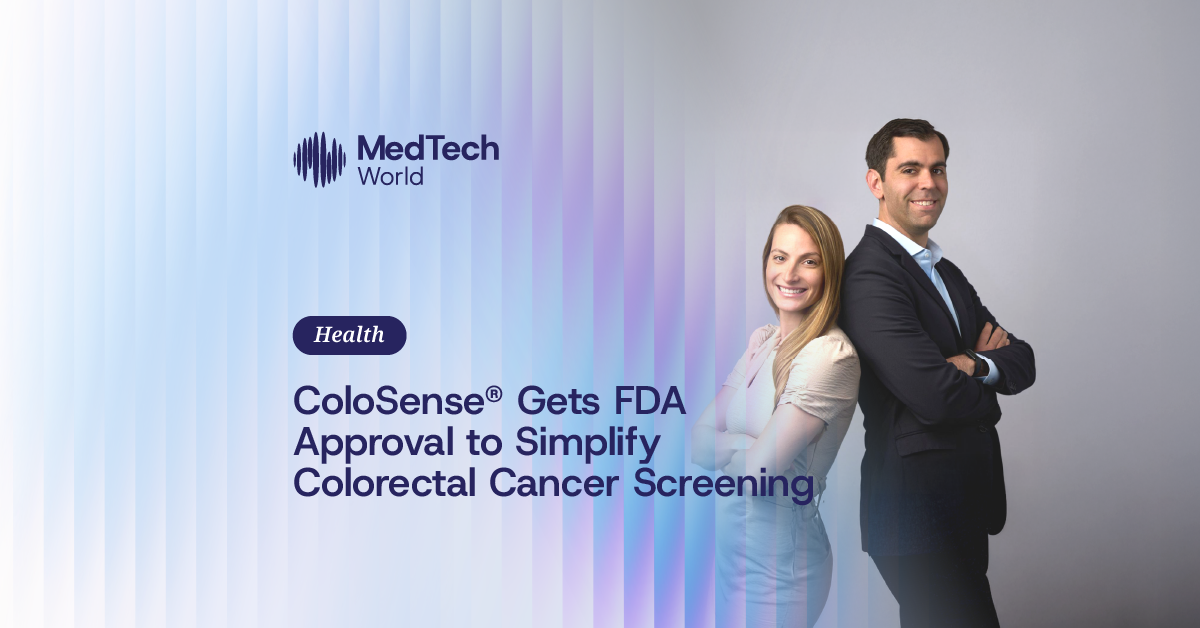
For millions of people avoiding colorectal cancer (CRC) screening, a key barrier just got eliminated—literally. Geneoscopy, Inc. has received FDA approval for a newly streamlined version of its ColoSense® collection kit, removing the most off-putting step in at-home stool-based testing: separating and scraping the sample.
“We’ve taken a critical step toward improving the at-home colorectal cancer screening experience by removing one of the most burdensome aspects for patients—the scraping of stool,” said Dr. Erica Barnell, Chief Medical & Science Officer at Geneoscopy. “The new collection kit simplifies the process for collecting a patient’s stool sample. By eliminating the most confusing and undesirable step, we believe ColoSense will drive higher adherence and better outcomes.”
Also read: EU must act on health security: MEP Adam Jarubas speaks with MedTech World
Colorectal cancer screening saves lives—but only if people actually do it. An estimated 44 million adults between 45 and 75 remain unscreened in the U.S., despite multiple testing options. For many, discomfort and confusion with the collection process have been major deterrents.
Geneoscopy’s simplified approach could shift that equation. The updated ColoSense collection kit does away with multiple containers and scraping altogether, offering a single, more intuitive way to collect the sample at home. This upgrade is expected to improve user compliance, reduce errors, and result in fewer invalid test results.
“To exceed 80% compliance for colorectal cancer screening, the patient experience for stool-based screening must be improved,” said Andrew Barnell, CEO of Geneoscopy. “The new ColoSense test does that, offering patients everything they like about at-home, high-sensitivity screening, but now, with an easier collection process.”
Also read: MedTech market in France hits €37B: Innovation and global ties grow
ColoSense isn’t just easier to use; it’s also unique in what it detects. As the only FDA-approved RNA-based test for colorectal cancer screening, it identifies biomarkers associated with both CRC and advanced adenomas (AA)—the precancerous growths that can quietly evolve into something much more serious.
In clinical trials, the test showed 93% sensitivity for CRC and 45% for AA in average-risk individuals. In people aged 45 to 49—a group where CRC rates are on the rise—ColoSense demonstrated 100% sensitivity for CRC and 44% for AA.
This makes it not only a convenient option but also a powerful tool for catching disease early. The test has earned a spot in the National Comprehensive Cancer Network (NCCN) guidelines and is now more widely accessible through Geneoscopy’s partnership with Labcorp.
Also read: MedTech World Bay Area 2025 ecosystem report
At-home testing options like ColoSense play a vital role in reaching individuals who are hesitant or unable to undergo a colonoscopy. By making stool-based screening easier and less unpleasant, Geneoscopy is betting on behavioral change through simplicity.
It’s not just about diagnostics—it’s about reducing the inertia around CRC screening and making prevention more routine. With the FDA’s nod to this upgraded kit, ColoSense could make a noticeable dent in those 44 million unscreened individuals.
Join us at MedTech Malta 2025, happening in Valletta from November 12–14. The event will feature global thought leaders, a Startup Pitch Competition, exclusive speaker opportunities, and a lot more. To get involved or learn about us, reach out at [email protected].