- Summits
- Sponsorship
- News
- About
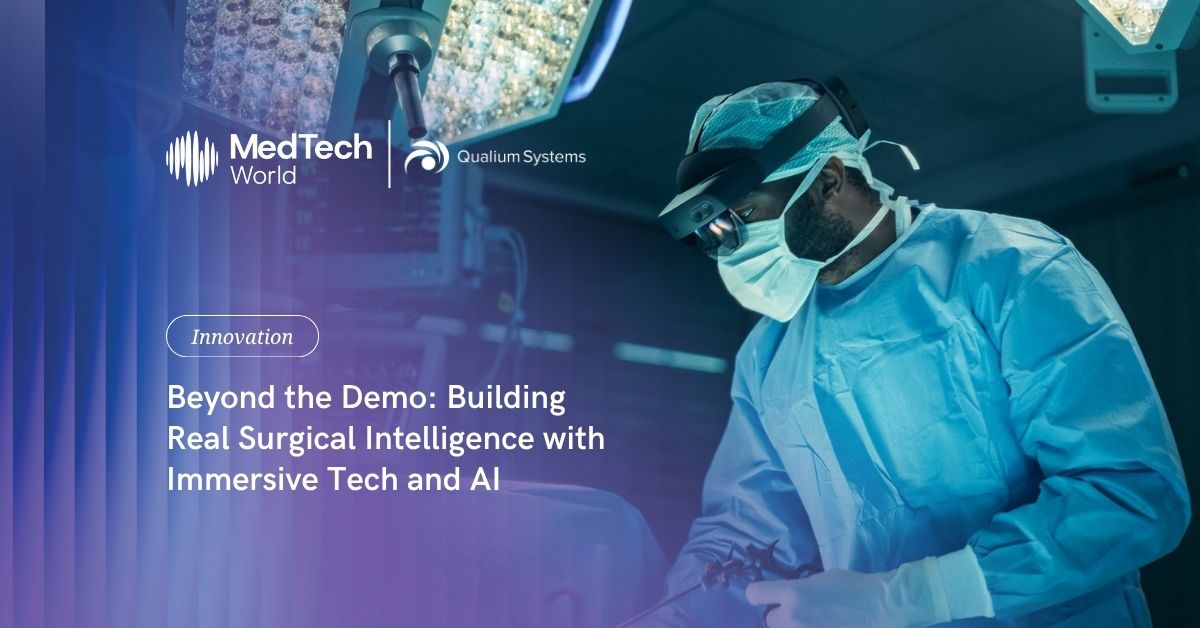
Immersive technology is no longer just about visualizing anatomy in 3D or creating realistic simulations. When combined with Artificial Intelligence, it ushers in a new era of real-time Digital Twins, transforming how surgeons operate, train, and improve outcomes.
MedTech World interacted with Olga Krivchenko, CEO and Cofounder of Qualium Systems, a software solution partner for MedTech enterprises and startups. The company specializes in surgical technology, 3D imaging, medical education and custom eHealth solutions — helping teams move from proof-of-concept to proof-of-value with quality systems and deployment-ready software. Together, we explored how the fusion of Virtual, Augmented reality and AI is redefining the way medical professionals plan, navigate and learn and work.
Healthcare systems everywhere are under pressure: longer wait times, workforce shortages, and growing expectations for safety and quality. By 2030, over 313 million surgeries are expected to take place worldwide. With this growing demand, technology is no longer optional—it’s essential to maintain precision, training quality, and patient safety.
“Digital transformation is how we meet healthcare’s toughest challenges,” says Krivchenko. “It’s not just about building digital tools for medical and healthcare providers. It’s about building intelligence into the way we deliver care.”

For years, Immersive tech or Extended Reality (XR) has been a promising tool for visualizing anatomy, planning procedures, and training clinicians. But the real transformation begins when XR connects with real-time AI. The first wave of XR showcased what was possible; the next wave brings systems that perceive, interpret, and respond.
At Qualium Systems, these elements come together in a surgical intelligence platform featuring AI-powered XR copilot Artificial Intelligence with Virtual and Augmented Reality (VR/AR) visualization. This unique digital tool supports pre-operative planning, intra-operative guidance, and post-operative analysis and seamlessly integrated with Digital OR systems allowing the platform to evolve from a one-time use case into a continuously learning application.
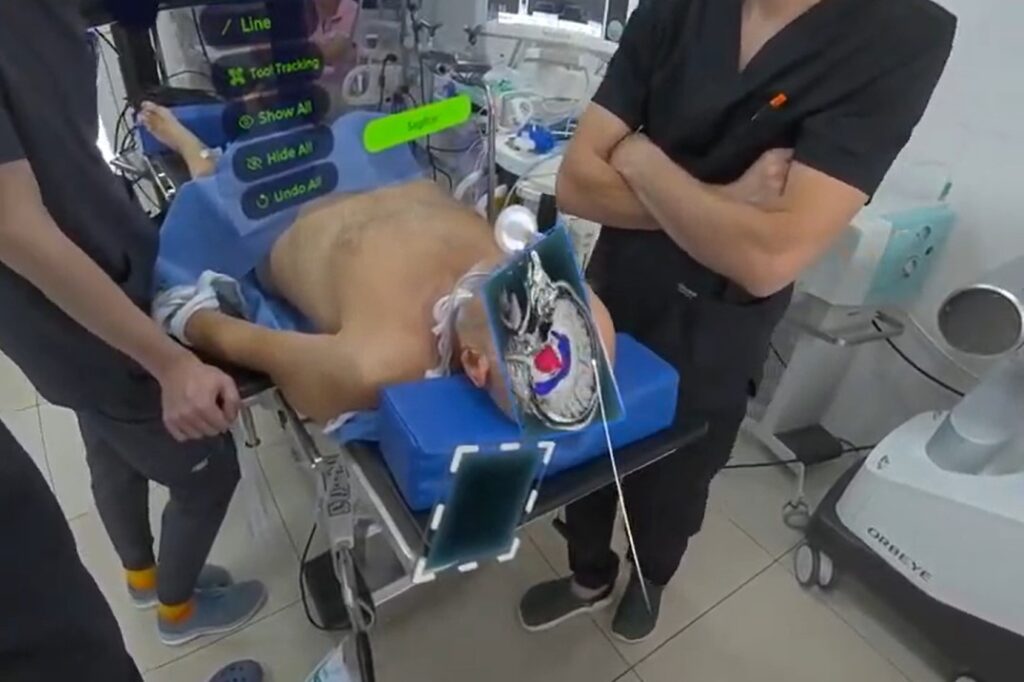
Here’s how it works in practice:
Behind this seamless experience are powerful data flows (DICOM in, FHIR/HL7 out) and spatial computing pipelines that merge anatomical AI-powered segmentation with real-time analysis of organs, vessels and soft tissues. The technology is designed around surgeon-centric UX, ensuring the surgeon remains in charge at every stage, providing a “superpower” surgical tech even for most skilled physicians. One more important advantage is hardware integrity and consolidation meaning no specialized or expensive equipment required.
The idea of Digital Twins – dynamic, synchronized representations of patients, devices, or procedures – takes simulation and training to a new level. In immersive education, these twins respond to a learner’s decisions in real time. A trainee can see a virtual patient’s vitals change, receive AI-assisted feedback, and track progress across sessions.
For MedTech companies, Digital Twins close the gap between R&D and real-world use. Teams can test device workflows, simulate rare clinical cases, and update training materials in sync with product development – all this in remote collaboration. Their Spatial Space MVP application demonstrates the case of full-body 3D anatomy education with Virtual Reality.
As Krivchenko explains, “Digital Twins turn static learning into active hands-on practice. They create a living connection between training, performing, and improving.”
Qualium Systems follows a quality-by-construction approach that aligns with key medical software standards, including ISO 9001 and ISO/IEC 27001. This ensures every innovation meets the highest cybersecurity, safety and reliability benchmarks.
That commitment translates into:
It’s a framework that balances innovation with rigor, an approach that aligns with the values often highlighted across MedTech World’s ecosystem.
Beyond innovation headlines, value is measured by outcomes:
Qualium Systems is driven to make a real difference in patients’ lives ensuring every feature is instrumented for measurement, allowing improvements to be linked directly to specific functions that impact physician performance and intelligence or patient safety, rather than to broad claims about “XR” or “AI.”
As Krivchenko sums it up, “Surgical intelligence isn’t a checklist of features—it’s a workflow that learns. When Immersive tech and AI work together, technology becomes a “superpower”, even for the most experienced physicians to improve patient outcomes and solve future challenges of healthcare systems.”
Innovations like these are at the heart of discussions taking place at MedTech Malta 2025, running from 12 to 14 November. The conference will bring together global leaders, innovators, and visionaries to explore how technologies such as XR, AI, and Digital Twins are advancing surgical intelligence, clinical education, and patient care. These conversations underline MedTech World’s mission—to spotlight the people and ideas transforming healthcare through intelligent design and collaboration.
At MedTech Malta, Qualium Systems will demo their Surgical Intelligence platform and Spatial Space – MVP application for full-body 3D anatomy education with Virtual Reality.
Get your ticket now and experience it firsthand.