- Summits
- Sponsorship
- Media Opportunities
- News
- About
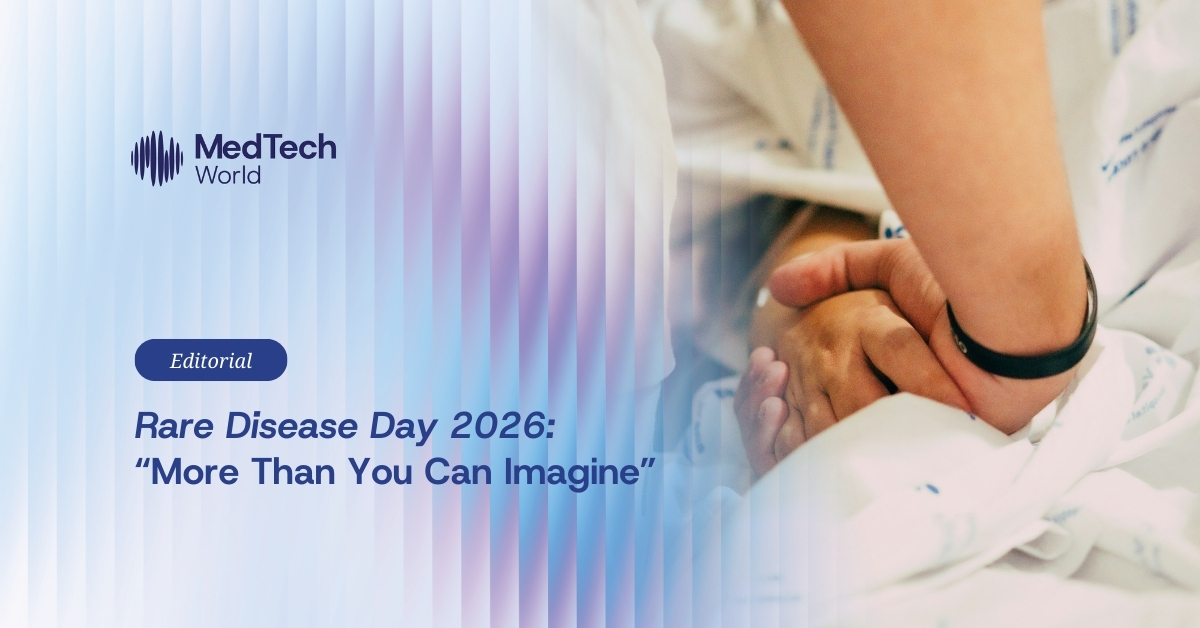
Three hundred million people. That is how many individuals around the world live with a rare disease. Most will spend years searching for a diagnosis. Many will never see an approved treatment. Nearly 80% of rare diseases are genetic, around 70% appear in childhood, and about 95% still have no approved therapy. The average time to receive an accurate diagnosis is 4.8 years. For nearly 30% of children affected, life does not extend beyond their fifth birthday.
These are not marginal numbers. They represent families navigating uncertainty, clinicians working without clear guidelines, and researchers racing against time.
The theme for Rare Disease Day 2026, observed on February 28 — “More Than You Can Imagine” — feels fitting. Because while the challenges are immense, so too is the pace of change.
In 2026, the conversation has shifted. The field is no longer focused only on identifying rare diseases. The latest generation of innovators is building tools to treat them, and in some cases, to correct them at their source.
One of the quiet revolutions in rare disease research is happening behind the scenes — in datasets.
UK-based Healx has been at the forefront of applying artificial intelligence to repurpose existing drugs for rare conditions. Rather than starting from scratch, the company uses machine learning to identify overlooked connections between known compounds and underserved diseases. Its growing pipeline includes programs targeting Fragile X syndrome, demonstrating how AI can compress years of research into far shorter timelines.
In the United States, OrphAI Therapeutics is tackling rare cancers and orphan diseases by focusing on previously “undruggable” biological targets. AI-driven modelling allows them to explore molecular territory that traditional chemistry struggled to reach.
And then there is AllStripes, not a drug developer, but a critical force in the ecosystem. By building real-world data platforms for rare diseases, the company helps researchers understand how these conditions progress over time. For communities where patient numbers are small and medical records fragmented, that clarity can change everything.
Together, these companies are replacing guesswork with pattern recognition.
If the first wave of gene therapy proved that replacing faulty DNA could work, the second wave is focused on doing it better.
A persistent challenge has been the “large gene” problem; many disease-causing genes are simply too big to fit inside the viral vectors typically used to deliver therapy. Italian biotech AAVantgarde Bio is addressing this by splitting large genes into parts and reassembling them inside the body. Their work targeting Usher syndrome type 1B aims to restore function in a condition that causes combined blindness and deafness.
Meanwhile, Beam Therapeutics is advancing base editing, often described as a molecular pencil. Instead of cutting DNA, base editing changes a single letter in the genetic code, reducing unintended effects. Clinical programs are already underway for Alpha-1 antitrypsin deficiency.
Taking an entirely different approach, Tune Therapeutics is not altering DNA sequences at all. The company focuses on epigenetic tuning, turning genes on or off when they are present but misregulated. For many rare conditions, that subtle shift could be enough to restore balance.
This is gene therapy, but with greater precision and nuance.
Rare diseases are, by definition, uncommon. But innovation in 2026 shows that even the smallest patient populations can attract serious scientific attention.
Actio Biosciences is pursuing a “shared genetics” strategy, identifying mutations that appear in both rare and common diseases. By leveraging broader datasets, the company develops small-molecule therapies for ultra-rare conditions such as KCNT1-related epilepsy.
Arnatar Therapeutics is gaining attention for its antisense oligonucleotide programs targeting rare liver and kidney disorders, including Alagille syndrome. These therapies are designed to modify how genes are read, offering a tailored approach to highly specific conditions.
In France, InnoSkel is focusing exclusively on rare skeletal disorders. Its gene therapy program for Type II collagenopathies addresses conditions that affect bone growth and development, areas long underserved by mainstream research.
Each company may focus on a narrow niche. Collectively, they are reshaping the field.
Beyond individual breakthroughs, several trends signal a broader shift.
The “large gene” barrier is gradually being overcome. Long-acting therapies, including siRNA programs under development at companies like Corsera Health, could reduce treatment to once-a-year administration. And major pharmaceutical players are paying attention, illustrated by AstraZeneca’s acquisition of Alexion Pharmaceuticals, reinforcing how rare disease research has become central to broader biotech strategy.
For decades, rare diseases were viewed as scientifically daunting and commercially uncertain. In 2026, they are increasingly seen as proving grounds for the most advanced technologies in medicine.
Scientific progress alone, however, is not enough. Policy, coordination, and patient advocacy remain essential, particularly in smaller health systems.
As Michelle Muscat, Founder and President of the National Alliance for Rare Diseases Support – Malta, notes:
“On Rare Disease Day, the focus turns to the urgent need for sustained national action to improve the lives of individuals and families living with rare conditions. In Malta, this year is particularly significant as it marks the tenth anniversary of the National Alliance for Rare Diseases Support – Malta, reflecting a decade of advocacy and progress in raising the profile of rare diseases within national health and social policy.
Over the past ten years, notable strides have been made to increase awareness, strengthen coordination, and place patient needs more prominently on the national agenda. However, many individuals in Malta continue to experience lengthy diagnostic journeys, fragmented care pathways, and uncertainty regarding access to specialised expertise and treatments. These realities highlight the pressing need for a comprehensive national strategy that moves beyond awareness towards measurable improvements in care and support.
Rare Disease Day serves as a reminder of the importance of translating commitment into concrete policy action. With coordinated collaboration between civil society and government, Malta can move closer to ensuring timely diagnosis, equitable access to specialised care, and holistic support for all those living with rare diseases.”
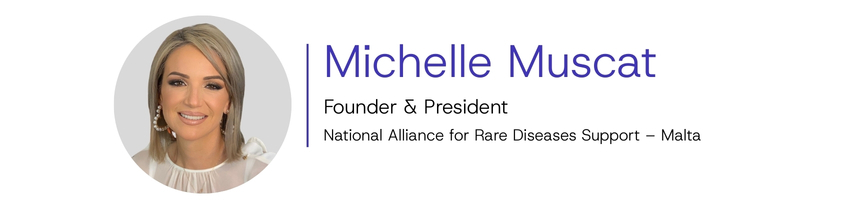
Her message underscores an important truth: innovation in laboratories must be matched by coordination in health systems.
The numbers remain difficult to ignore. Millions are still waiting. Most conditions still lack treatments. Diagnostic journeys remain long and complex.
But Rare Disease Day 2026 is not only about the gap; it is about the momentum.
AI is accelerating discovery. Base editing is refining precision. Epigenetic therapies are expanding what is possible. Data platforms are bringing clarity to previously invisible patient populations.
For families who have felt overlooked, this shift matters. It signals that rare diseases are no longer an afterthought. They are at the forefront of biomedical innovation.
And that is, truly, more than you can imagine.