- Summits
- Sponsorship
- News
- About

Some healthcare innovations begin in a lab. Others begin in a boardroom. ArthrolenseTM began in the operating room.
After decades of experience performing hip and knee arthroplasty—including complex primary and revision procedures—Dr. Russ Nevins and Dr. David Backstein shared a common observation: while orthopedic technologies had advanced significantly in areas such as precision and reproducibility, an important unmet need remained. Many of the most consequential intraoperative decisions were still being made without complete, real-time insight. Based on their shared observation, the idea was born to develop a machine vision and machine learning-based visual guidance system that could empower surgeons with actionable, real-time insights.
Real-time insight matters because in joint replacement, patient outcomes are often shaped by nuanced decisions made during the procedure itself—decisions involving anatomy, soft tissue balance, alignment, implant positioning, and how these factors interact in an individual patient.
There is growing recognition that every patient presents differently. Yet many surgical systems have historically focused more on standardizing execution than improving patient-specific understanding at the point of care. In our founders’ clinical experience, most systems focus on 2/3 of the knee, the patellofemoral compartment management is an area where current digital planning systems offer limited intraoperative support, and where unaddressed issues can affect patient satisfaction.
For the Arthrolense founders, that gap represented more than a technical limitation. It had direct implications for patient care and outcomes.
“We have seen meaningful progress in surgical precision,” says Dr. David Backstein. “But precision alone does not always address the need for deeper intraoperative understanding. Surgeons need tools that help them see the complete picture.”
“For years, many of us have relied on experience, feel, and fragmented data to make critical decisions in surgery,” adds Dr. Russ Nevins. “We believed there was an opportunity to bring modern imaging intelligence into the operating room in a way that supports surgical judgment and can ultimately benefit patients.”
“Innovation should begin with the patient,” says Oren Gelman, CEO of Arthrolense. Our goal is to provide surgeons with real-time insight, so they are better positioned to make decisions that can elevate the standard of care.”
Arthrolense was founded on a simple but powerful belief: when surgeons have better insight, patients benefit.
The company’s mission is to help advance a future where orthopedic surgery is not only precise, but truly informed, adaptive, and centered on the needs of every individual patient.
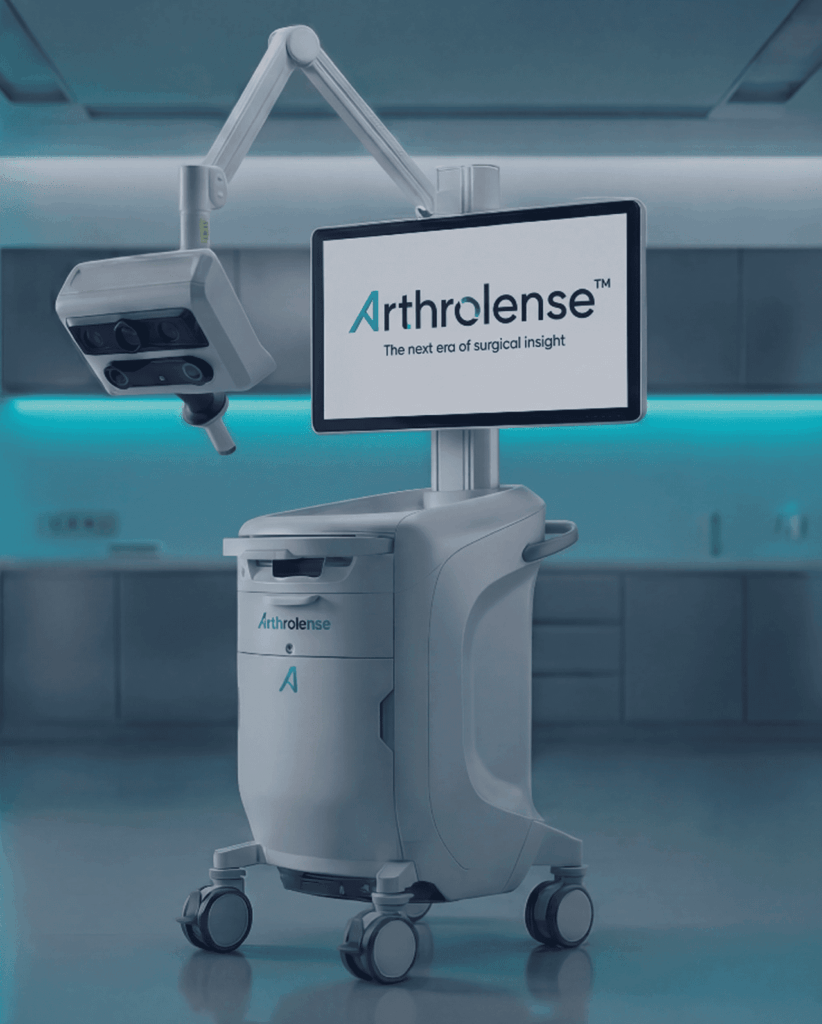
The Arthrolense 4Di™ Visual Guidance System is in development and has not yet been cleared by the U.S. FDA. It is not available for sale or commercial distribution.
MedTech World has unveiled MedTech World Startup Tracks, a new, focused format designed to help startups connect more directly with investors, corporate leaders, and ecosystem partners aligned with their areas of innovation. Pre-register now as MedTech World return to Florida from 5 to 7 May 2027.