- Summits
- Sponsorship
- Retreats
- Media Opportunities
- News
- About
Artificial Intelligence and its developments have had a revolutionary impact on society, and healthcare is not an exception. China has made massive strides in AI integrated healthcare, and continues to do so as AI tools are deployed in hospitals across the country.
China’s ambitions for artificial intelligence are staggering. The country is projected to invest more than US$1.4 trillion into AI development by 2030, a figure that eclipses the GDP of many nations. But what’s perhaps more astonishing is where some of that investment is already landing: hospitals powered not by humans, but by AI doctors.
In 2024, Tsinghua University made headlines with the launch of the world’s first AI hospital, Agent Hospital—a concept that blends virtual AI agents, clinical care, and real-world pilot deployment into one tightly integrated system. Now that vision is being refined, tested, and expanded across China in what might be one of the most ambitious attempts to reimagine modern healthcare.
Tsinghua’s Agent Hospital was made up of 14 AI doctors upon launch. At its core, is MedAgent-Zero, the self-evolving AI framework developed by the University’s AIR (Institute for AI Industry Research). Moreover, in November of 2024, the “Zijing AI Doctor” was launched. Developed by a Tsinghua University spin-out start-up, Zijing Zhikang, to serve as the core component in AI Agent’s ecosystem.1 The system features 42 AI doctors across 21 clinical specialties, covering over 300 diseases. Furthermore, each specialty has trained its virtual agents on over ten common conditions. And finally, by creating a pool of half a million synthetic patient cases to test and evolve diagnostic accuracy. These AI doctors can treat 10,000 patients with 93% accuracy in a matter of days, a feat that would take real doctors years to complete.
Furthermore, these doctors aren’t chatbots; they’re AI systems capable of autonomously working with AI generated patients in a fully-fledged closed-loop ecosystem.
The system underwent internal testing in November of 2024, in which the closed-loop environment was used to rapidly and extensively evolve the AI doctor agents. Moreover, internal testing enabled vast simulation, and refinement using virtual patient data and clinical workflows. Consequently, the system was made ready to undergo public pilot testing, which has since greatly superseded internal testing.
The inauguration ceremony for Tsinghua Agent Hospital held last April marked this transition into public deployment.2 During the event, the system’s integration with Chang Gung Hospital was announced, emphasizing the institute’s commitment and ambition to revolutionize healthcare.
From ophthalmology and respiratory medicine to radiological diagnostics, AI doctors take on tasks traditionally handled by their human counterparts—streamlining workflows, offering real-time recommendations, and lowering the barrier to care.
Garnering international attention, the event highlighted China’s AI Hospital model to address physician shortages, and improve healthcare access, especially in underserved regions.
Beyond clinical deployment and streamlining medical services, the system will serve as educational groundwork at Tsinghua. As a result, educational integration will catalyze the rise of a new generation of “AI-collaborative physicians.”
May 2025 marked a symbolic and strategic milestone: the Phase II expansion of Beijing Tsinghua Chang Gung Hospital, adding 500 new beds, raising its capacity to 1,500 inpatients and up to 10,000 outpatients daily.3 However, while the physical infrastructure grew, the real story was in the digital layer being embedded alongside it.
AI now supports nearly every step of the patient journey—from digital admissions and predictive alerts to infusion management, diagnostics, and mobile nursing stations. The hospital even partnered with the Tsinghua Academy of Arts and Design to incorporate “healing architecture,” merging technology with cultural aesthetics for a more human-centered experience.
This is not a case of slapping AI on top of a legacy system. This is a full rethinking of what a hospital can be when clinical need, AI capability, and design philosophy converge.
While Tsinghua is building a top-down, integrated model, another player is influencing the healthcare landscape from the ground up. DeepSeek AI, an open-source medical LLM developed in China, has taken a localized deployment approach.4 Taking this approach, its models are embedded in the intranets of more than 260 hospitals across 93.5% of China’s provinces.
This model ensures patient data never leaves hospital firewalls, solving major data privacy and compliance concerns. And it’s working. In cities like Shanghai, Shenzhen, and Chengdu, DeepSeek is already assisting physicians with:
At Ruijin Hospital, DeepSeek handles 3,000 pathological slides per day. At Chengdu First People’s Hospital, it’s powering telemedicine and chronic disease management.5 The Jinshan Branch of Shanghai Sixth Hospital has even integrated real-time AI workstations that reduce misdiagnosis risk.
Despite such deployments, only 0.7% of China’s national healthcare system has adopted these AI models. This figure hints at immense potential but also underscores a growing divide. While urban centers push ahead, rural and underfunded hospitals risk being left behind.
The parallel evolution of Agent Hospital and DeepSeek reflects two paths toward the same goal: scalable, sustainable, and smarter healthcare. Tsinghua’s Agent Hospital aims to build a new blueprint for integrated care, while DeepSeek is retrofitting intelligence into existing infrastructure.
Both are rooted in China’s broader industrial strategy, where AI isn’t simply a tool—it’s a national priority. Healthcare is among the most critical applications, especially in the face of a growing elderly population, physician shortages, and uneven access to quality care.
Yet questions remain. Can we trust AI doctors to make clinical decisions? Will rural hospitals get left behind? Are current medical regulations equipped to manage non-human practitioners?
Answers are still unfolding, but one thing is clear: China isn’t waiting around. The country isn’t just theorizing the role of AI in healthcare—it’s building it, hospital by hospital, model by model.
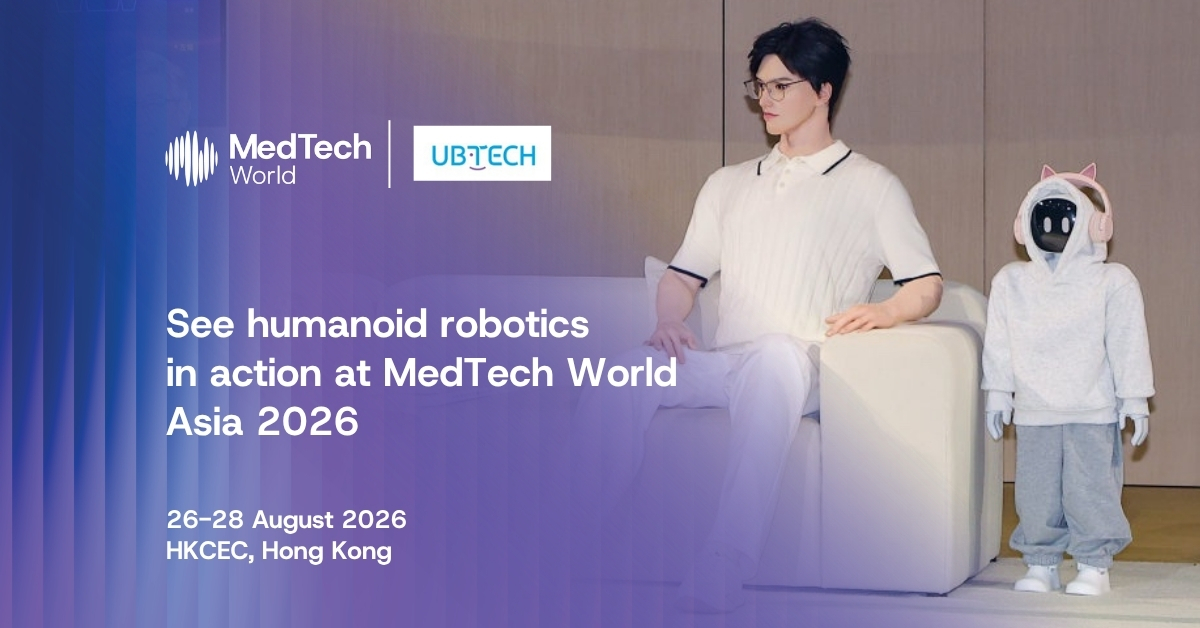
As AI continues to reshape healthcare across Asia and beyond, the discussion around innovation, implementation, regulation, and clinical adoption has never been more important. Join healthcare leaders, investors, innovators, and policymakers at MedTech World Asia 2026, taking place in Hong Kong from 26–28 August, to explore the technologies and collaborations driving the next chapter of healthcare. Secure your place now.