- Summits
- Sponsorship
- Retreats
- Media Opportunities
- News
- About
Building a medical device that works is hard. Building a medical device company that survives long enough to commercialise it is harder. The gap between those two things — between having a cleared product and generating consistent, scalable revenue — is where most MedTech startups run into serious trouble.
It is a gap that has less to do with clinical performance than founders typically expect, and far more to do with health economics, workflow integration, message clarity, and the operational infrastructure needed to sustain a commercial launch.
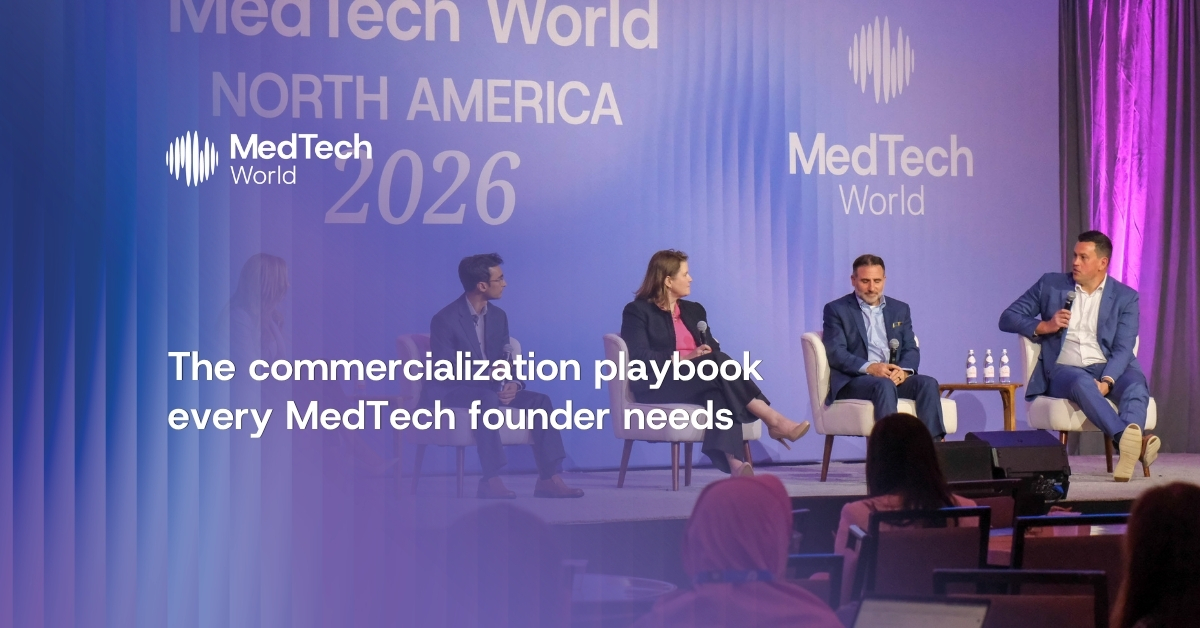
Those realities took centre stage during the panel “Commercialization Playbook for MedTech Startups: From Readiness to Revenue” at MedTech World North America 2026.
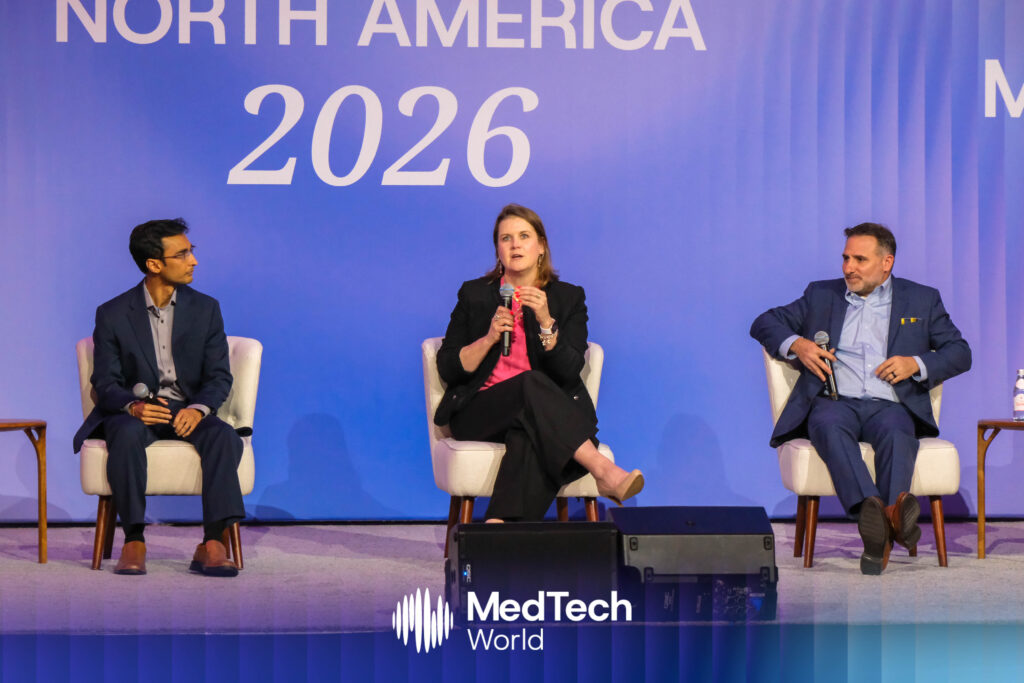
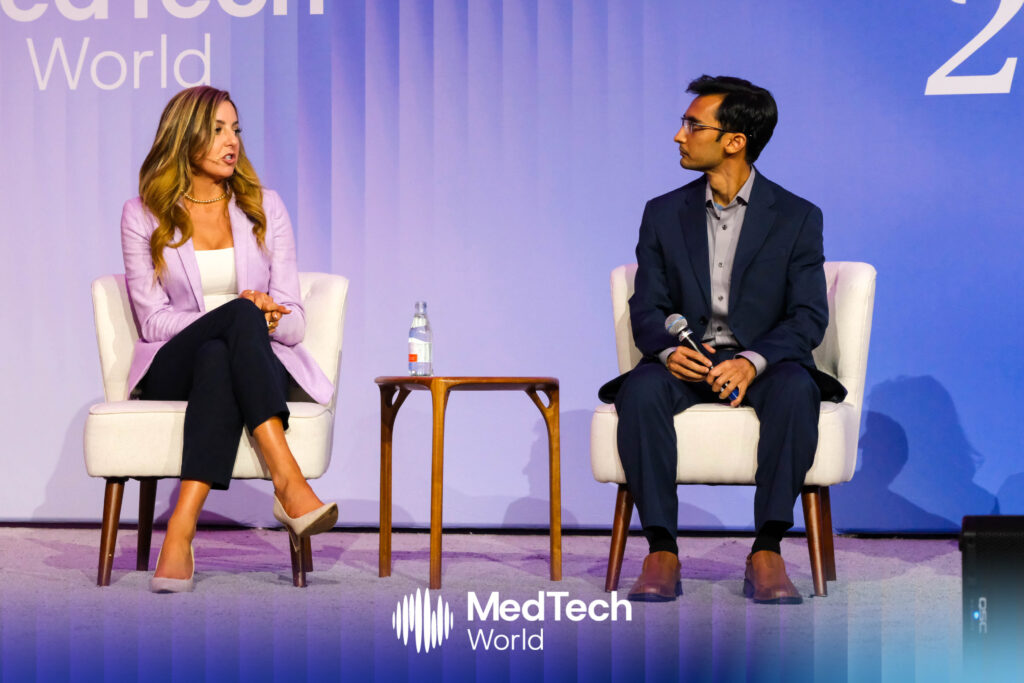
Moderated by Ivanny Franklin, Managing Partner at MedSight Capital, the session featured Maunark S. Patel, Co-Founder and CEO of Skuvent Inc; Tim Lawrie, Founder and CEO of ProjectUS Consulting; Claudia Holy, Founder and CEO of Podymos Ltd; and Joe Sasson, Chief Commercial Officer and EVP at MedAxiom Ventures.
Together, the panel worked through the questions that every founder in the room was sitting with: when is a product truly commercially ready, how do you accelerate adoption, when do you step back from founder-led sales, and how do you survive the commercialisation gauntlet on a limited runway?

The conversation opened with a deceptively simple question: how do you define commercial readiness?
The answer, the panel agreed, is rarely about regulatory clearance. FDA clearance opens the door. It does not mean anyone will walk through it.
Holy described commercial readiness as a convergence of several conditions that must be built in parallel rather than sequenced one after another. Clinical adoption must run alongside reimbursement strategy, which must run alongside go-to-market planning and message development. Treating these as separate phases is one of the most common and costly mistakes founders make.
Sasson added a dimension that is often overlooked: operational outcomes. A technology that generates a million-dollar return on investment but creates significant workflow disruption inside a hospital or practice will frequently lose to one with a far smaller financial return that integrates seamlessly. Healthcare systems are under enormous staffing pressure, and ease of adoption is not a secondary consideration — it shapes purchasing decisions directly.
Patel reinforced that point from an operational standpoint. If a product cannot fit naturally into the existing workflows of a health system, adoption will lag regardless of how compelling the clinical or financial case appears on paper.
One thread that ran through almost every exchange on the panel was the problem of unclear value propositions.
Holy was direct: the single most common issue she sees working with MedTech companies from a commercialisation and marketing perspective is that the message is too technical, too internally focused, and too disconnected from the specific problem the product is solving for the healthcare system, the clinician, or the patient.
When messaging fails, she noted, the symptoms are predictable. Initial launch centres — where the company’s existing relationships and clinical champions carry the early adoption — tend to perform reasonably well. The breakdown comes when companies try to move into the wider market, where those personal relationships are absent and the message has to do the work. If it cannot do that work clearly and quickly, adoption stalls.
Her broader point was that 80% of a purchasing decision in healthcare is now made before a buyer ever speaks to a sales representative. Healthcare professionals are researching independently, evaluating online, and forming views about products before any commercial conversation takes place. Companies that have not invested in content that answers their buyers’ real questions — not just promotional materials, but genuinely useful information that addresses the hesitations and concerns across the entire decision journey — are arriving late and fighting uphill.
No commercialisation discussion at this level goes far without addressing reimbursement, and this session was no exception.
Sasson described the coding, coverage, and payment trifecta as a stool: remove any one of the three legs and the whole structure collapses. Founders who secure FDA clearance and assume the revenue will follow without a clear reimbursement pathway are setting themselves up for a very difficult period.
Lawrie pointed out that this is not a problem to solve after clearance. The work of understanding which CPT codes apply, what the economic case looks like inside the health system, what commercial payers are likely to accept, and what alternative pathways — Medicaid waivers, HSA and FSA eligibility, employer-directed programmes — might be available should begin years before a product reaches the market. The cost of doing that work early is a fraction of the cost of discovering these answers late, when the company’s runway is already compressing.
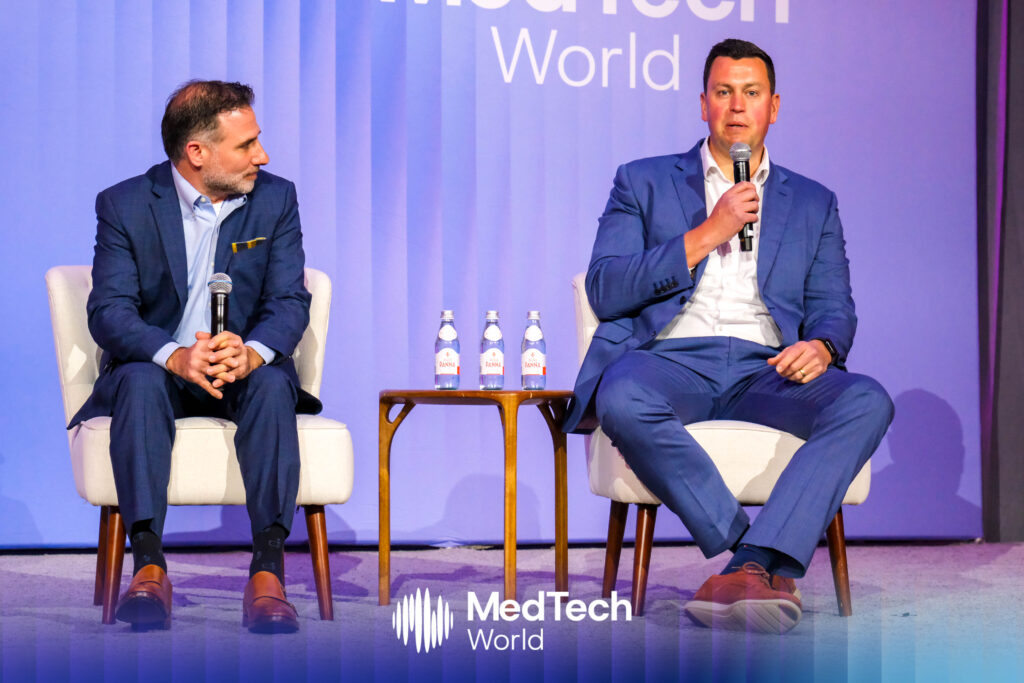
One of the more candid exchanges concerned the frequency with which founders build products without meaningful clinical input, then discover too late that the product does not fit the real-world workflow it was designed to serve.
Holy described companies that arrive at launch having never properly tested their messaging with the clinicians they are targeting. The result is materials that describe the technology accurately but fail to communicate why it matters in a way that resonates with a busy cardiologist or surgeon making a quick decision.
Sasson returned to workflow as the central variable. It is not enough to understand how a product works at one step in a procedure. The entire adoption pathway needs to be friction-mapped: how does the product enter the hospital, who on the value analysis committee needs to approve it, what are the integration requirements, how is it going to be trained, what does the billing model look like. Any unresolved friction point in that chain is a potential adoption killer.
The panel’s advice to founders was consistent: get to clinicians early, engage them often, and treat their feedback as a design input rather than a validation exercise.
One of the more nuanced conversations of the session centred on the question of when a founder should transition away from leading the commercial function directly.
Holy observed that founder-led sales is essential in the early stages, not just because founders know the product best, but because their passion and deep knowledge are often the most compelling elements of an early pitch. The challenge is that this model does not scale.
The transition, the panel suggested, rarely happens at a fixed milestone — a funding round, a head count threshold, a revenue target. It happens when the founder has codified enough of what is in their head that someone else can carry the message effectively. The fastest path to that point is through content: videos, educational materials, documented processes, and communication frameworks that allow a commercial team to engage with customers with the same depth and authenticity the founder brings to those conversations.
Patel and Lawrie both pointed to repeatable processes as the foundation of everything. The companies that scale successfully are not the ones with the best individual salespeople. They are the ones that have defined their sales and marketing processes in enough detail that the model can be replicated as the team grows.
The session closed with a question that resonated visibly across the room: what do you do if you have 18 months of runway and you still need to commercialise?
The panel did not pretend the situation is easy, but they were precise about where limited capital should be directed.
Holy’s answer was unambiguous: educate your customers faster, and do it in ways that do not depend solely on your sales team. Create content that answers the questions your buyers are actually asking. Eliminate the repetition in your commercial process by building it into materials that can work at scale. The companies that survive tight runway situations are the ones that figure out how to do more with less, not by cutting corners, but by getting systematic about how they generate demand.
Sasson put it simply: sales cures all. In a situation with limited time, everything should be subordinated to optimising the sales process and getting deals closed. Revenue gives investors confidence, and investor confidence is what keeps the business alive long enough to reach the next stage.
Lawrie and Holy both returned to the theme of fractional support — the ability to bring in deep, functional expertise on a short-term basis without taking on the full cost of a senior hire. For a company in a constrained position, this is often the most effective way to access the knowledge needed to move quickly without committing to headcount the business cannot yet sustain.
What came through most clearly across the session was a reframing of what commercial readiness actually means in practice.
It is not the moment a product receives regulatory clearance. It is not the day a first customer signs a contract. It is the point at which a company has genuinely answered the questions its buyers are asking: why this technology, why now, what does it cost the health system, how does it integrate, what evidence supports it, and what happens after deployment.
The founders who reach that point prepared — who have built the playbook, mapped the friction, aligned the message, and developed the evidence — are the ones who get through the hardest part of the MedTech journey. The ones who arrive at launch still working through those questions tend to find that the window closes faster than they expected.
Discussions on MedTech commercialisation, go-to-market strategy, and building scalable sales models will continue at MedTech World Asia 2026, taking place in Hong Kong from 26–28 August 2026. Join founders, investors, commercial leaders, and health system executives shaping the next generation of MedTech growth. Secure your ticket and be part of the conversation.