- Summits
- Sponsorship
- Retreats
- Media Opportunities
- News
- About
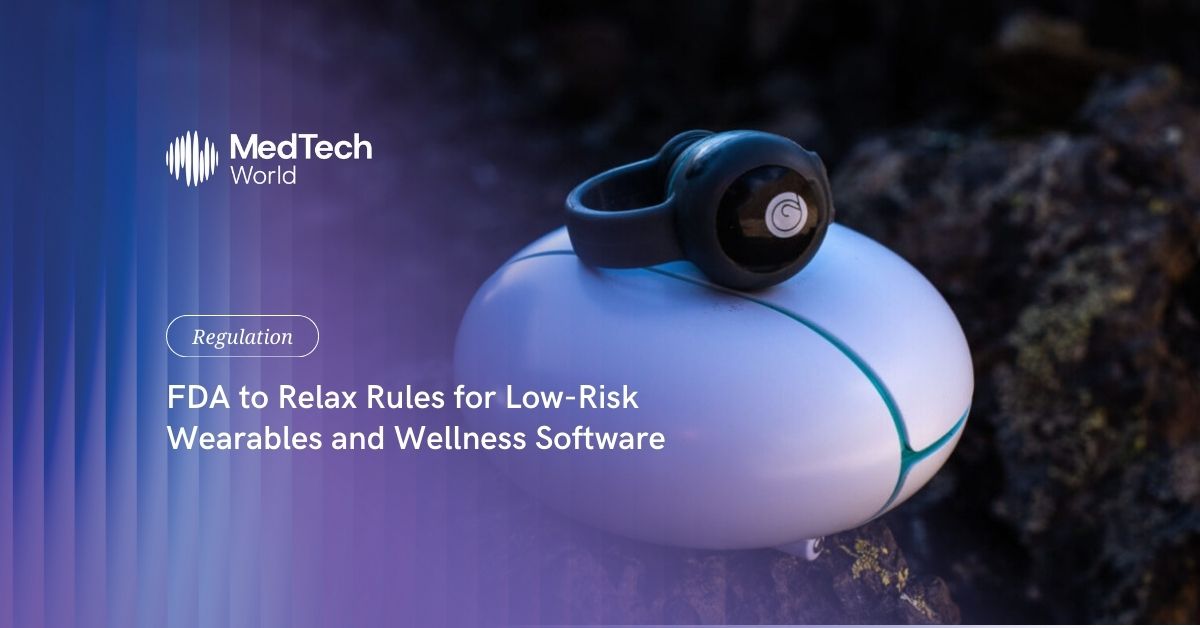
From smartwatches to wellness apps, health technology has become part of everyday life. Now, the US Food and Drug Administration (FDA) is signalling a shift in how it plans to oversee some of these tools, particularly those that are low risk and not intended to diagnose or treat disease.
Speaking at the 2026 Consumer Electronics Show (CES) in Las Vegas, FDA Commissioner Dr. Marty Makary outlined plans to relax regulatory requirements for what the agency describes as “non-medical grade” devices. The aim: reduce unnecessary oversight for consumer-facing health and wellness technologies, while keeping guardrails firmly in place for products that make clinical claims.
Under the proposed exemptions, low-risk devices such as heart rate monitors and other wearables designed to track general health metrics would no longer be subject to the same premarket requirements as medical devices. These tools, often used for fitness, wellbeing, or general health awareness, would be allowed to provide information without undergoing FDA regulation.
However, the distinction between wellness and medical use remains central. Devices or software that claim to deliver clinically accurate measurements, or that are intended for diagnosing or treating specific medical conditions, will still fall under existing regulatory pathways.
“We want to let companies know, with very clear guidance, that if their device or software is simply providing information, they can do that without FDA regulation,” Makary said in an interview with Fox Business’ Varney & Co.
“The only stipulation is if they make claims of something being medical grade… We don’t want people changing their medicines based on something that’s just a screening tool or an estimate of a physiologic parameter.”
Makary’s comments framed the move as a practical response to how quickly consumer technology evolves. According to a report by ConsumerAffairs, he told attendees the FDA needed to operate at “the speed of Silicon Valley” to remain effective and relevant.
That approach extends to software-driven tools, including those powered by artificial intelligence. The relaxed oversight is expected to apply to certain AI-enabled wellness products, aligning with a White House executive order issued in December 2025 that encourages AI adoption and seeks to reduce barriers across multiple sectors.
“If something is simply providing information like ChatGPT or Google, we’re not going to outrun that lion,” Makary said. “We have to promote these products and, at the same time, just guard against major safety concerns.”
The message is clear: innovation won’t be slowed by regulation where risk is low, but consumer safety remains non-negotiable.
Alongside the proposed exemptions, the FDA has also taken steps to adjust how it evaluates evidence for medical device submissions. In December 2025, the agency removed a limitation on the use of real-world evidence (RWE), allowing de-identified data to be considered more broadly in regulatory applications.
Rather than applying a one-size-fits-all rule, FDA reviewers will now assess the quality and relevance of RWE on an application-by-application basis. The updated guidance applies to “certain” types of medical device submissions and is expected to help bring new technologies to patients more efficiently, without lowering evidentiary standards.
Makary described the change as a way to get potentially life-changing treatments to patients faster, while still relying on robust data to inform regulatory decisions.
Taken together, the FDA’s announcements point to a more nuanced regulatory model, one that recognises the difference between consumer wellness tools and medical technologies, and adapts oversight accordingly.
For startups and established companies alike, the message is less about deregulation and more about clarity. Build tools that inform, and the regulatory burden may be lighter. Make medical claims, and the existing rules still apply.
As digital health continues to blur the line between consumer tech and clinical care, that clarity may prove just as valuable as speed.
As regulatory frameworks evolve alongside consumer health technology, these discussions will remain central to how innovation is brought to market responsibly. Join regulators, industry leaders, founders, and investors at MedTech World Middle East | Dubai, taking place from 11 to 13 February 2026, to explore how policy, technology, and real-world adoption are influencing the next phase of healthcare innovation.