- Summits
- Sponsorship
- Retreats
- Media Opportunities
- News
- About

For MedTech startups, raising capital is no longer just about securing funding. Increasingly, success depends on gaining access to clinicians, validating technologies inside real care environments, understanding reimbursement pathways, and proving operational value before scaling commercially.
That shift is changing the role of healthcare investors. Hospital venture funds are emerging not simply as financial backers, but as strategic partners capable of helping startups navigate the realities of clinical adoption. From pilot programs and workflow integration to clinical trials and co-development opportunities, health systems are becoming deeply involved in how innovation moves from concept to implementation.
Those dynamics took center stage during the discussion “Hospital Venture Funds: Where Capital Meets Clinical Innovation” at MedTech World North America 2026.
Moderated by Alex Condon, COO, Matrix One, the session featured Anita Watkins, Managing Director, Rex Health Ventures, UNC Health; Sibo Gama Morales, Investment Associate, Orlando Health Ventures; Todd Schwarzinger, Partner, Innovations Ventures, Cleveland Clinic Innovations; and Patrick Wayte, SVP, Center for Health Technology & Innovation, American Heart Association.
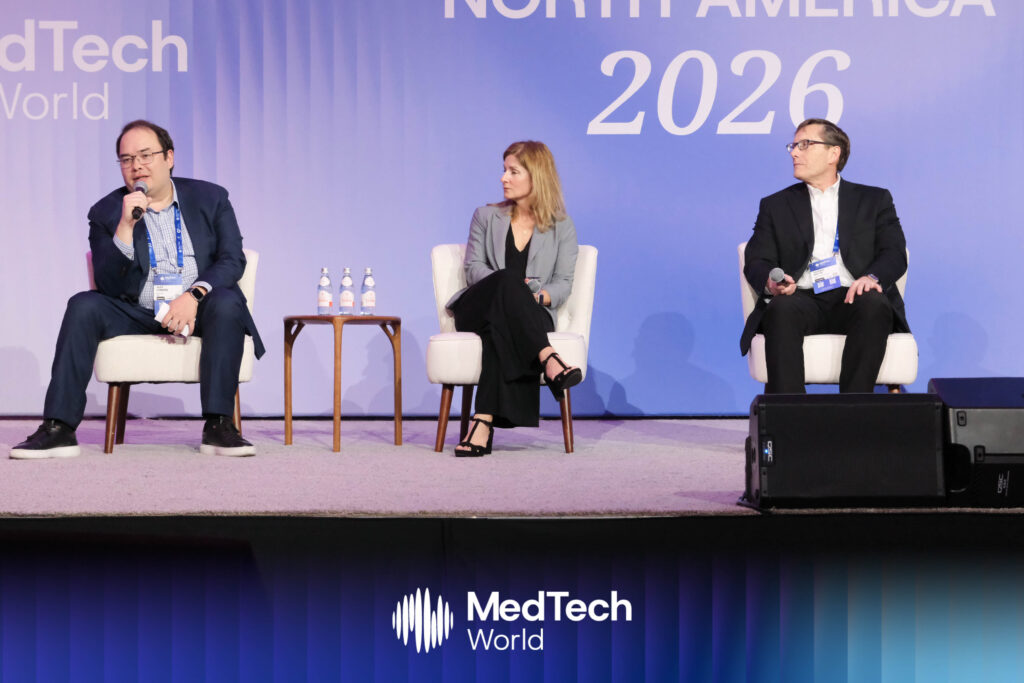
Together, the panel explored how hospital-backed investors evaluate startups, what founders often misunderstand about selling into health systems, and why operational deployment is becoming just as important as innovation itself.
One of the clearest themes throughout the discussion was that hospital venture funds evaluate companies differently than traditional venture capital firms.
Anita Watkins explained that health systems bring multiple stakeholders into the diligence process before an investment is made. Clinicians, nurses, operations teams, and finance leaders all assess how a technology fits into care delivery and whether it can realistically be implemented inside the hospital environment.
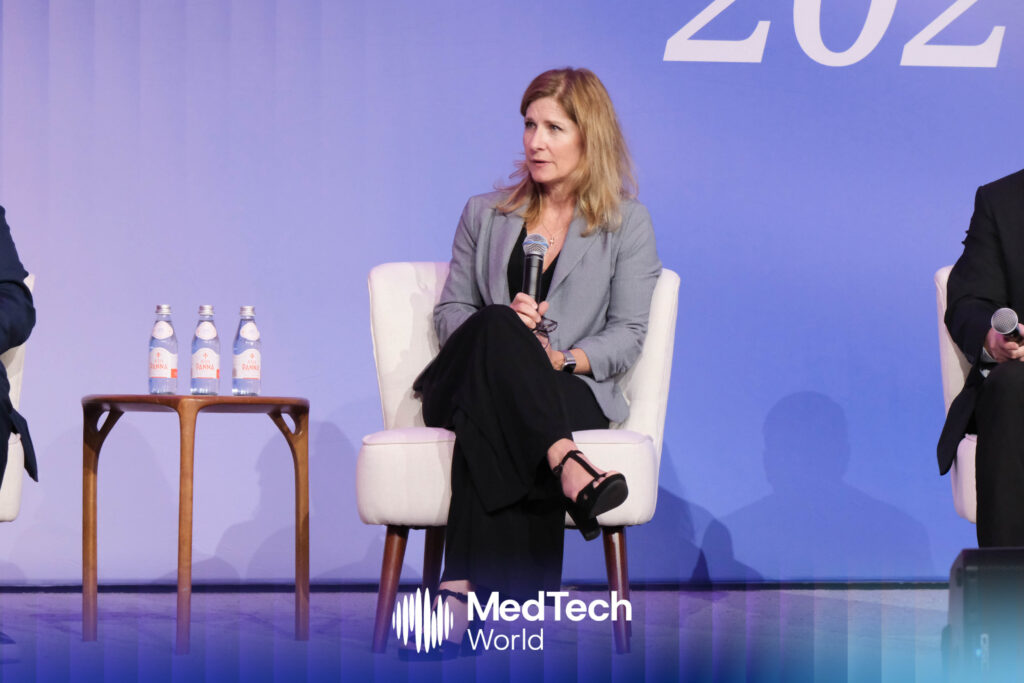
That level of review, she noted, can become valuable validation for startups seeking additional investors.
Rather than focusing only on revenue potential, hospital-backed investors examine how a product affects patient outcomes, workflow efficiency, reimbursement structures, and long-term operational impact.
For founders, this means demonstrating not only why a technology is innovative, but why healthcare systems would actually adopt it.
Sibo Gama Morales argued that many startups still approach hospital venture groups using traditional VC pitch strategies that fail to address the realities of healthcare delivery.
Slides centered around market size projections and aggressive growth curves may resonate in some investor meetings, but health system investors often want a much deeper operational understanding.

Morales explained that Orlando Health Ventures evaluates technologies based on how they fit into reimbursement pathways, clinical workflows, and existing economic models. Founders need to understand the CPT codes connected to their products, the integration requirements necessary for deployment, and the financial implications for the health system itself.
Even highly promising technologies, he noted, can struggle commercially if hospitals cannot justify their adoption economically.
The panel emphasized that deployment planning should no longer be treated as a secondary consideration. Integration strategy, clinician onboarding, workflow compatibility, and reimbursement readiness increasingly shape investment decisions from the earliest stages.
For large health systems like the Cleveland Clinic, internal clinical support often determines whether a partnership moves forward.
Todd Schwarzinger explained that startups need strong clinical champions who genuinely believe the technology changes patient care or improves operations meaningfully.
Without that support, navigating a complex healthcare organization becomes significantly more difficult.
Schwarzinger also warned founders against pursuing the wrong health system partnerships too early. In some cases, smaller and more agile providers may be better suited for initial deployment and validation before companies attempt to scale into larger systems.
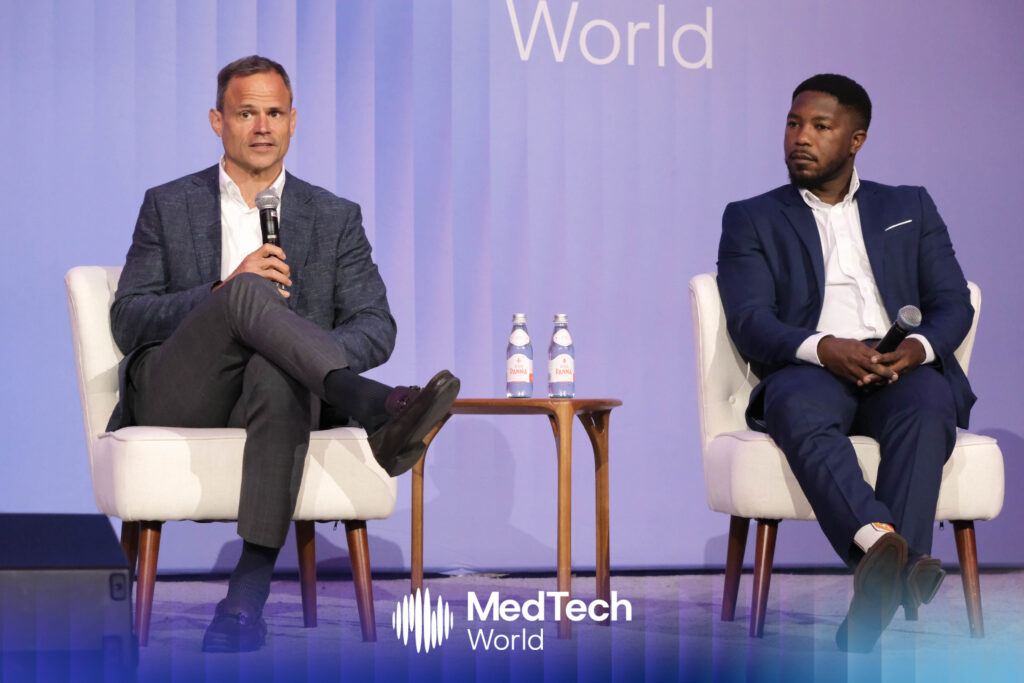
The discussion highlighted an important reality for MedTech founders: not every health system is the right first customer, and choosing the wrong partner can consume valuable time and resources.
Artificial intelligence quickly became one of the most discussed topics during the session.
Morales compared today’s AI market to the earlier rise of blockchain, arguing that while excitement is high, the gap between hype and practical deployment still needs to narrow.
He acknowledged that AI is already improving areas such as clinical documentation and imaging analysis, but stressed that implementation remains the major challenge.
According to Morales, many technologies are introduced into healthcare systems without sufficient collaboration with the clinicians expected to use them. As a result, adoption often falls short despite promising technical capabilities.
Workflow integration, EHR compatibility, user training, and clinician involvement are increasingly determining whether AI platforms succeed or fail inside hospitals.
Schwarzinger echoed that sentiment, noting that many AI companies now present very similar capabilities. In such a crowded market, the differentiators are often operational execution, measurable ROI, and successful integration into existing workflows.
At the Cleveland Clinic, much of the co-development work with startups centers on validating outcomes and proving real-world value before broader adoption takes place.
Representing the American Heart Association, Patrick Wayte discussed the growing importance of clinical evidence, research alignment, and scientific collaboration.
Through its innovation programs and investment initiatives, the organization connects startups with clinicians, researchers, and scientific experts who can help shape studies and guide development strategies.
Wayte encouraged founders to spend more time listening to providers and understanding what evidence healthcare systems and payers actually want to see.
For many startups, generating the right data can be just as important as developing the technology itself.

An audience question about leading investment rounds sparked a broader conversation around syndicate strategy and long-term investor alignment.
The panelists largely agreed that hospital venture funds work best alongside traditional institutional investors rather than replacing them.
Health system investors contribute clinical validation, operational expertise, and deployment support, while traditional venture firms often provide the scale of capital needed for long-term growth.
Watkins stressed the importance of syndicate curation, warning that poorly structured investor groups can leave companies unsupported in future funding rounds.
The discussion also touched on the importance of selecting investors who remain committed through the company’s growth journey rather than focusing solely on valuation during fundraising.
As the conversation wrapped up, panelists shared several technology areas they are following closely.
Watkins pointed to surgical technologies that improve efficiency and broaden procedural accessibility. Wayte highlighted developments in post-stroke recovery and preventative cardiometabolic health solutions.
Schwarzinger referenced technologies that unlock insights from patient records and healthcare data, while Morales discussed emerging cancer therapies, including drug-device combinations using sound-based treatment approaches.
Across all of these areas, one message remained consistent: healthcare innovation is increasingly being evaluated through the lens of implementation, usability, and measurable impact.
For startups navigating today’s healthcare environment, gaining access to capital may still matter, but gaining access to the right strategic healthcare partners may matter even more.
Discussions around hospital venture funds, clinical validation, AI deployment, and the future of healthcare investment will continue at MedTech World Asia 2026, taking place in Hong Kong from 26–28 August 2026. Join health systems, investors, startups, and industry leaders exploring how strategic partnerships are accelerating MedTech adoption across global healthcare markets. Secure your ticket and be part of the conversation.