- Summits
- Sponsorship
- Retreats
- Media Opportunities
- News
- About
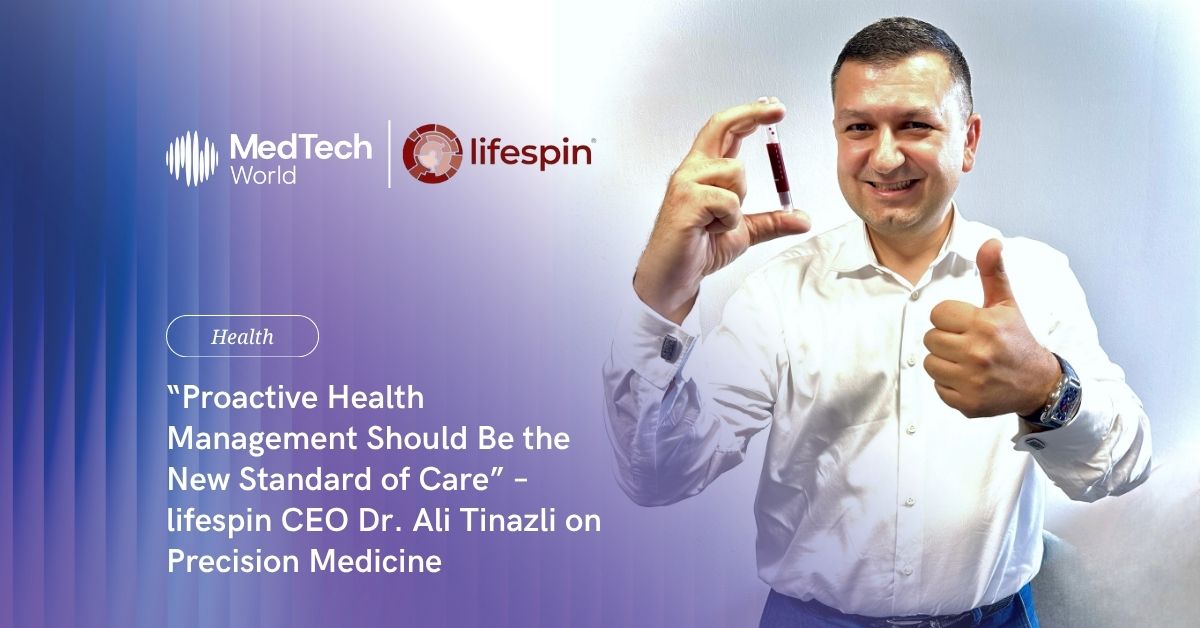
Precision medicine is changing how we think about healthcare. It is not only about treating disease but about understanding each person’s biology early enough to prevent illness before it begins. For Dr. Ali Tinazli, CEO of lifespin, this is more than a goal. It is a commitment to make personalized, preventive healthcare accessible to everyone.
MedTech World spoke with Dr. Tinazli about lifespin’s progress in metabolomics, its latest milestones, and why prevention should become the foundation of modern healthcare.
“This year was a highly important year for us,” Dr. Tinazli begins. lifespin recently launched its General Health Assessment product for preventive care and signed a service agreement with Premier Integrated Labs (PIL), part of IHH, one of the world’s largest healthcare providers.
Beyond that, lifespin introduced home self-collection kits that make it possible for users to collect their own blood samples. “Now we can reach physicians, pharmacies, and even homes,” he explains. “It is about improving accessibility to our precision medicine AI engine.”
At the core of lifespin’s work is metabolomics, the study of small molecules that reflect real-time biological activity. The process, Dr. Tinazli explains, is fast and efficient.
“It is a two-step procedure involving a standard blood collection and a five-minute measurement of a small sample. The data is uploaded to the cloud, analyzed remotely, and turned into actionable insights.”

lifespin’s proprietary AI engine powers this process, transforming routine samples into a clear view of a person’s metabolic health. The new ability to self-collect samples outside clinical settings is expanding access even further.
Asked about what trends excite him most, Dr. Tinazli points to multimodality and prevention.
“Multimodality means combining data from multiple sources such as genome, proteome, and wearables to get a complete picture of health,” he says. “Our contribution is unlocking the metabolome for routine and affordable clinical use.”
The company’s preventive care health assessment dashboard is designed to identify early warning signs and support a global shift toward preventive care that reduces the burden of chronic diseases.
Even as the field advances, Dr. Tinazli believes two key barriers remain. “First, cash-constrained hospital systems, particularly in Europe. Second, the need for greater awareness and faster innovation adoption,” he says.
He adds that Asia is leading the way in innovation due to the dominance of private payor systems, while the United States is beginning to show encouraging movement in prevention and longevity. “Global circumstances, however, are making innovation transfer more difficult. We must find ways to keep collaboration open.”
At MedTech Malta 2025, Dr. Tinazli will speak on the panel “Precision Medicine in MedTech: Shaping the Future of Personalised Care.” For him, personalized care begins long before treatment.
“Access to comprehensive health data is the first step toward prevention,” he says. “Too many people develop chronic conditions because insights come too late. Our goal is to make proactive health management the new standard of care, accessible to everyone at acceptable costs.”
lifespin’s next chapter is focused on expansion. “We are growing our commercial partnerships, laboratory reach, and HealthTech SaaS cloud accessibility,” Dr. Tinazli shares. “We are also completing our regulatory procedures to bring our solutions to more markets.”
He sees events like MedTech Malta as vital to progress.
“It is one of the top events in my calendar because it connects experts from all parts of healthcare.”
Dr. Tinazli is also watching new areas of innovation with interest.
“Wearables and advanced non-invasive technologies are empowering consumers with continuous health insights,” he says. “Companies like carex.ai, which can measure vital signs with medical-grade accuracy through video calls, are a great example.”
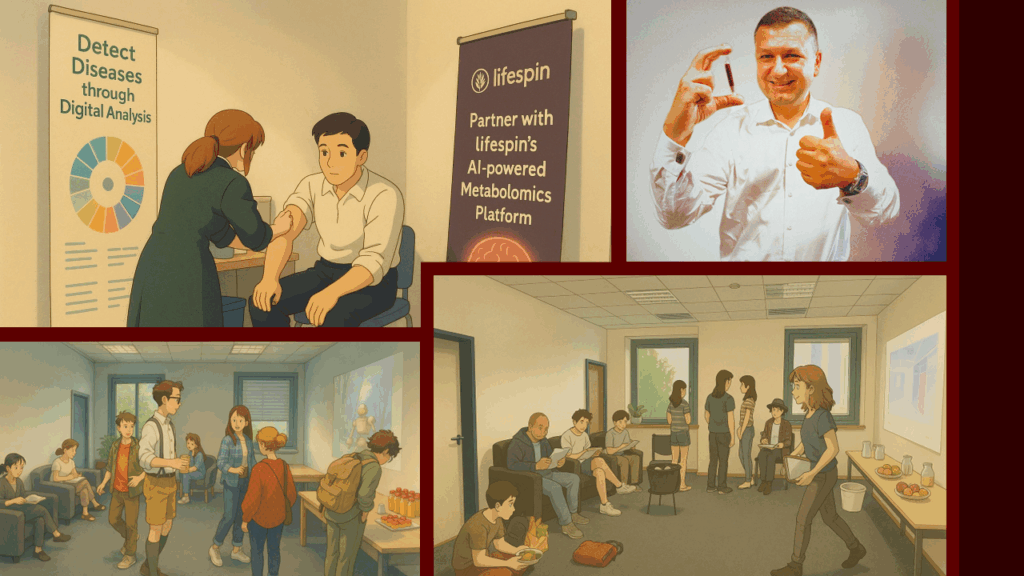
Earlier this year, lifespin held an Open Day inviting people to experience its General Health Assessment.
“In just four hours, 73 people took part,” Dr. Tinazli recalls. “It showed how ready people are for affordable, personalized health insights.”
As MedTech Malta 2025 approaches, his message to the community is warm and simple. “I am looking forward to reconnecting with my global friends on the beautiful island of Malta.”
For lifespin, precision medicine is not a futuristic concept. It is a practical step toward a world where everyone can understand their health and take action before illness begins.
Join global innovators, investors, and healthcare leaders at MedTech Malta 2025, happening from 12 to 14 November. Discover the ideas, technologies, and partnerships driving the next generation of medical innovation.
Grab your ticket to MedTech Malta 2025.