- Summits
- Sponsorship
- Retreats
- Media Opportunities
- News
- About
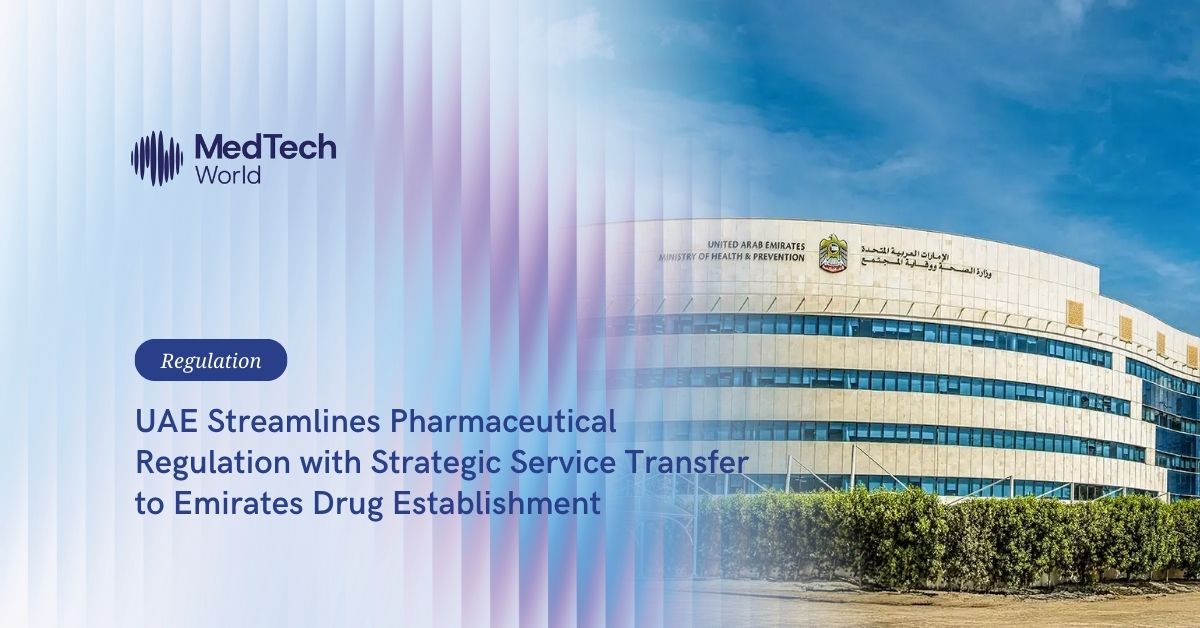
The UAE is taking another measured step towards simplifying healthcare regulation, as the Ministry of Health and Prevention (MoHAP) transfers a substantial portion of its pharmaceutical-related services to the Emirates Drug Establishment (EDE). The move is less about shifting authority and more about refining how regulation works in practice, making it clearer, more efficient, and easier to navigate for companies and professionals operating in the sector.
At its core, the transition is designed to align responsibilities with expertise. By consolidating key regulatory functions under EDE, the UAE is reinforcing a system where oversight of medicines, medical supplies, and related health products is managed through a single, specialised authority.
Healthcare regulation often involves multiple touchpoints, which can slow processes and create uncertainty for stakeholders. MoHAP’s approach addresses this directly. The transfer aims to unify mandates, clearly define institutional roles, and strengthen coordination across government entities—without disrupting service continuity.
Importantly, the shift has been implemented in phases, allowing service users to adapt smoothly while maintaining access to essential regulatory functions. For pharmaceutical companies, manufacturers, and distributors, this phased rollout reduces operational disruption and helps preserve regulatory confidence.
Under the new structure, EDE assumes full responsibility for 44 core services. These include critical regulatory functions such as:
In addition, EDE will oversee technical and compliance-related services, including product analysis, approval of pharmacovigilance officers and plans, and authorisation for the destruction of drug products. Together, these responsibilities place EDE firmly at the centre of pharmaceutical regulation in the UAE.
Not all services move entirely. Thirteen services are now jointly managed between MoHAP and EDE, reflecting their more complex regulatory nature. These include licensing and oversight of pharmaceutical facilities, health advertising approvals and appeals, complaint handling, and the regulation of emergency and psychotropic medicines.
Meanwhile, MoHAP retains direct oversight of five services related to narcotic drugs, including prescription books, custody authorisations, quota management, and approvals for hospitals and day-surgery centres. This ensures continuity where public health sensitivity and clinical oversight remain paramount.
MoHAP has been clear that this redistribution of services does not signal a reduction in its responsibilities to customers. Instead, it reflects a broader effort to reduce duplication, shorten decision-making cycles, and improve predictability across regulatory pathways.
The service transfer also aligns with the UAE’s Zero Government Bureaucracy Programme, which focuses on simplifying procedures and accelerating service delivery. By reducing the number of regulatory reference points, the customer journey becomes more direct—particularly for pharmaceutical companies operating across multiple product categories.
As the UAE continues to position itself as a regional hub for healthcare and life sciences, regulatory clarity plays a decisive role. This transition strengthens institutional governance while supporting cross-government collaboration, ensuring the system can keep pace with scientific advances and market growth.
Guided by the “We the UAE 2031” vision, the restructured framework reinforces confidence in the country’s healthcare ecosystem, one that prioritises efficiency, transparency, and long-term sustainability.
MoHAP has encouraged pharmaceutical companies and professionals to stay engaged through official channels for updates and enquiries, underscoring the importance of clear communication as the new structure settles into place. For the sector, the message is straightforward: regulation in the UAE is becoming more focused, more coordinated, and easier to navigate.
MedTech World Middle East | Dubai 2026 brings together regulators, industry leaders, investors, and innovators to discuss how healthcare systems are evolving across the GCC and beyond. Taking place in Dubai from 11 to 13 February 2026, the event provides a focused platform to exchange perspectives, build partnerships, and understand what it takes to scale MedTech solutions across regional and global markets. Reserve your place and join the dialogue in Dubai.