- Summits
- Sponsorship
- Retreats
- Media Opportunities
- News
- About

Only 6% of surgeries globally are performed using robotic systems today. That number tells two stories at once. The first is about how far surgical robotics has come. The second is about how much ground remains to be covered, and who gets left out while the industry figures it out.
For years, the conversation around surgical robotics has centred on flagship academic medical centres and major health systems with the capital, infrastructure, and procedural volume to justify the investment. Mid-sized hospitals have largely been spectators. That dynamic is beginning to shift, but the path forward is far more complex than simply lowering the price of a robot.
That tension took centre stage during the session “Surgical Robotics and Smart ORs for Mid-Sized Hospitals” at MedTech World North America 2026.
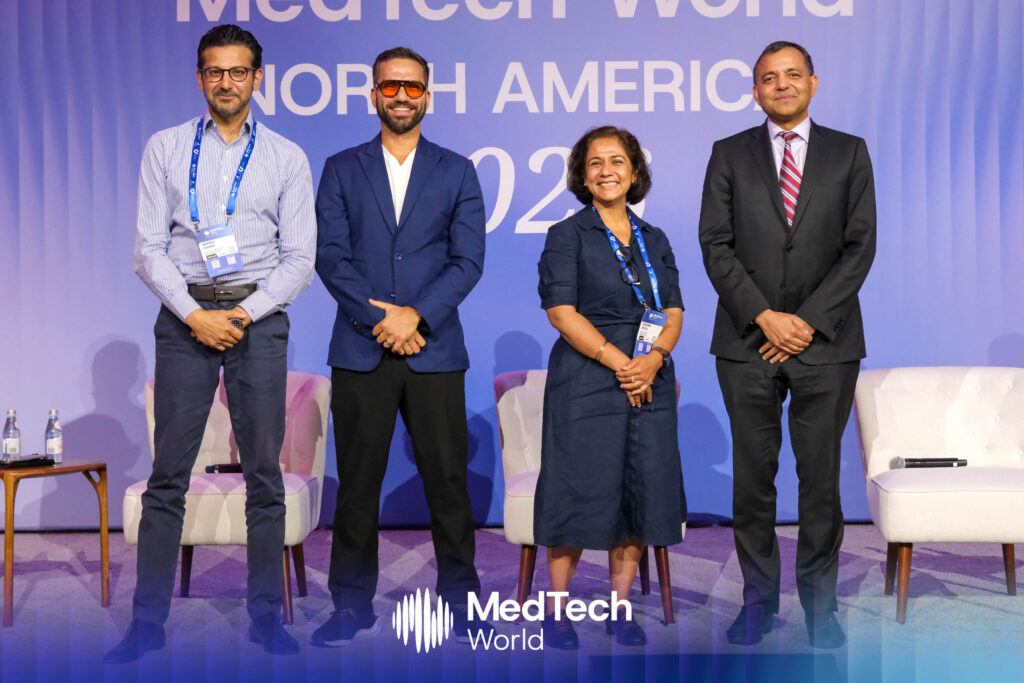
Moderated by Manish Chand, Robotic Surgeon and Technology Researcher at University College London, the discussion featured Dr. David Laith Rawaf, Director of Clinical Strategy and Partnerships at VitVio; Rachna Dayal, Managing Partner at Sugati Ventures; and Rajit Kamal, Vice President and General Manager of Surgical Robotics at Medtronic.
Together, the panel examined why the robotics market is fragmenting, what it will actually take to make robotic surgery economically viable outside of major academic centres, and how the operating room of the future is being shaped not just by hardware, but by intelligence, connectivity, and data.
A decade ago, the surgical robotics conversation was, by most accounts, a conversation about a single company. That monopoly has given way to a much more crowded and competitive landscape. Kamal noted that there are now more than a hundred different soft tissue robotic platforms either on the market or in development, a transformation that he welcomed rather than cautioned against.
He pointed out that in the United States, 26% of eligible surgical procedures are already being performed robotically, and that figure is projected to exceed 60% within the next decade. The global growth trajectory outside the US is equally significant.
Competition, Kamal argued, is precisely what the industry needed. It has placed pressure on existing players to innovate more aggressively and given healthcare systems greater leverage when evaluating their options.
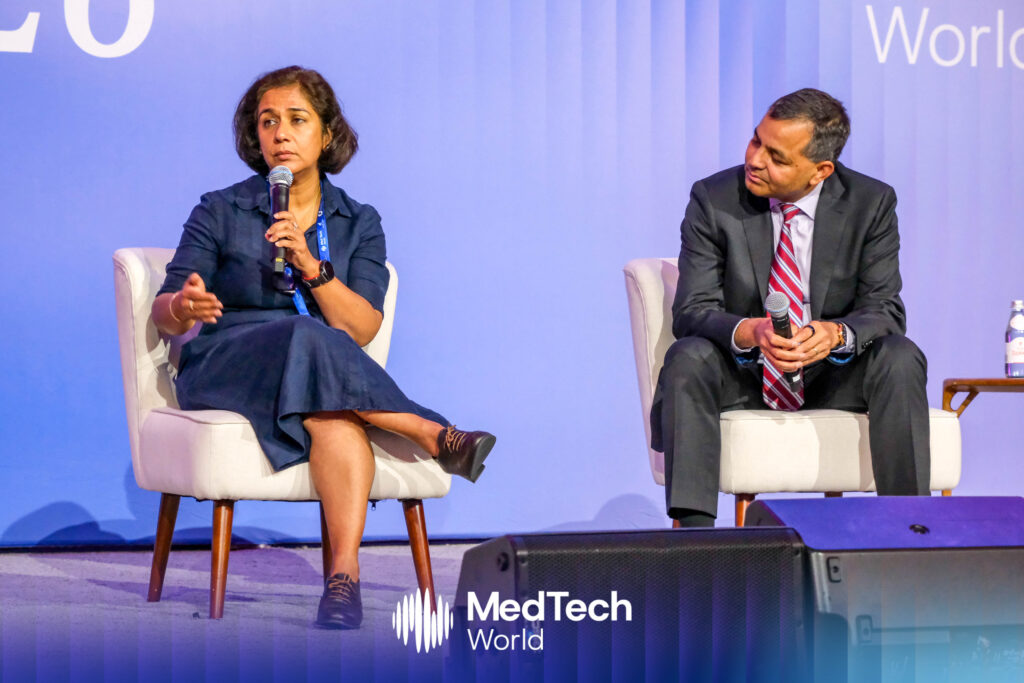
Dayal offered a complementary perspective from the investment side. She observed that the shift in care settings is quietly reshaping what the robotics market actually looks like in practice. As hospitals move increasingly toward tertiary and quaternary care for complex procedures, more routine operations are migrating to ambulatory surgery centres. That shift is creating a genuine opening for robotic platforms designed around the specific operational and financial constraints of the ASC environment.
CMS has been steadily expanding the list of procedures eligible for reimbursement in outpatient and ASC settings, which Dayal described as one of the cleaner signals driving where the next wave of robotic adoption is likely to land.
Bringing any robotic system into a mid-sized hospital or ambulatory surgery centre is not simply a capital expenditure decision. The panellists were careful to frame the economics in a way that went well beyond the sticker price of the system itself.
Kamal explained that health system administrators and ASC operators are increasingly evaluating robotics through the lens of total cost of ownership over a seven-year horizon rather than upfront acquisition cost alone. That means factoring in procedure-level economics, sterilisation requirements, training and onboarding, and the operational throughput that a system enables.
In an ASC context, where space is limited and turnover time between procedures directly affects revenue, a robotic system that adds efficiency can carry a compelling financial case even at a premium price point. One that adds complexity without a commensurate clinical benefit, by contrast, will struggle regardless of what it costs.
Chand posed the question directly: for a twenty-minute laparoscopic cholecystectomy that a skilled surgeon can perform efficiently with conventional instruments, what does a robot actually add? It was one of the sharper moments of the discussion, and the panel did not shy away from the tension it surfaced. Not every procedure benefits meaningfully from robotic assistance, and building a credible value case requires an honest answer to that question rather than a blanket claim about the superiority of robotic approaches.
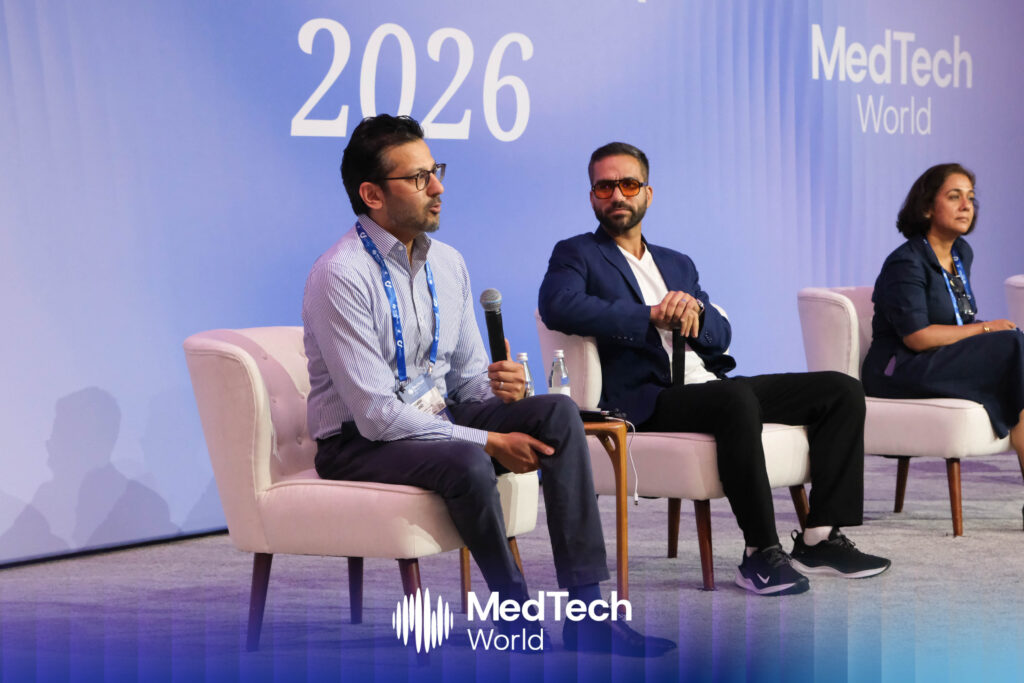
Dr. David Laith Rawaf brought a grounded clinical perspective to those questions. His central argument was that the operating room is generating an enormous volume of data, and that very little of it is being used in any systematic way to drive improvement.
The challenge, he explained, is not really a data problem. It is an interoperability problem. Different instruments, platforms, and systems in the same operating room generate siloed outputs that rarely communicate with each other. Surgeons end up managing multiple applications with no shared layer connecting them. The result is a fragmented picture of what is actually happening in the OR, with no reliable mechanism for identifying variation, tracking outcomes, or feeding insights back into clinical practice.
What VitVio is working toward is a platform that sits above individual device silos and creates a unified, ambient view of the OR environment. Rawaf described this as a kind of digital twin of the operating room, a layer capable of capturing not just what individual devices are doing, but how the full team and environment are functioning together.
That level of connectivity, he argued, is what would allow data to actually move across the care continuum from pre-operative planning through to post-operative follow-up, and to generate the insights that surgeons, hospital administrators, and technology companies need to understand where outcomes are improving and where friction still exists.
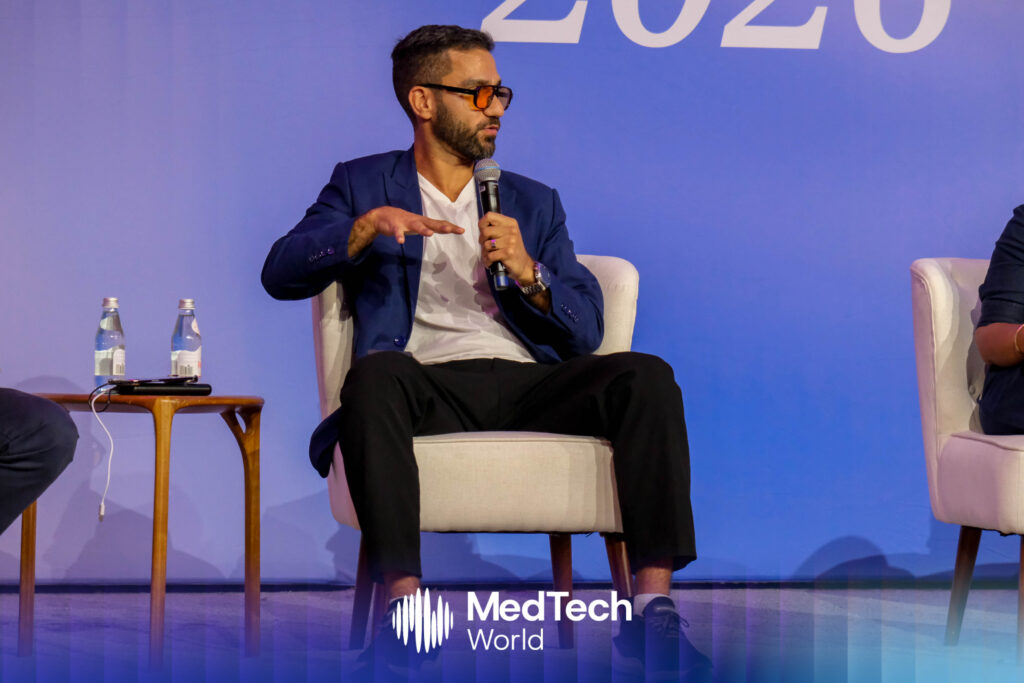
Kamal was direct about where Medtronic sees the competitive landscape heading. The hardware differences between robotic platforms are narrowing. The next major differentiation will come from intelligence — from what systems can perceive, analyse, and communicate before, during, and after a procedure.
He described the AI capabilities currently in development around Hugo, Medtronic’s soft tissue robotic platform, which launched commercially in the US earlier this year. These include intraoperative tools that can identify anatomical structures, flag critical zones during dissection, and track surgical steps in real time. Similar AI layers are being developed for Medtronic’s laparoscopic instruments, not just its robotic system.
Beyond the operating room itself, Kamal pointed to connectivity as the third pillar of where surgical technology is heading. Platforms that can link a surgeon in one location with a procedure happening elsewhere, whether for proctoring, training, or eventual teleoperation, are no longer hypothetical. The technology infrastructure for low-latency remote surgical support already exists. The remaining questions are regulatory, institutional, and cultural rather than technical.
Dayal, drawing on her investment background in semiconductors and hardware-software integration, noted that the companies most likely to move fastest in this space are not necessarily the incumbents. Smaller teams unburdened by large organisational structures can often iterate more rapidly, and the most interesting opportunities may be in building intelligent add-on layers that enhance existing robotic ecosystems rather than competing head-on with established platforms at scale.
One of the more candid exchanges of the session centred on the question of data sharing. Every robotic system in an operating room is capturing a significant volume of procedural data. In most cases, that data stays with the manufacturer, used internally to improve their own platform and not shared across systems.
Kamal acknowledged the tension directly. There is device-specific data that companies reasonably want to protect for competitive reasons. But there is also operational and outcome-level data that, as he put it, belongs to the customer. The case for establishing industry frameworks that allow the latter category of data to move freely — across systems, into EHRs, and back to health system administrators — is becoming harder to argue against.
Rawaf described the operating room of the future as an interoperable ecosystem rather than a collection of competing closed systems. Getting there will require collaboration that the industry has historically found difficult. But the pressure from health systems, who are increasingly demanding that their technology investments talk to each other, is making that conversation unavoidable.
The session closed with a question about where the next significant wave of robotic adoption is likely to emerge. The answer, across the panel, pointed consistently toward the same place: mid-sized hospitals and ambulatory surgery centres, enabled by a combination of competitive pricing pressure, CMS reimbursement expansion, and the growing availability of AI and connectivity tools that make robotics operationally viable outside the traditional academic medical centre model.
That window is opening, but it will not open automatically. The panellists were clear that the economics still need to be built carefully, that clinical champions inside health systems remain critical to adoption, and that the question of workflow integration is just as important as the question of clinical performance.
For the companies positioning themselves in this space, the message was consistent: the next decade in surgical robotics will be defined less by which platform has the most advanced hardware, and more by which platforms can prove their value across the full picture of clinical outcomes, operational efficiency, and real-world deployment inside the hospitals that have, until now, largely been left behind.
Discussions on surgical robotics, AI in the operating room, and smart hospital infrastructure will continue at MedTech World Asia 2026, taking place in Hong Kong from 26–28 August 2026. Join surgeons, investors, health system leaders, and technology innovators advancing the next chapter of surgical innovation. Secure your ticket and be part of the conversation.