- Summits
- Sponsorship
- Retreats
- Media Opportunities
- News
- About

Women’s health has a branding problem. For decades, the category has been defined almost exclusively through the narrow lens of fertility and pregnancy, a framing that has left vast areas of unmet clinical need chronically underfunded, understudied, and underserved by device innovation.
That framing is beginning to crack. But the path from recognition to fundable, commercialisable solutions remains considerably harder in women’s health than in almost any other area of MedTech. Understanding why and where the real opportunities lie was at the heart of the panel “Women’s Health Devices: Beyond Fertility and Pregnancy” at MedTech World North America 2026.
Moderated by Desert Horse Grant, Lead of Innovation at Sylvester Comprehensive Cancer Center, the session featured Addie Harris, Partner at Precision Life Science Partners; Thorsten Waloschek, CEO of NeoPredics; Darshana Zaveri, Founder and Managing Partner at Catalyst Health Ventures; and Dr. Ashraf Affan, Founder and CEO at Angel Kids Pediatrics and Behavioral Health.
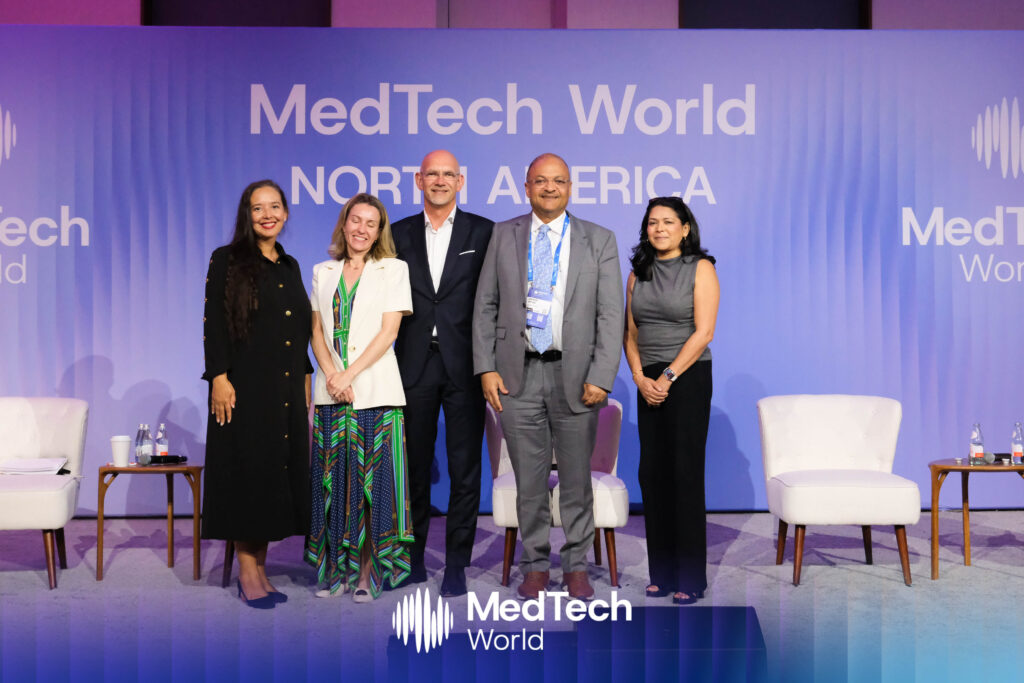
The panel opened with a question that set the tone for everything that followed: Where are the most overlooked opportunities for device innovation in women’s health today?
Zaveri was direct. Anything involving uterine health, including excessive bleeding, endometriosis, fibroids, and polyps, represents a significant unmet need where device-based solutions remain scarce. Pelvic floor disorders and overactive bladder have seen some attention, but menopause is a space where almost nothing meaningful has been built. Ovarian cancer screening stood out as a particularly urgent gap: a largely asymptomatic disease where the majority of women are diagnosed at stage four and survival rates remain devastatingly low.
Dr. Affan brought a different lens to the table, that of a paediatrician watching downstream consequences play out in real time. Preterm birth, he argued, is one of the most economically devastating outcomes in all of healthcare, generating enormous NICU costs and lifelong complications for children born too early. The business case for prevention is compelling on paper. The structural misalignment between who pays for the solution and who benefits financially from the current system has kept innovation slow.
Waloschek reinforced that point. His company, NeoPredics, works in predictive analytics for maternal and neonatal care, forecasting jaundice, preterm delivery, and preeclampsia before they become crises. The problem, he observed, is not always a lack of technology. It is a failure to use the technology that already exists. Hospitals are sometimes not incentivised to prevent the very outcomes that generate their highest revenue streams.
When Zaveri put on her investor hat, the conversation sharpened considerably. The fundamental challenge for women’s health devices, she explained, is not a lack of clinical need. It is a lack of buyers. The exit landscape is thin. Without a robust pool of potential acquirers, companies either need to build towards an IPO with a TAM in the tens of billions, or accept that the path to liquidity will be long, capital-intensive, and uncertain.
Harris echoed this from a market-sizing perspective. The few sizable acquirers that exist, primarily in imaging, are not sufficient to support a healthy acquisition market across the breadth of conditions that fall under the women’s health umbrella. Non-dilutive funding, capital efficiency, and building towards a portfolio of products rather than a single-asset company are all strategies that can improve odds, but none of them make the fundamental structural challenge disappear.
Waloschek drew attention to an adoption challenge that is easy to overlook from a US-centric vantage point. The clinical management of preterm birth, preeclampsia, and neonatal conditions varies dramatically not just between continents, but between individual European countries. A device designed around a US clinical workflow may face completely different regulatory expectations, reimbursement structures, and clinical norms in Germany than in Italy. For resource-constrained startups, the aspiration to scale globally runs directly into the reality of building effectively for multiple distinct markets simultaneously.
The session ended with a forward-looking question to the panel, asking where the next meaningful wave of women’s health innovation is going to come from.
Dr. Affan’s answer centred on continuity. Too much of the innovation conversation treats mother and baby as separate clinical units at separate stages. A longitudinal model that optimises the pregnancy through to postpartum and tracks the wellbeing of the mother-infant unit as a single system, nutritionally, behaviorally, and physiologically, represents a fundamentally different and more impactful approach.
Waloschek offered a striking frame for why getting this right matters beyond the immediate clinical context. He coined the term “newgevity,” the idea that longevity, increasingly the central preoccupation of health innovation, actually begins at the moment of birth and in the conditions surrounding it. Getting the beginning of life right is the most powerful lever we have on lifetime health outcomes. That reframing, if it gains traction, could meaningfully change how investors and health systems think about the economic case for investing in this space.
Discussions on women’s health innovation, funding strategy, and device commercialisation will continue at MedTech World Asia 2026, taking place in Hong Kong from 26–28 August 2026. Secure your ticket and be part of the conversation.