- Summits
- Sponsorship
- News
- About
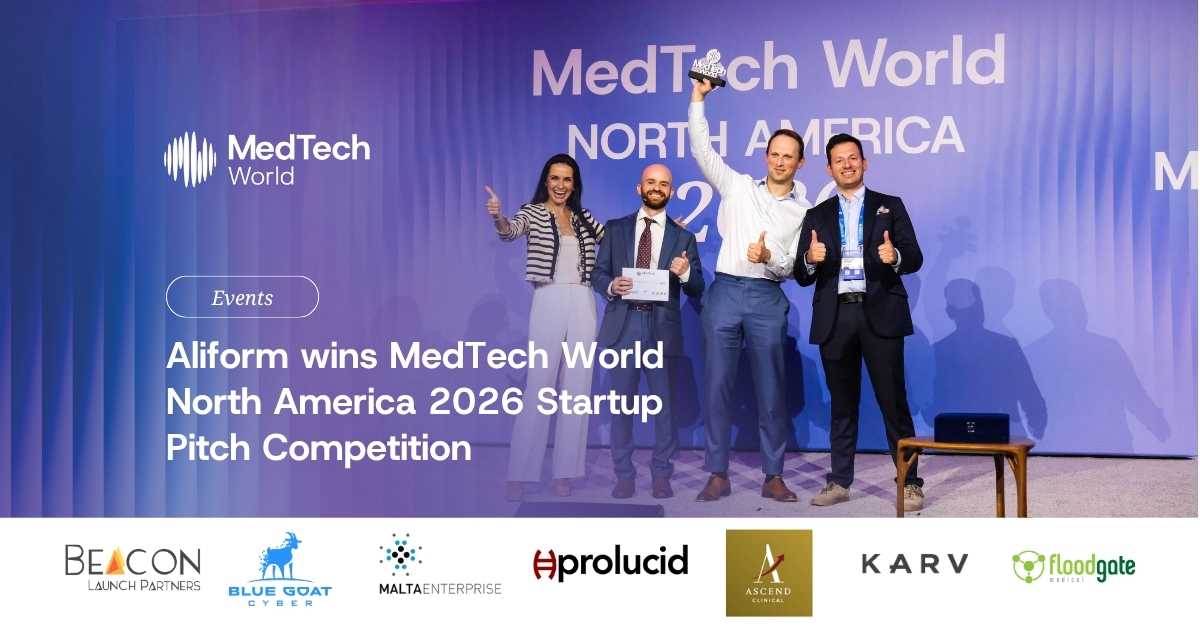
The MedTech World Startup Pitch Competition at the MedTech World North America 2026 concluded with a winning presentation from Victor Suturin, Founder and CEO of Aliform, whose pitch focused on addressing one of plastic surgery’s persistent post-procedure challenges: fibrous skin adhesions.
This year’s pitch competition was powered by Ascend Clinical Research, Beacon Launch Partners, Blue Goat Cyber, FloodGate Medical, KARV, Malta Enterprise, and Prolucid Technologies.
Opening his presentation with a statistic that immediately framed the scale of the opportunity, Suturin noted that around 20 million plastic surgery procedures are performed annually worldwide. He then narrowed the focus to a single patient story, describing a liposuction patient who underwent multiple revision procedures after developing skin adhesions that distorted her surgical results.
According to Suturin, the first three revisions failed to resolve the issue. It was only during the fourth procedure, when the surgeon used Aliform’s product, Celluleaf, that the adhesions were successfully released.
“Celluleaf is a distillation of five years of development with one goal in mind, to turn the tethering problem from a stop sign into a speed hump for the plastic surgeon,” Suturin explained during the competition.
The device is designed to address fibrous bands that pull the skin downward after procedures such as liposuction. During the pitch, Suturin described how surgeons insert a thin cannula, then deploy a specially designed blunt wire, known as the “leaf,” to manually release the tethered tissue. Unlike energy-based or cutting devices, the technology relies on blunt dissection to break up the adhesions.
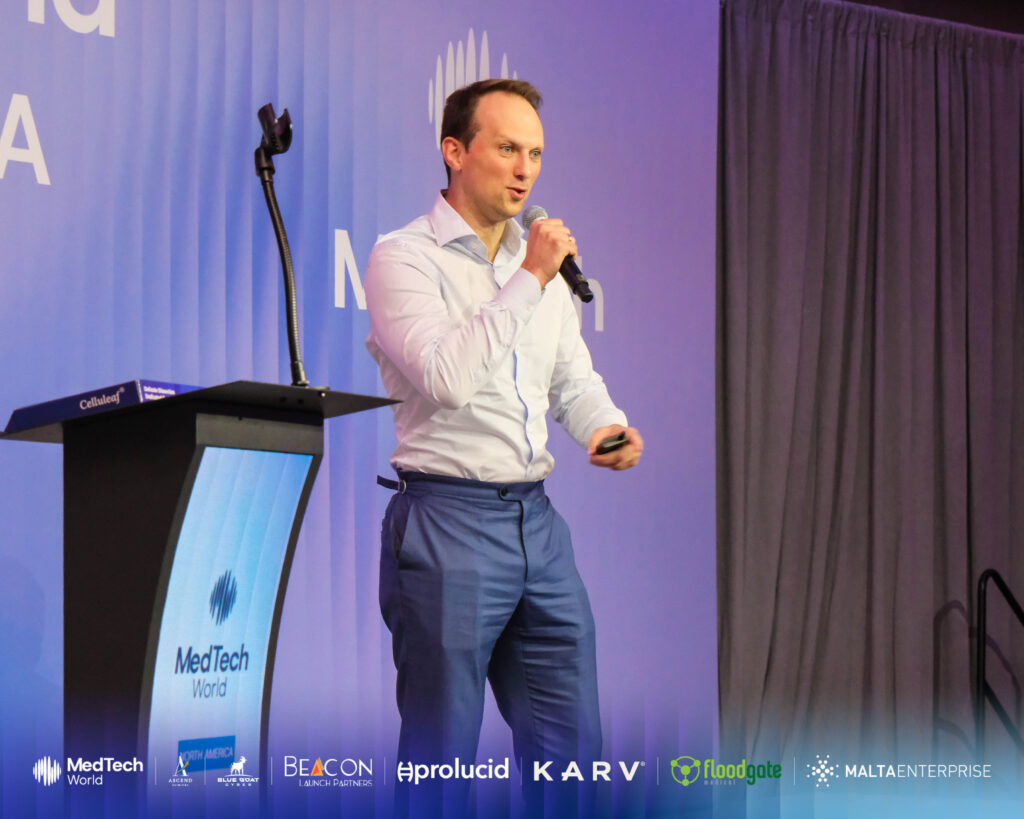
To demonstrate the product’s commercial potential, Suturin outlined the economics behind it. Clinics charge between $3,000 and $6,000 per procedure, while the single-use Celluleaf device costs approximately $1,000. He estimated that the U.S. market alone includes more than 15,000 plastic surgery clinics, with surgeons performing anywhere between 50 and 200 procedures annually.
Suturin shared that Celluleaf is now available in the United States and Canada after five years of development and is already being used by more than 10 surgeons across 15 clinical applications, including fibrous adhesions, cellulite, and lipedema. He also revealed that the company completed its first 20 sales last month.
Rather than immediately scaling aggressively, Suturin emphasized that Aliform’s current priority is validating repeat sales and refining its commercialization strategy.
“The next goal, as framed to us by our strategics, is ten to twenty clinics with repeat sales,” he said. “We do that, we prove commercial viability.”
The judges used the Q&A session to explore the broader implications of the technology. When asked whether the device causes additional injury or scarring, Suturin clarified that the procedure instead relieves existing scar tension and restores a more natural force distribution beneath the skin. He compared the process to “breaking the weeds of the soil.”
The discussion also explored future applications beyond aesthetics, including breast reconstruction after cancer treatment, radiation fibrosis, traumatic scar correction, and smaller cosmetic procedures performed in med spas.
When questioned about reimbursement pathways, Suturin explained that reconstructive applications may qualify for reimbursement codes, but Aliform is initially focusing on the private-pay aesthetics market to build traction while preparing for larger clinical studies in the future.
The company currently operates from the Texas Medical Center in Houston, with a production subsidiary in the Netherlands. Suturin noted that Aliform’s 10-person team has largely been composed of scientists and PhDs during the product development phase, with the company now beginning to expand its commercial expertise as it enters the U.S. market.
As the pitch neared its conclusion, one of the judges raised the potential impact of GLP-1 weight-loss drugs on the market opportunity. Suturin agreed that significant weight loss often leads to contour irregularities and additional aesthetic procedures, creating further demand for technologies that address tissue tethering and skin irregularities.
The presentation resonated strongly with both judges and attendees, ultimately earning Aliform the top prize in the MedTech World Startup Pitch Competition at MedTech World North America 2026.
Attention is already turning toward the next edition of MedTech World North America 2027, with pre-registrations now open for the event taking place from May 5–7, 2027. Alongside discussions on investment, innovation, and commercialization, the 2027 edition will also introduce dedicated startup tracks designed to further support early-stage companies navigating growth, partnerships, and market entry within the global MedTech ecosystem.