- Summits
- Sponsorship
- Retreats
- Media Opportunities
- News
- About
Lung cancer diagnostics are at a turning point. Advances in genomic testing have made it possible to detect disease earlier and match patients to more precise treatments, yet access remains uneven. High costs, technical complexity, and infrastructure requirements still limit how widely these tools are used in everyday clinical settings.
A Belfast-based biotech startup, Biomarx, wants to change that.
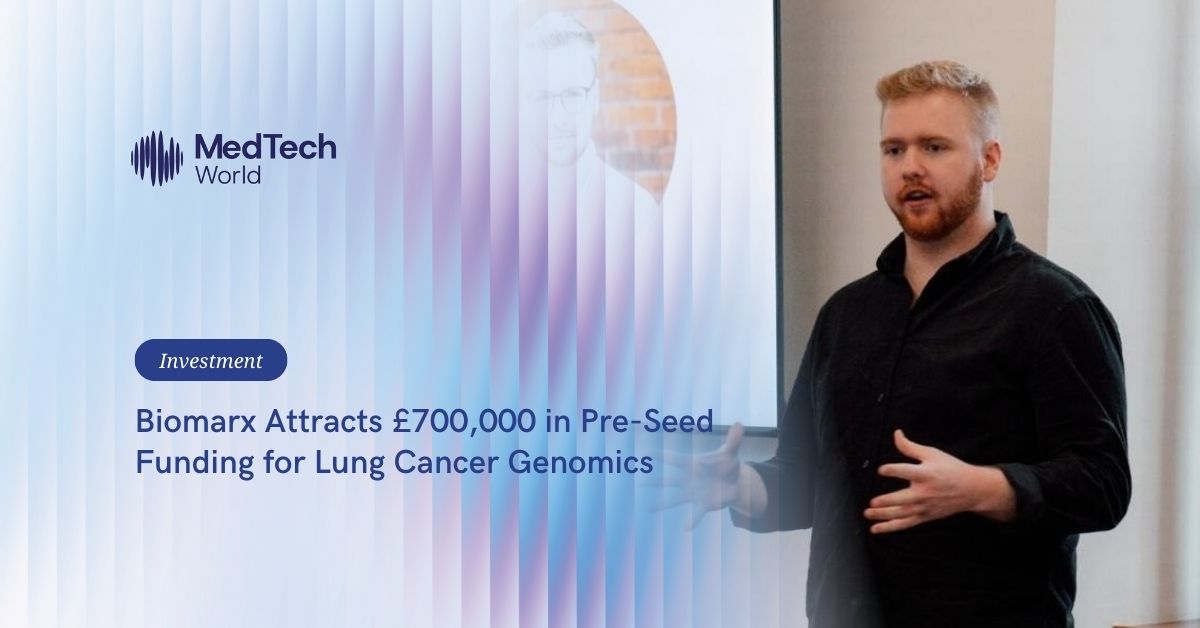
Founded by Sean Macfarlane, Biomarx has secured £700,000 (€806,167) in pre-seed funding to advance a diagnostics platform designed to lower the barriers to next-generation sequencing. The goal is straightforward but ambitious: make high-quality genomic testing faster, more affordable, and easier to adopt in clinical practice.
With the new funding, Biomarx is moving beyond proof of concept and into its next development phase. The company plans to build a minimum viable product, pursue ISO 13485 accreditation, and conduct an initial lab-based clinical study. Together, these steps are intended to lay the groundwork for regulatory readiness and early validation.
At the core of Biomarx’s approach is automation. The company is developing a plug-and-play diagnostics platform that removes much of the technical complexity associated with liquid biopsy testing. By simplifying workflows and reducing manual steps, the platform aims to support broader clinical adoption without compromising quality.
Biomarx’s first test kit will target non-small cell lung cancer (NSCLC), one of the most commonly diagnosed cancers worldwide. The test uses circulating tumour DNA (ctDNA) to enable earlier detection and support more informed treatment stratification.
The funding round was led by SFC Capital, which manages one of the UK’s SEIS funds, alongside Clarendon Fund Managers, a Belfast-based venture capital firm. Additional backing came from the University of Strathclyde, TechStart Ventures, and a group of angel investors.
As part of its next phase, Biomarx will be based in Glasgow, working closely with the University of Strathclyde. Named Entrepreneurial University of the Year in 2023, the institution has a strong record in deep-tech commercialisation and in translating in-vitro diagnostic research into market-ready products.
Biomarx had already begun to build momentum late last year, when it emerged as a regional winner in InterTrade Ireland’s Seedcorn competition, securing £50,000 after taking the top spot in the deep tech category.
By tackling cost, complexity, and speed at once, Biomarx is positioning its platform as a practical bridge between genomic innovation and real-world clinical use. If successful, the company’s approach could help reduce disparities in access to personalised cancer care, starting with lung cancer, but with potential to extend further.
For now, the focus is clear: build a robust, automated diagnostics platform that helps clinicians act earlier and with greater confidence, when it matters most.
As genomic diagnostics continue to move closer to routine clinical use, conversations around access, validation, and real-world adoption remain central to the MedTech ecosystem. These topics will be explored further at MedTech World Middle East | Dubai, taking place from 11 to 13 February 2026, where founders, clinicians, investors, and industry leaders come together to discuss the practical pathways from innovation to implementation. Reserve your place to be part of the discussion.