- Summits
- Sponsorship
- Retreats
- Media Opportunities
- News
- About
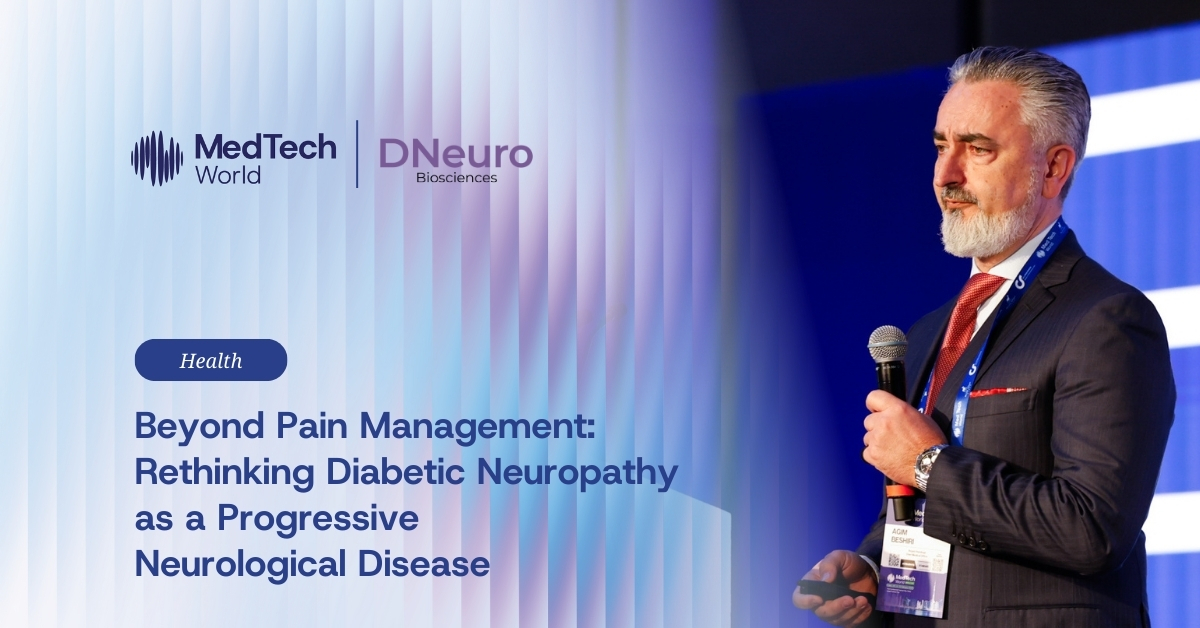
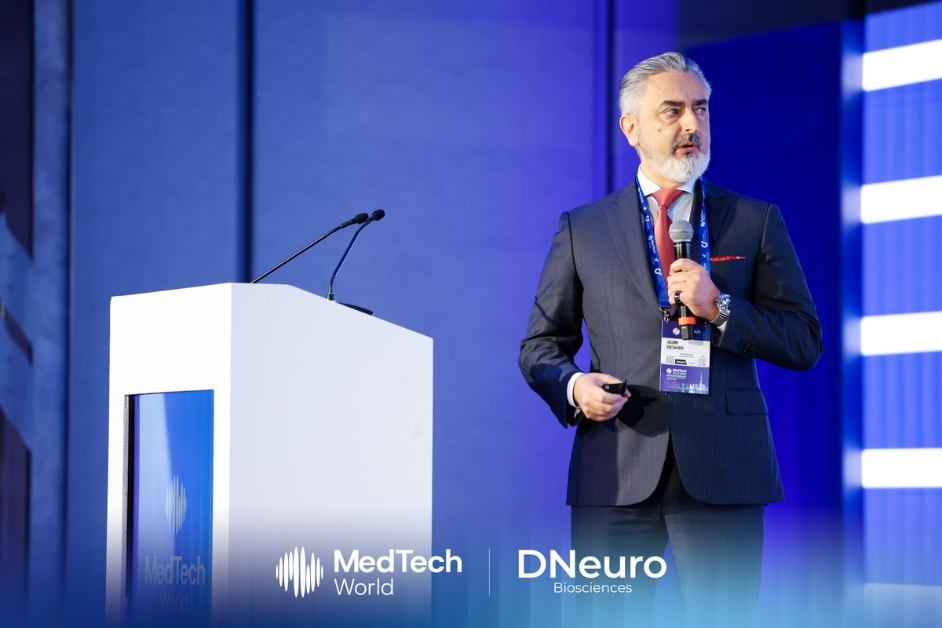
For decades, diabetic neuropathy has been framed largely as a pain condition, managed once discomfort becomes severe enough to demand attention. Yet this pain-centric approach, while understandable, risks obscuring the true nature of the disease. According to Dr. Agim Beshiri, Chief Medical Officer at DNeuro Biosciences, pain is not the disease itself, but merely its most audible signal.
“Pain is the loudest symptom, not the pathology,” he explains.
“By centering diabetic neuropathy around pain, we ignore the silent and progressive loss of nerve structure and function that begins long before patients report discomfort.”
This distinction matters. Many patients with advanced neuropathy report reduced pain over time, not because the disease has improved, but because nerve fibers have degenerated to the point where they can no longer transmit signals. Clinically, that absence of pain can create a dangerous illusion of stability while neurological damage continues unchecked.
Viewed through a neurological lens, diabetic neuropathy is better understood as a progressive neurodegenerative disease. Chronic metabolic stress, inflammation, microvascular compromise, mitochondrial dysfunction, and impaired neurotrophic signaling collectively drive axonal degeneration and demyelination. Sensory loss, motor impairment, autonomic dysfunction, and impaired balance are not secondary complications; they are direct consequences of ongoing nerve injury.
Treating diabetic neuropathy as a symptom-driven condition delays intervention until meaningful damage has already occurred. By the time pain prompts treatment, histopathological changes may have been developing for years. Dr. Beshiri notes that many patients have already lost 30–50% of small nerve fiber density at first presentation. At that stage, reversal is unlikely. The realistic goal becomes preservation rather than recovery.
Current standards of care reflect this late-stage intervention model. Available therapies focus almost exclusively on pain modulation, largely because pain is measurable, regulatory pathways are established, and short-term outcomes are easier to demonstrate. However, these therapies do not address nerve metabolism, do not protect axons, and do not promote regeneration.
“Pain relief alone does nothing to stop sensory loss, motor decline, balance dysfunction, or loss of protective sensation,” says Dr. Beshiri. “Patients may feel better while becoming objectively worse.”
This disconnect has long-term consequences. Progressive sensory loss increases the risk of falls, ulcers, infections, and amputations. Functional decline erodes independence and often leads to preventable hospitalisations, long-term care, and escalating healthcare costs. What begins as a neurological problem ultimately becomes a systemic burden.
DNeuro Biosciences approaches diabetic neuropathy from a fundamentally different starting point: the assumption that it is a neurodegenerative disease requiring neuroprotective and neuroregenerative treatment strategies. Rather than targeting symptoms, the company’s development efforts focus on preserving axonal health, reducing neuroinflammation and oxidative stress, correcting mitochondrial dysfunction, and restoring the biological environment necessary for neuronal survival and regeneration.
In practical terms, this means designing therapies that intervene at the level of disease biology, not symptom perception. Pain reduction may occur, but it is not the primary endpoint. Altering the disease trajectory is.
This approach aligns closely with what clinicians observe in real-world practice. The paradox of improving pain alongside worsening sensation disappears when nerve degeneration—not pain—is treated as the core problem.
While early diagnosis is widely recognised as important, Dr. Beshiri emphasises a critical limitation: clinicians have historically lacked effective treatment options capable of modifying disease progression. As a result, diagnostic practices have had limited impact on long-term outcomes.
“Clinicians are doing their best with diagnosis,” he notes, “but without neuroprotective or neuroregenerative therapies, there has been little they can do beyond symptom control.”
The emergence of disease-modifying treatments has the potential to change this dynamic. Once effective therapies are available, greater emphasis can be placed on identifying sensory loss earlier, even before pain becomes prominent, allowing intervention at a stage when nerve preservation is still achievable. Dr. Beshiri likens this shift to managing cardiovascular disease before the first heart attack, rather than after.
Moving beyond pain management as the central treatment goal reframes success for both patients and healthcare systems. For patients, success means preserved sensation, maintained mobility, and delayed or avoided disability. For healthcare systems, it means fewer falls, ulcers, amputations, and long-term care placements, shifting resources away from crisis management and toward prevention.
This shift is no longer theoretical. Advances in neurobiology, mitochondrial medicine, and regenerative neuroscience have begun to align scientific capability with long-standing clinical observations. According to Dr. Beshiri, DNeuro Biosciences has already demonstrated this alignment through human study data, reinforcing confidence that altering the trajectory of diabetic neuropathy is achievable.
At the core of DNeuro Biosciences’ strategy is a simple clinical insight: pain does not track disease progression in diabetic neuropathy. Nerve degeneration does. This principle informs every aspect of the company’s pipeline, from target selection to clinical endpoints.
“We are not developing analgesics with neurological side effects,” Dr. Beshiri says.
“We are advancing neuroprotective and neuroregenerative, disease-modifying interventions designed to change the natural history of diabetic neuropathy.”
As the field begins to reconsider long-held assumptions, this reframing may mark a turning point, one where diabetic neuropathy is no longer managed after damage has occurred but treated as the progressive neurological disease it has always been.
Join leading clinicians, researchers, investors, and founders at MedTech World North America | West Palm Beach (11–13 May 2026) as they explore the next generation of therapies and technologies transforming healthcare.
Secure your place and be part of the conversations defining what comes next in MedTech.