- Summits
- Sponsorship
- Retreats
- Media Opportunities
- News
- About
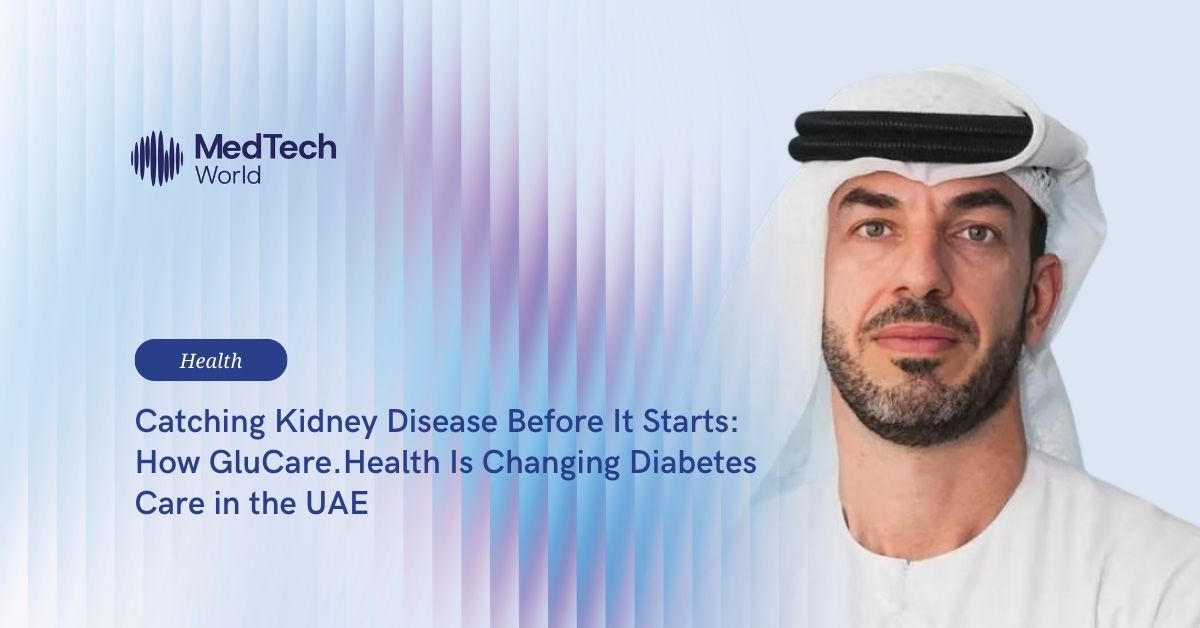
For many people living with diabetes, kidney disease does not arrive with warning signs. It develops quietly, often over years, and by the time standard tests raise a red flag, damage may already be hard to reverse. This gap between what is happening inside the body and what the healthcare system can detect has long been one of the biggest challenges in diabetes care.
GluCare.Health believes that gap should not exist.
The UAE-based metabolic health provider has introduced a new biomarker test that looks far earlier into the disease process, offering patients and clinicians a clearer picture of kidney health before traditional measures show anything wrong. With the launch of the uPTM-FetA test, GluCare has become the first provider in the UAE to offer this form of early detection for diabetic kidney disease (DKD).
Diabetic kidney disease does not begin with obvious symptoms. At its earliest stages, subtle processes like inflammation and fibrosis are already underway. During this phase, a modified protein called Fetuin-A is released into the urine. The uPTM-FetA test is designed to detect this signal early, sometimes one to two years before changes appear in commonly used markers such as UACR or eGFR.
That timing matters. Studies show that up to 40 percent of people with DKD can still present normal kidney function when assessed with standard tests alone. For patients, this often means reassurance when vigilance is needed most.
“By implementing the uPTM-FetA biomarker test into routine diabetes check-ups, we enable our care team to protect kidneys before irreversible damage occurs and not when it’s too late, which is what we currently see in the traditional healthcare system, ” said Dr. Ihsan Almarzooqi, Co-founder and Managing Director of GluCare.Health, in a statement.
Rather than replacing existing diagnostics, the uPTM-FetA test works alongside them. Its value lies in foresight: identifying people who are on a trajectory toward kidney disease long before symptoms or conventional abnormalities appear.
This earlier insight allows clinicians to act sooner. Patients identified as higher risk can begin protective therapies earlier, adjust lifestyle factors with greater urgency, and undergo closer monitoring. Those at lower risk can continue with standard care, reassured by clearer data rather than assumptions.
Dr. Almarzooqi sees this approach as a necessary evolution in diabetes management. “We cannot wait until guidelines change – there are so many innovations occurring that a forward-thinking provider has to constantly be tweaking their care model of what they test in terms of diagnostics, and what they do in terms of their care plan and therapeutics. As one of the leading metabolic health providers globally in terms of outcomes, transparency, and peer-reviewed publications, many providers look at our care model as the benchmark of what they should be implementing into their care pathways and what the future of health looks like.”
The test is not offered in isolation. It is embedded within GluCare’s wider diabetes and prediabetes care programme, which blends clinical care with continuous monitoring and lifestyle support.
Patients work with dietitians, exercise specialists, and lifestyle coaches as part of routine treatment, not as optional add-ons. Wearable technologies such as continuous glucose monitors and devices like the Oura ring provide ongoing data on sleep, activity, stress, and glucose patterns. These digital biomarkers help clinicians and patients understand how daily choices influence long-term outcomes.
This model is a response to a persistent challenge in the region. Despite access to care, around 70 percent of people with type 2 diabetes in the UAE are still classified as uncontrolled under traditional systems. GluCare’s approach aims to address not just blood sugar levels, but the behaviours and early biological signals that drive long-term complications.
Founded in 2020, GluCare.Health has positioned itself as a hybrid, vertically integrated metabolic health platform, combining clinical expertise with data-driven tools. It is the first healthcare provider globally to integrate Continuous Metabolic Monitoring into standard care and the first to receive accreditation from the International Consortium for Health Outcomes Measurement (ICHOM).
With multiple clinics in the UAE and plans to expand into the UK and US over the coming years, GluCare’s focus remains consistent: detect problems earlier, personalise care more precisely, and give patients a clearer understanding of their health before complications take hold.
Early diagnostics, continuous monitoring, and proactive care models are reshaping how chronic diseases are managed across the region. These themes will be explored in depth at MedTech World Middle East | Dubai, taking place from 11 to 13 February 2026, where healthcare leaders, clinicians, innovators, and investors will examine what it takes to move from reactive treatment to earlier, more personalised care pathways. Reserve your slot now.