- Summits
- Sponsorship
- Retreats
- Media Opportunities
- News
- About
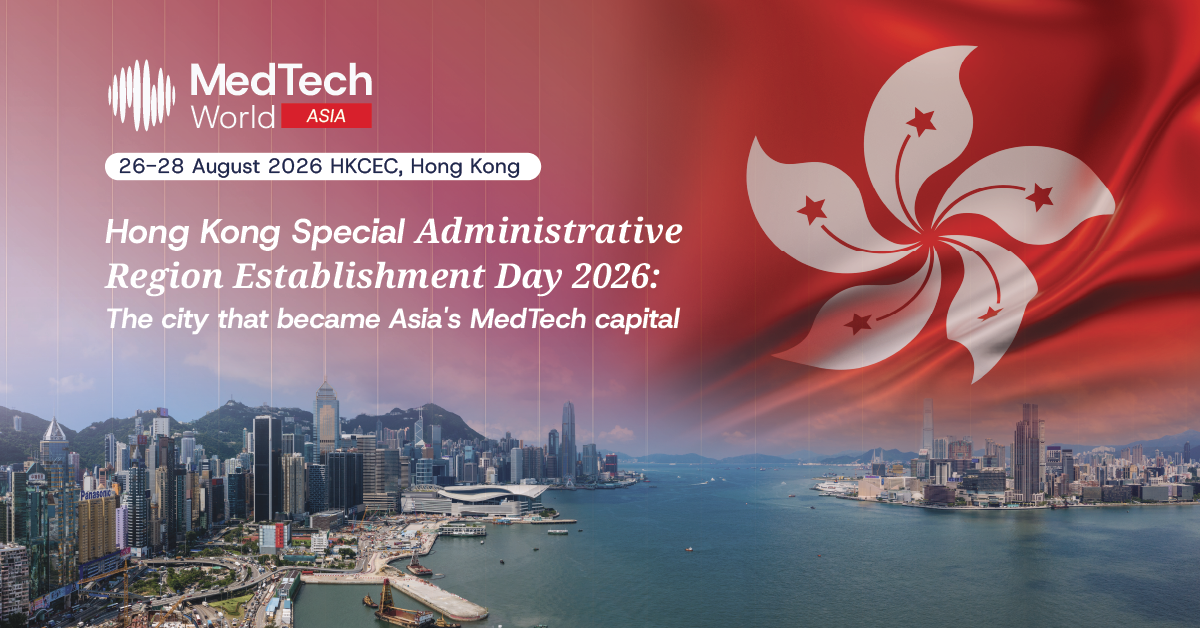
On 1 July 1997, the world watched as a flag was lowered and another raised over Victoria Harbour. Pundits debated what Hong Kong would become. Banks hedged. Multinationals quietly stress-tested their contingency plans. Twenty-eight years on, the answer is in: Hong Kong didn’t just survive the handover. It quietly became one of the most strategically important cities in the world and, for the global MedTech industry in particular, it is now arguably the single most consequential place to do business in Asia.
That is not celebratory talk. That is the data.
In the years since 1997, Hong Kong did something remarkable: it held its ground as an international financial centre while simultaneously becoming the primary gateway into the world’s most complex and lucrative market. It ranked #1 globally for biotech IPOs in 2025. HKEX-listed firms have raised $17.5 billion in biotech financing since 2018. There are 1,500 VC funds in the city managing over $200 billion in assets. The combined healthcare market cap on the exchange sits at HK$4.8 trillion.
These are not the numbers of a city in decline. They are the numbers of a city that spent 29 years building a moat that no other city in Asia can cross.
But the more important story for MedTech isn’t what’s inside Hong Kong. It’s what’s directly behind it.
The Greater Bay Area, Hong Kong, Shenzhen, and Guangzhou have quietly become the most productive medical technology corridor on earth. Eighty-six million people. A combined GDP exceeding $2 trillion. And behind those figures, a supply chain capability so compressed that a concept validated in Hong Kong can be manufactured at scale in Shenzhen within weeks. Not quarters. Weeks.
The Pearl River Delta has long been the world’s production floor. What has changed is the sophistication of what it produces and the speed at which it operates. The Shenzhen Bay Laboratory, a government-funded biomedical research hub, now anchors a GBA life sciences cluster with world-class wet lab infrastructure accessible directly from the Hong Kong border. The Qianhai International Innovation Zone, a GBA free-trade zone offering fast-track business registration, cross-border data flows, and MedTech-specific incentives, is operational and actively courting companies using Hong Kong as their regional base.
Guangzhou adds clinical trial volume. Shenzhen adds manufacturing scale and AI engineering talent. Hong Kong provides the capital, the legal framework, and the international credibility that make the whole corridor accessible to companies from New York, London, Munich, and Sydney.
The three cities are, in practical terms, one economic zone. Hong Kong is the front door. The GBA is the factory, the lab, and the market, all within one hour.
In December 2025, Hong Kong’s eHealth portal launched cross-border record sharing with designated mainland institutions, connecting 6.3 million users across the border. It is the only functioning cross-border health data bridge in Asia.
For digital health companies, remote monitoring platforms, and AI diagnostics businesses, this is not a regulatory footnote. It is a commercial unlock, the removal of one of the most persistent barriers to mainland market entry. And it happened in Hong Kong, precisely because Hong Kong is the only city in the world where the legal, regulatory, and diplomatic conditions for something like this could be assembled.
The GBA is also home to some of the most important companies in global MedTech: Mindray, the world-leading patient monitoring company; United Imaging, whose AI-powered diagnostic imaging systems are reshaping radiology; and BGI, the genomics giant operating across research, diagnostics, and precision medicine. All of them sit within 45 minutes of the Hong Kong Convention & Exhibition Centre.
China’s 37,000-plus hospitals represent a distribution opportunity that most global MedTech companies are still trying to find the right entry point for. The HK-GBA corridor is that entry point.
This is precisely why MedTech World chose Hong Kong to host its Asia flagship event, and why that decision was straightforward from the moment it was considered.
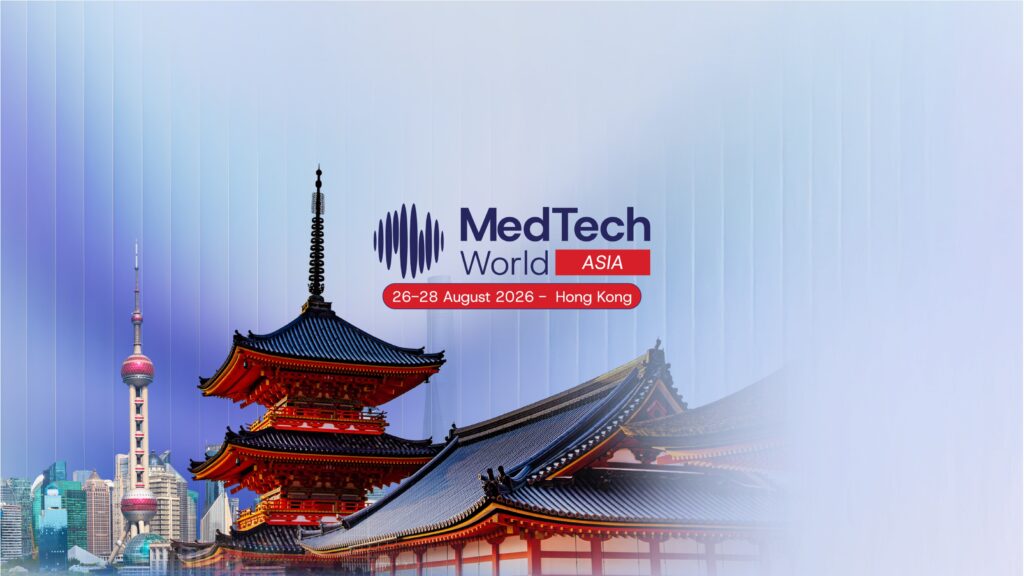
MedTech World Asia 2026 takes place 26-28 August at the Hong Kong Convention & Exhibition Centre. It brings together hospital executives, regulators, investors, founders, and corporate strategists from across the globe at the one location that connects every element of the MedTech value chain: the capital markets, the regulatory bridge, the manufacturing corridor, and the market itself.
On 1 July 1997, the question was what Hong Kong would become. On 1 July 2026, the answer is clear, and in less than eight weeks, MedTech World will be there to prove it.