- Summits
- Sponsorship
- Retreats
- Media Opportunities
- News
- About
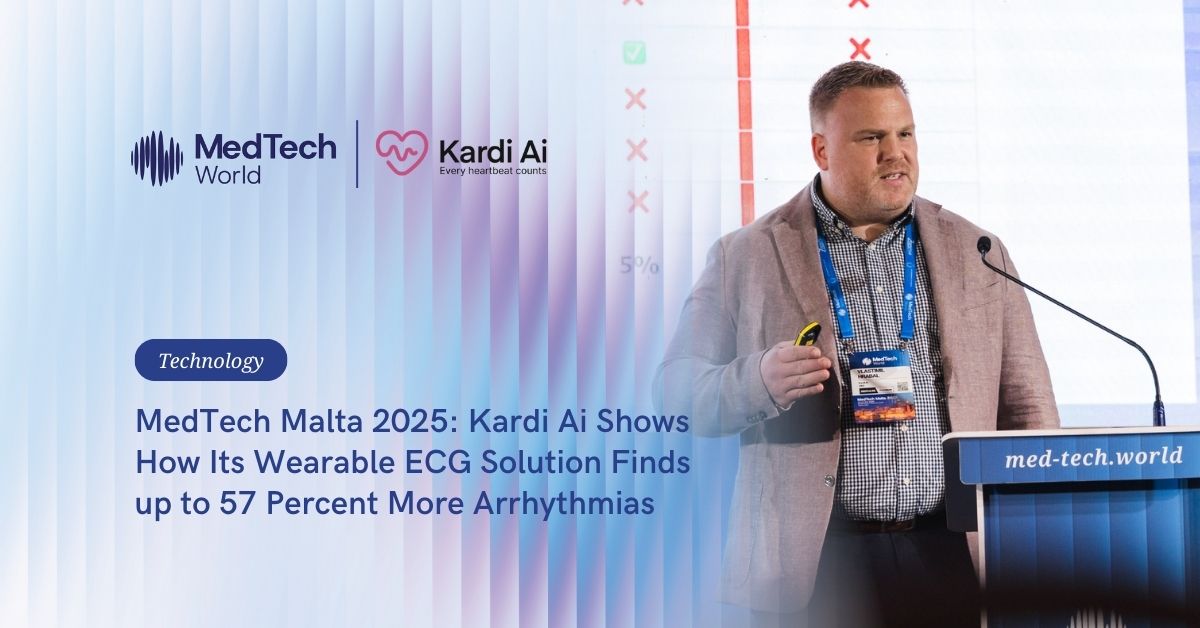
On Day 1 of MedTech Malta 2025, Vlastimil Hrabal, CEO of Kardi Ai, took to the La Valette Stage at the Mediterranean Conference Centre to present a clear message: long-term, accessible, medical-grade heart monitoring can save lives, and the world urgently needs it.
Hrabal opened his session by outlining the global burden of cardiovascular disease. The numbers are difficult to overlook. Cardiovascular disease remains the leading cause of death across Europe, Asia, and the United States, with millions of deaths each year and a combined economic impact that stretches into the hundreds of billions.
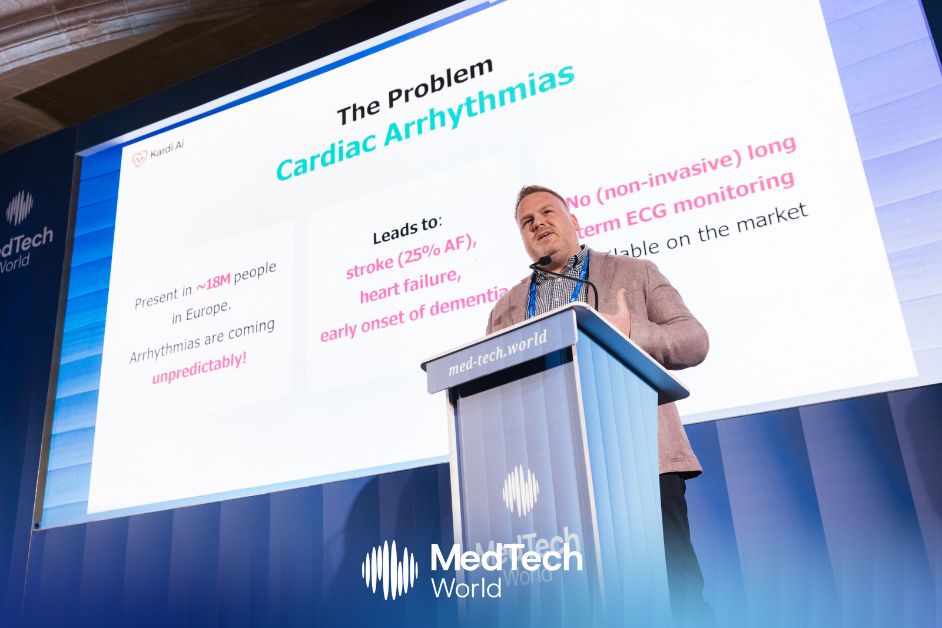
Arrhythmias were front and centre in the presentation. Hrabal noted that around 18 million people in Europe live with arrhythmias, many of which appear without warning. These irregular heart rhythms play a major role in stroke, heart failure, and early dementia. Despite the severity of the issue, he highlighted a significant gap in care. There is currently no widely available, non-invasive way to monitor ECG activity for months at a time, which means many arrhythmias go undetected.
Hrabal introduced Kardi Ai as a solution designed specifically to fill this gap. The company uses artificial intelligence to enable continuous, long-term ECG monitoring with a wearable device made for everyday use.
Kardi Ai’s mission is to turn continuous ECG signals into an intuitive interface that doctors can easily interpret. The goal is preventive screening and remote monitoring at scale, especially for individuals who are most likely to develop cardiovascular disease.
He explained how the device compares with existing tools. Kardi Ai offers:
Hrabal emphasised how long-term monitoring elevates detection rates. The company’s internal data shows that 10 percent of arrhythmias appear on the first day, but detection climbs to 57 percent by month three.
Hrabal presented results from Kardi Ai’s latest clinical study, completed in July 2025 at two Czech university hospitals. The study included 1190 measurements from 120 participants.
Key findings included:
Kardi Ai has also earned MDR Class IIa certification in the European Union, strengthening its clinical credibility and supporting its expansion into new healthcare settings.
Hrabal shared the company’s current traction, which includes more than 250,000 ECG measurements, a monthly active user rate of 80 percent, and an arrhythmia detection rate six times higher than standard 24-hour Holter monitoring. He added that the Kardi Ai system has already contributed to saving more than 300 lives based on early detection.
The company is working with more than 130 cardiologists, 30 hospitals, multiple insurers, and several e-commerce partners. With over 3000 active users, Kardi Ai has already established a strong and growing footprint.
Kardi Ai operates on a SaaS model across B2C, B2B, and B2B2C channels. Hrabal outlined a phased international rollout beginning in Eastern Europe, followed by the UAE and India, where regulatory steps are underway.
He also shared the company’s projected growth in monthly recurring revenue, showing how the shift from non-certified to MDR-certified distribution is expected to accelerate adoption and scale.
Hrabal highlighted the company’s selection for several notable awards, including Global Startup Awards 2025, Deloitte Fast 50’s Impact Star, and multiple national innovation honours in the Czech Republic.
He introduced the team behind Kardi Ai, which includes experienced leaders in cardiology, engineering, product development, and business operations. The company has raised 3.45 million euros to date and plans to open its Series A round in early 2026.
Hrabal closed by inviting the MedTech Malta community to continue collaborating on expanding access to long-term ECG monitoring. Early detection, he noted, is one of the most reliable ways to reduce preventable deaths linked to cardiovascular disease, and Kardi Ai is focused on making that possible for as many people as possible.
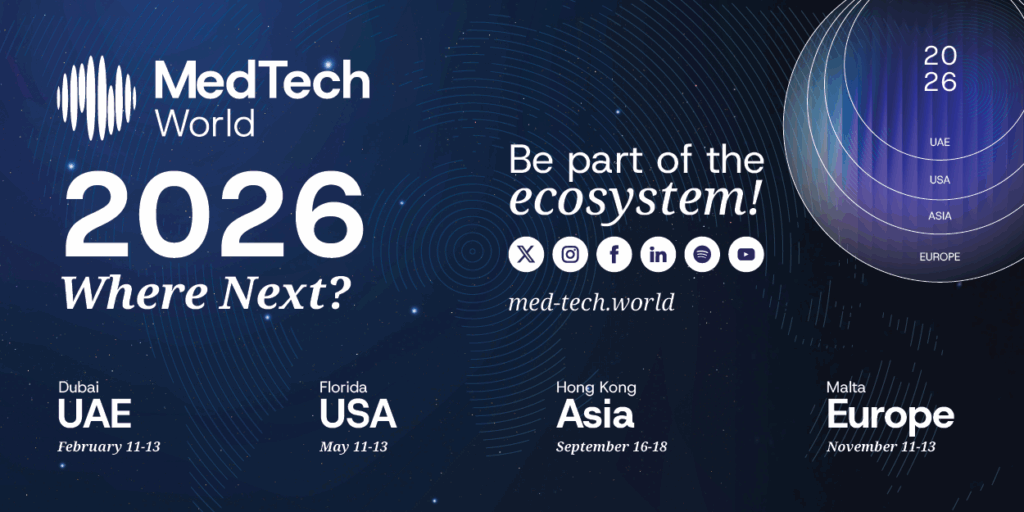
Be part of the conversations driving global health innovation throughout 2026. MedTech World will host four flagship events across key regions:
Whether you are a founder, policymaker, clinician, investor, or part of a growing team, these gatherings provide opportunities to connect with leaders advancing medical technology.