- Summits
- Sponsorship
- Retreats
- Media Opportunities
- News
- About
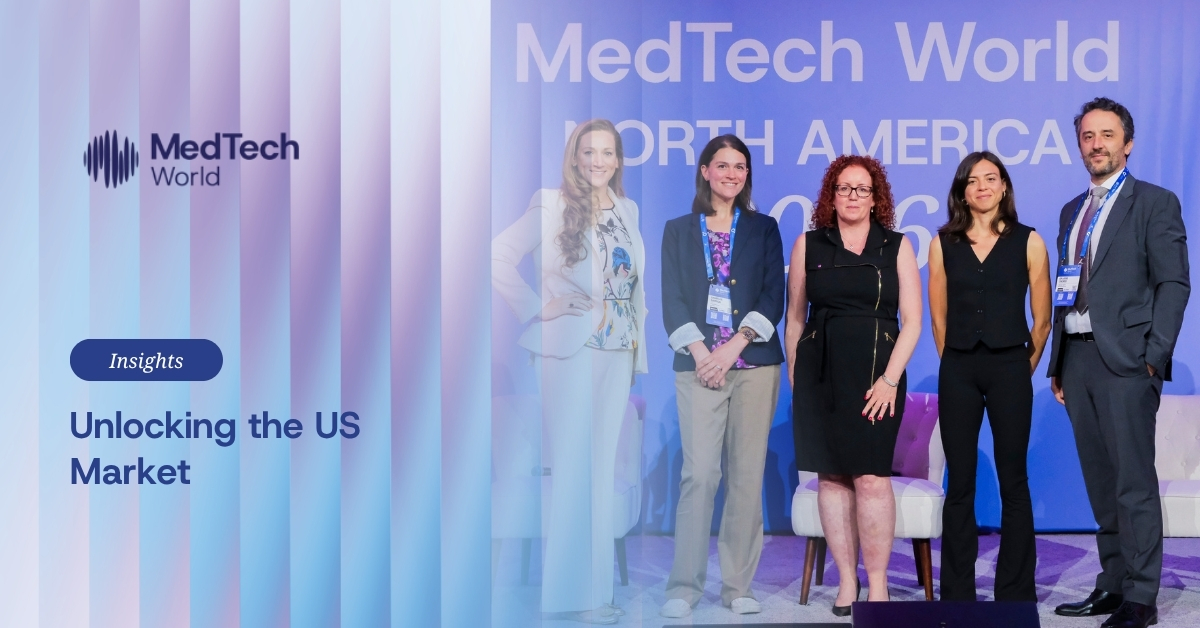
The MedTech World North America Summit kicked off today at West Palm Beach Florida with a panel on the challenges of entering and growing in the US market. Blythe Karow, Founder of The Karow Advisory Group, led the discussion with Angela Paterson from CS Life Sciences, Mercè Guerra from Alira Health, Danielle E. Sapega from Cozen O’Connor’s Health Life Sciences Group, and Dr Jose Osorio, founder of 3PH Alliance. The panel explored the main challenges and strategies startups face, including regulatory pathways, reimbursement, and finding their first commercial customers.
Blythe Karow opened the session by outlining the key steps for building a strong strategy to enter the US market. She stressed that startups need to focus not only on product development, but also on aligning their clinical, regulatory, and market-access plans from the very beginning.
“Startups often focus on product development, but it’s critical to think about the broader strategy, including reimbursement and market access,” said Karow. She went on to emphasise the importance of avoiding costly delays by considering these factors early in the process, which is essential for long-term success.

Mercè Guerra, an expert in regulatory affairs, discussed the challenges startups face when seeking regulatory approvals. She explained that it is important to develop strategies that address both US and European regulations to ensure products meet all necessary compliance standards.
“While FDA approval is crucial for the US market, it is equally important to plan for European regulatory compliance,” Guerra explained. “A harmonised strategy for both regions can speed up market entry and reduce unnecessary duplication of clinical evidence.”
She also noted that planning reimbursement strategies early helps startups navigate the complex healthcare system. Regulatory compliance alone does not guarantee success in the market.
Danielle E. Sapega, who specialises in healthcare law and reimbursement, shared her thoughts on why reimbursement is important for medtech companies. She pointed out that many startups overlook reimbursement strategies early, which can lead to problems down the road. Reimbursement is often overlooked by early-stage companies.
It is essential to understand the payer system in the US, including Medicare, Medicaid, and private insurers,” Sapega said. “Without the right coding, coverage, and payment mechanisms, your product may struggle to gain traction in the market.” Sapega also discussed other reimbursement options, such as Medicaid waivers, and encouraged startups to consider them as part of their planning.
Dr Jose Osorio, an electrophysiologist and founder of 3PH Alliance, emphasised that startups should consider clinical workflows when developing new technologies. He said startups often forget to consider how their products will fit into existing clinical settings, which can make adoption more difficult.
“Startups need to understand how their product fits into clinicians’ daily routines. It’s not just about the technology; it’s about how it integrates into the workflow,” Dr Osorio explained. “Engaging with clinicians early on is crucial for ensuring that the product aligns with their needs and does not disrupt existing processes.” He also discussed the role of real-world evidence and how startups can use it to demonstrate the effectiveness of their products in clinical settings.
The panel shared useful advice on the key steps for startups entering the US market. By focusing on regulatory compliance, reimbursement strategies, and clinical integration, startups can improve their chances of success. The discussion also stressed the value of planning ahead and working closely with key stakeholders, such as clinicians and payers. To learn more about the MedTech World North America Summit, check out the full agenda.