- Summits
- Sponsorship
- News
- About
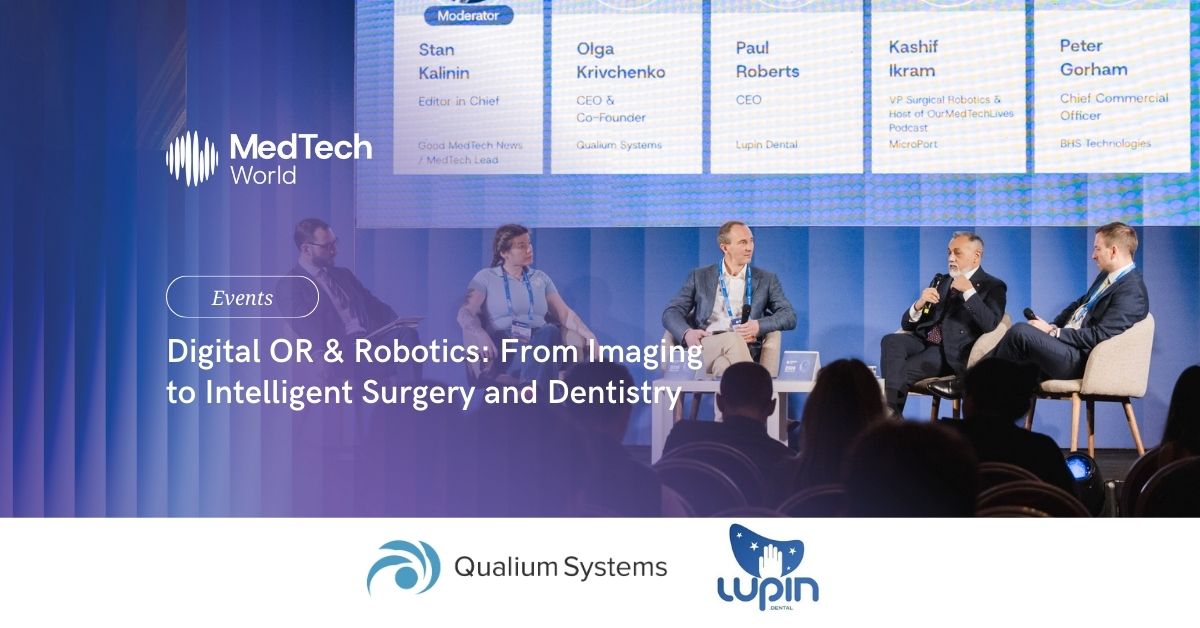
The operating room is changing fast. What began as an era of early robotic assistants has evolved into an ecosystem of digital intelligence, advanced software, and increasingly specialised systems. This shift, and where it is heading next, took centre stage at MedTech Malta 2025 during the panel “Digital OR & Robotics: From Imaging to Intelligent Surgery and Dentistry.”
Moderated by Stan Kalinin, Editor in Chief at Good MedTech News, the conversation brought together four leaders who have collectively shaped robotic surgery, imaging, and dental innovation for decades:
As Stan noted when opening the session, the momentum behind robotics is undeniable: over $700 million has flowed into new robotics companies in just the last 10 months. But beyond the capital, he argued, the most important developments come from leaders who have “seen it all” and can translate experience into direction.
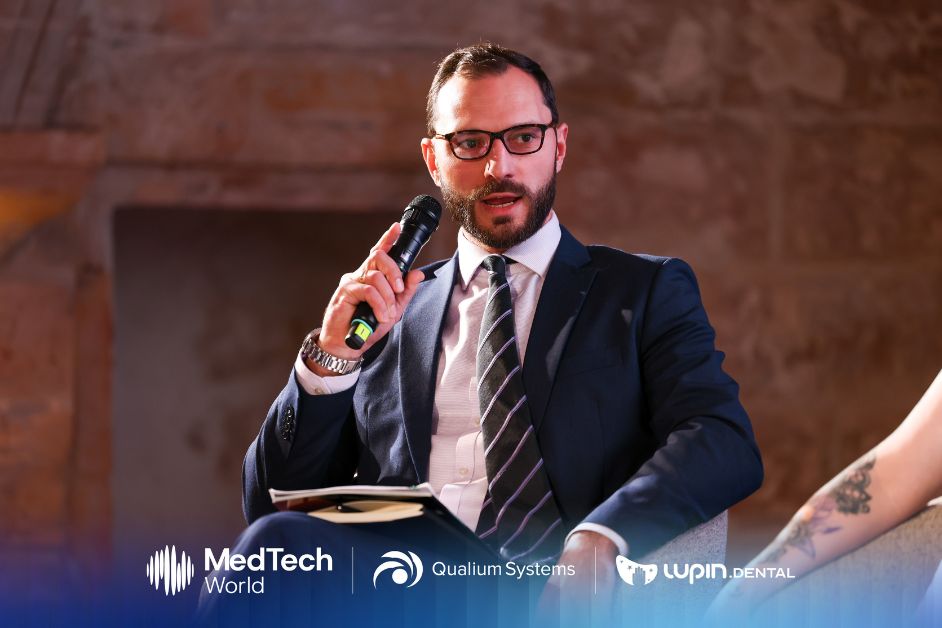
Peter Gorham, whose journey began in MedTech nearly 20 years ago, offered a candid look at how robotics has grown, and where its impact remains uneven.
He noted that while major platforms continue to add features, the real shifts are happening in specialisation, not general-purpose systems. Companies like PROCEPT (in prostate aquablation) and Quantum Surgical (in liver interventions) are focusing on narrow, well-defined patient groups, and that, he argued, is where robotics is “moving the needle.”
Rather than more technology for its own sake, the value will come from systems that solve a specific clinical problem better than any manual approach.
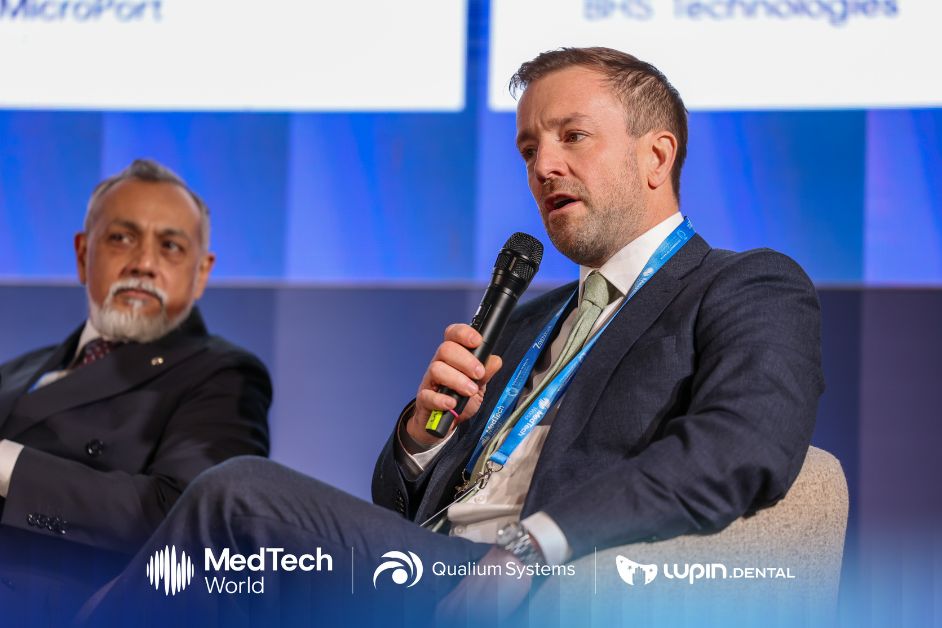
With three decades in MedTech and extensive experience launching multiple robotic platforms, Kashif Ikram spoke about what truly drives adoption, and what still holds it back.
He pointed to the classic adoption curve: early users, the difficult chasm, and then the early majority. Soft-tissue robotics has finally crossed that chasm, largely thanks to pioneers like Intuitive. But for new entrants, the barriers remain high:
Ikram stressed that these constraints don’t kill innovation; they simply mean that robotic platforms must now solve operational challenges as much as surgical ones.
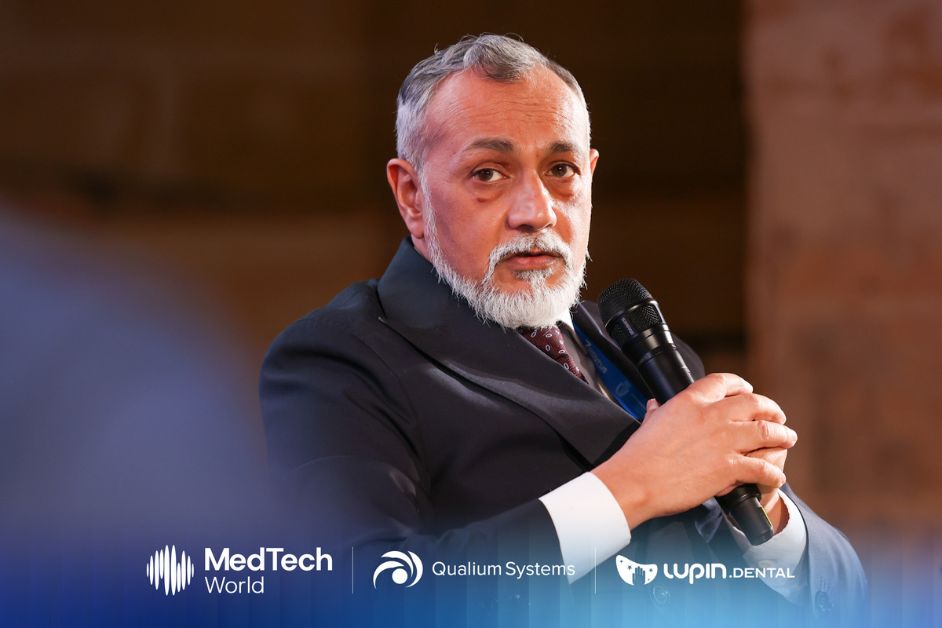
While surgery has had two decades to mature, dentistry is only now entering its robotics era, said Paul Roberts, who led the early build of CMR Surgical before entering dental robotics.
Only three dental robots are approved today, two for implant placement and Lupin Dental’s system for restorative procedures, compared to dozens across general surgery.
Surprisingly, dentistry’s digital foundation is stronger than most people realise:
What’s missing, Roberts explained, is automation of the manual preparation and execution steps, which remain highly variable. With the ecosystem already digitised, 2025 could mark a turning point where robotics becomes part of everyday dental care.
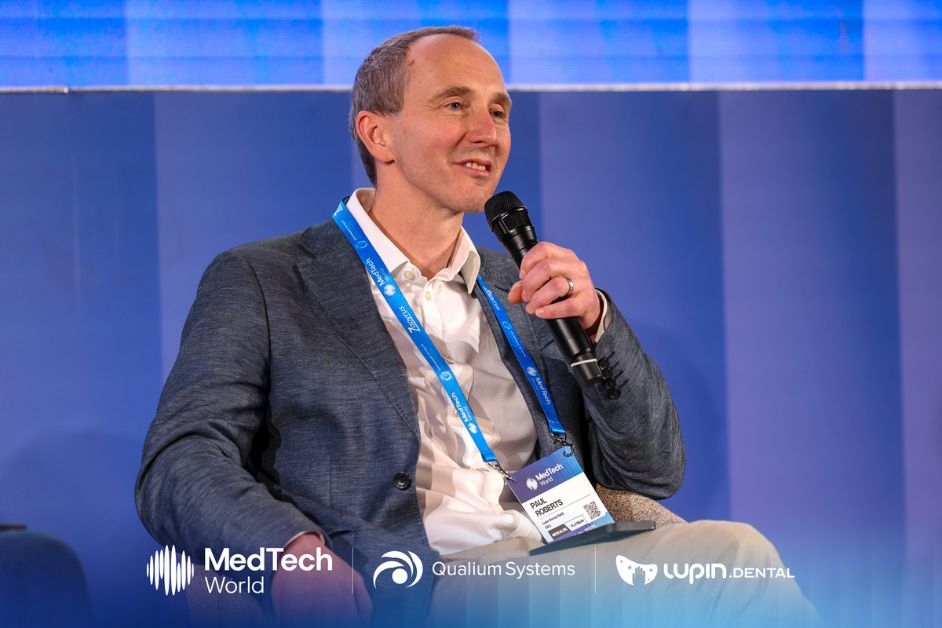
While robotics is often associated with large capital equipment, Olga Krivchenko reminded the room that nothing in the digital OR works without software.
Software drives:
Hardware may start the revolution, Krivchenko said, but software is what makes robotics scalable, practical, and accessible.
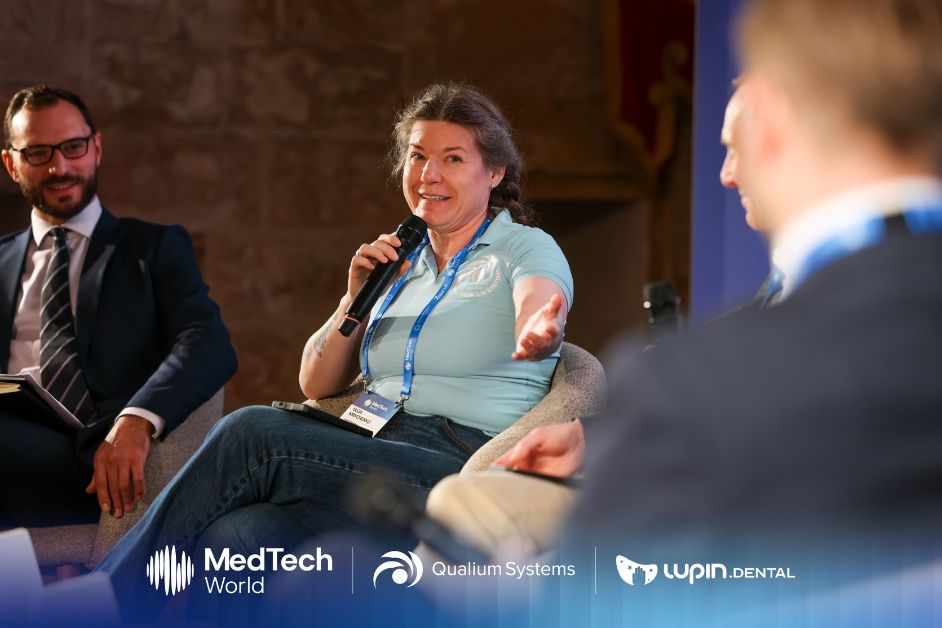
Ikram, whose teams have completed more than 400 telesurgeries, described the potential of remote operating, citing cases spanning Shanghai to Morocco, Orlando to Angola, and Shanghai to Kuwait.
For him, telesurgery is less about novelty and more about:
He predicts that in dentistry, a single clinician could one day guide procedures for patients in several countries from one location.
Peter Gorham added a grounded perspective, reflecting on his own experience waiting 27 hours on a hallway stretcher in Milan due to lack of beds.
His question was sharp:
Why focus on sending robots to remote regions if well-resourced countries still struggle with capacity and basic access?
For him, the real promise of telesurgery is super-specialisation, delivering expert procedures to patients who cannot travel, not replacing local surgical training.
Ikram agreed that both realities coexist: the need to expand skills globally, but also to reduce travel within countries like the UK, Sweden, and others, where distance still limits care.
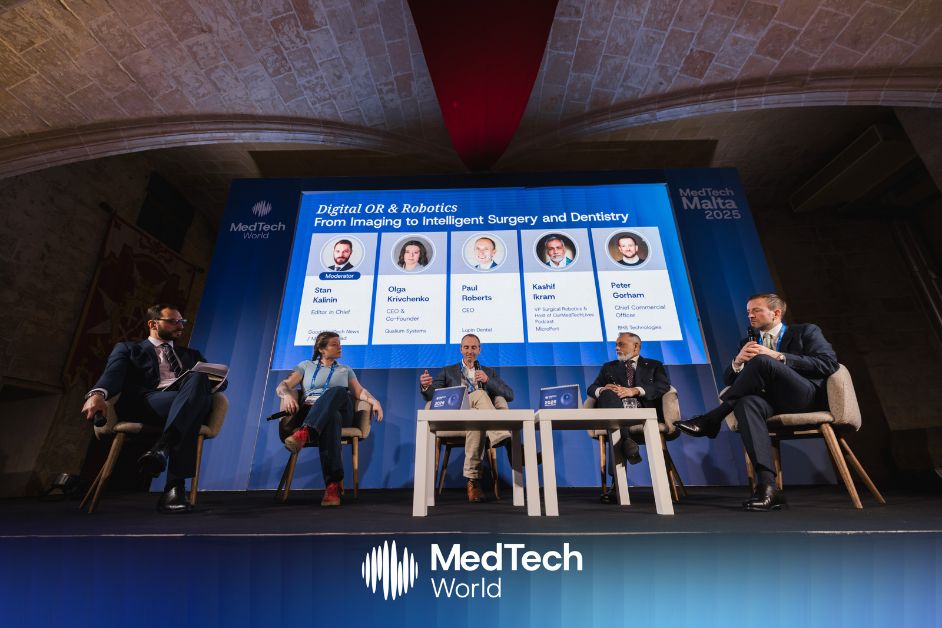
Across the discussion, one theme was consistent: robotics is no longer defined by its hardware. It is being shaped by:
The Digital OR is becoming more connected, more intelligent, and more focused on solving specific problems, not just enabling new tools.
MedTech Malta 2025 offered a clear takeaway: this sector isn’t only expanding; it is maturing. And with leaders like these pushing the boundaries, its next phase promises broader access, more precision, and technology that supports clinicians at every step.
Keep up with the leaders shaping the next chapter of surgical robotics, dental automation, digital OR innovation, and intelligent health systems.
MedTech World Middle East | Dubai, February 11–13, 2026
MedTech World North America | West Palm Beach, May 11–13, 2026
MedTech World Asia | Hong Kong, September 16–18, 2026
MedTech World Europe | Malta, November 11–13, 2026
Be part of the conversations, connections, and technologies taking healthcare forward.