- Summits
- Sponsorship
- Retreats
- Media Opportunities
- News
- About
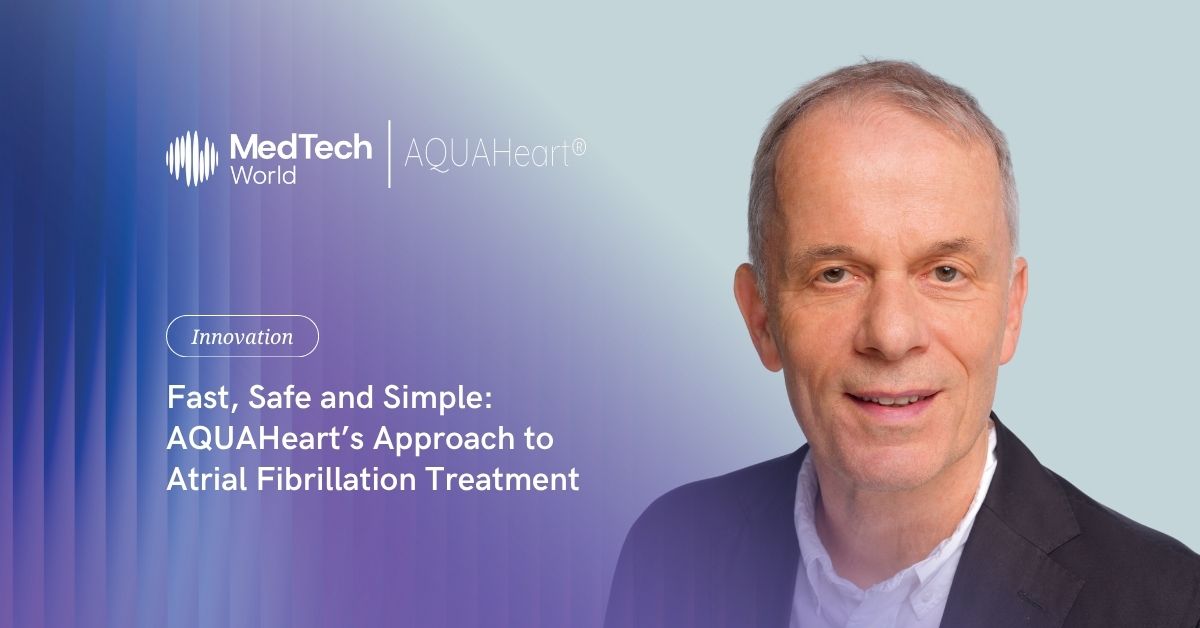
Atrial fibrillation (AF) remains one of the most common and challenging cardiac conditions worldwide, affecting millions of people and significantly increasing the risk of stroke and heart failure. While treatment has advanced over the years, performing ablations, the process of targeting and destroying small areas of heart tissue that cause irregular rhythms, remains complex, time-consuming, and heavily dependent on advanced electrophysiological mapping.
AQUAHeart, a young and ambitious MedTech company, is working to simplify this process with its pioneering steam-powered ablation (SPA) technology. By combining high-power, short-duration energy delivery with a straightforward balloon-based system, AQUAHeart aims to make AF ablation faster, safer, and easier without compromising precision.
Leading this innovation is Holger Friedrich, CEO of AQUAHeart, who brings more than 30 years of experience in the cardiovascular field. “I was fascinated with the technology when I saw it first,” Friedrich shared in a recent conversation with MedTech World.
“I was driven by the idea to make it usable for AF patients, to see the entire process from scratch to execution.”

AQUAHeart’s solution is centred on what the company calls single-shot Pulmonary Vein Isolation (PVI) therapy, a method designed to make AF ablation as simple as possible. “The tool is a simple over-the-wire balloon placement system, something interventional cardiologists are already very familiar with,” explained Friedrich.
“At the same time, integrated PV signal mapping gives real-time success feedback, and there’s no need for 3D mapping. Combined with automated procedure management, this brings unmatched procedural simplicity.”
This simplicity benefits both physicians and patients. For clinicians, the procedure is faster and easier to perform. For patients, it offers the potential for improved long-term outcomes with an exceptionally high level of safety.
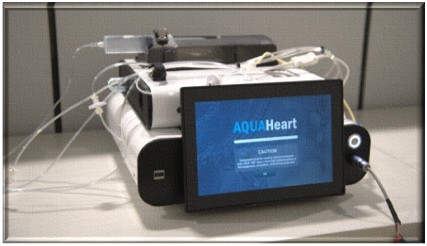
Currently in the preclinical stage, AQUAHeart recently completed a chronic animal study with excellent results. The company’s SPA technology has demonstrated the ability to produce fast, precise, and durable lesions, a critical factor in ensuring long-term treatment success for AF.
However, the path to innovation has not been without challenges. “With everyone focused on PFA, raising money was difficult,” Friedrich acknowledged, referring to pulsed-field ablation, the widely discussed alternative in the AF space. “Along the way, we also needed to optimise our engineering and design team, and we lost some time with solving some remaining design challenges.”
When asked about the competitive landscape, Friedrich offered a balanced view.
“On one hand, there’s RF technology, very established for decades, with good results but some limitations. On the other hand, there’s PFA, which has touted speed, safety, and efficiency, but in reality, only speed may hold true. We believe we can even beat that.”
According to him, AQUAHeart combines the best of both worlds, delivering the efficacy of RF ablation and the efficiency of PFA, while enhancing safety and improving procedural economics.
AQUAHeart is developing a Class III device, meaning it faces stringent regulatory requirements before reaching market approval. Despite these hurdles, the company remains confident in its trajectory. The estimated global market for AF ablation technologies exceeds $10 billion, and Friedrich believes AQUAHeart could capture up to 25% of that total addressable market with the right strategic partnership.
Having been funded so far by family office and angel investors, AQUAHeart recently received a term sheet for a lead investment into its Series A round, with a pre-money valuation of around $27 million.
Looking ahead to MedTech Malta 2025, Friedrich expressed his enthusiasm about engaging with investors and potential partners. “This space is so innovative and creative and that it never seems to stop,” he said.
“Here, innovation is not just a word but a core message. That spirit thrives on active exchange between all stakeholders, which is why meetings like this are important and useful.”
As AQUAHeart moves toward its first-in-human study, Friedrich remains inspired by the collaborative nature of the MedTech ecosystem. “It’s the mindset and intelligence of the people in this field, the coexistence of large corporations, startups like ours, and clinical scientists, that excites me most. A lot of good people are working for a better future for patients, physicians, and their families.”
Be part of the global MedTech community as innovation leaders take the stage to share ideas, build partnerships, and explore new directions in medical technology. Book your ticket for MedTech Malta 2025 and connect with the people and companies advancing healthcare innovation.