- Summits
- Sponsorship
- Retreats
- Media Opportunities
- News
- About
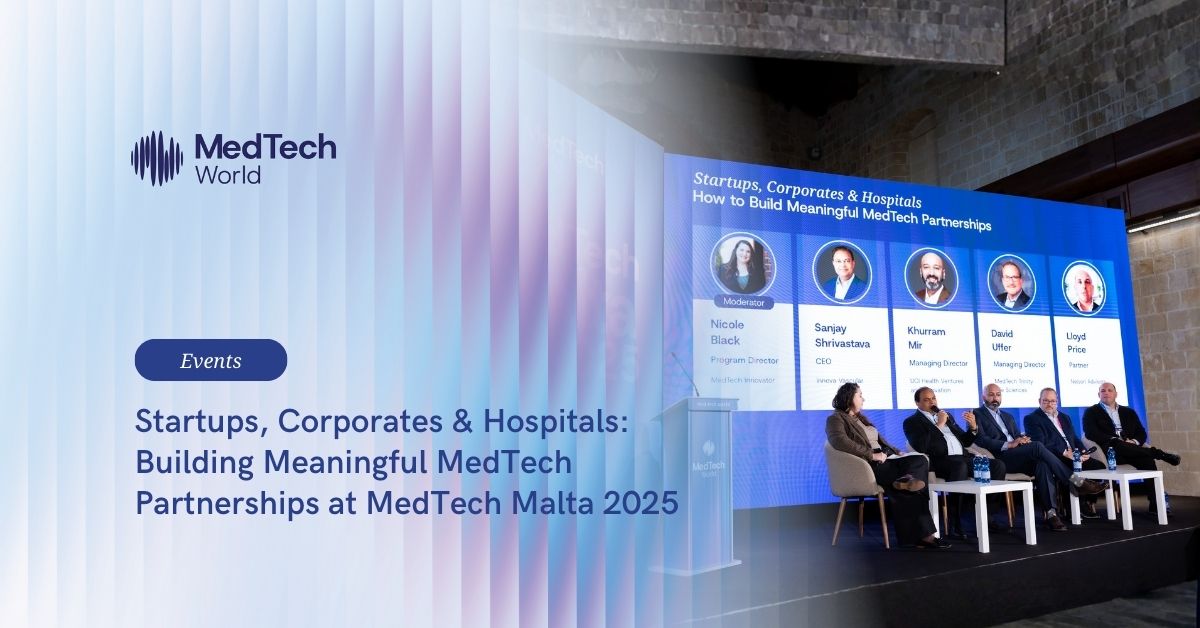
At MedTech Malta 2025, a key panel brought together leaders in the field to discuss how startups, corporates, and hospitals can forge strong MedTech partnerships. Moderated by Nicole Black, Program Director at MedTech Innovator, the panel members included Sanjay Shrivastava, CEO of Innova Vascular; Khurram Mir, Managing Director at UCI Health Ventures and Innovation; David Uffer, Managing Director of MedTech at Trinity Life Sciences; and Lloyd Price, Partner at Nelson Advisors.
Nicole Black started the discussion of the panel titled “Startups, Corporates & Hospitals: How to Build Meaningful MedTech Partnerships,” by stressing the importance of real partnerships. “It’s not just about having calls every few months. Partnerships involve funding, trials, and strategic distribution,” she said. MedTech Innovator supports hundreds of startups, helping connect them with the right partners.

Sanjay Shrivastava shared the image of a three-legged stool to explain his approach. “My company is like a three-legged stool. One leg is investors, one is customers, and one is employees.” According to him, investors, customers, and employees must all work together. “If one leg is weak, the stool topples.” He emphasised the need for balance and drew from his experience to explain how past partnerships helped fund clinical trials and led to successful exits. “Partnerships are key to growth and survival,” he said.

Khurram Mir brought the hospital perspective. He explained their dual role as investors and strategic customers and how startups can work with health systems. “We want startups to prove their ideas and find clinical champions inside the hospital,” he said. For hospitals, partnerships often mean clinical trials or studies and require time and patience, a recurring theme throughout the panel. “It’s hard to get in, and even harder to leave once you are part of the system.” Establishing proof points and timing are key for long-term partnerships and “persistence is vital because hospitals have longer procurement cycles, and partnerships here carry permanence,” he added. This bridging role between startups and hospital leadership helps translate innovation into clinical practice.
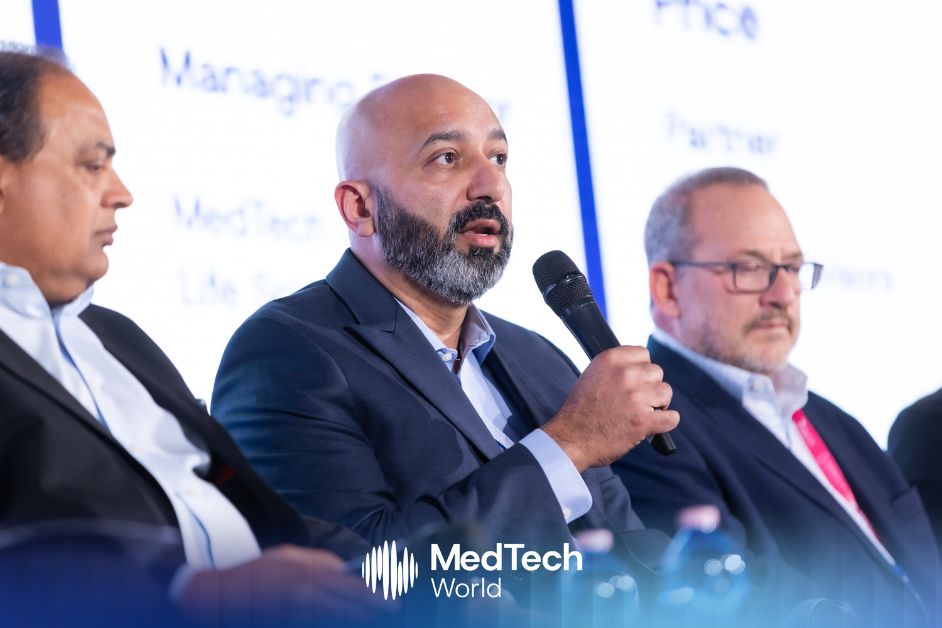
David Uffer went on to talk about how there are different ways startups can partner with large companies. “There is no one way. Partnerships can mean investing, tech development, or research collaboration,” he said. He noted that corporates bring resources beyond money, like regulatory and clinical support, which helps startups grow.

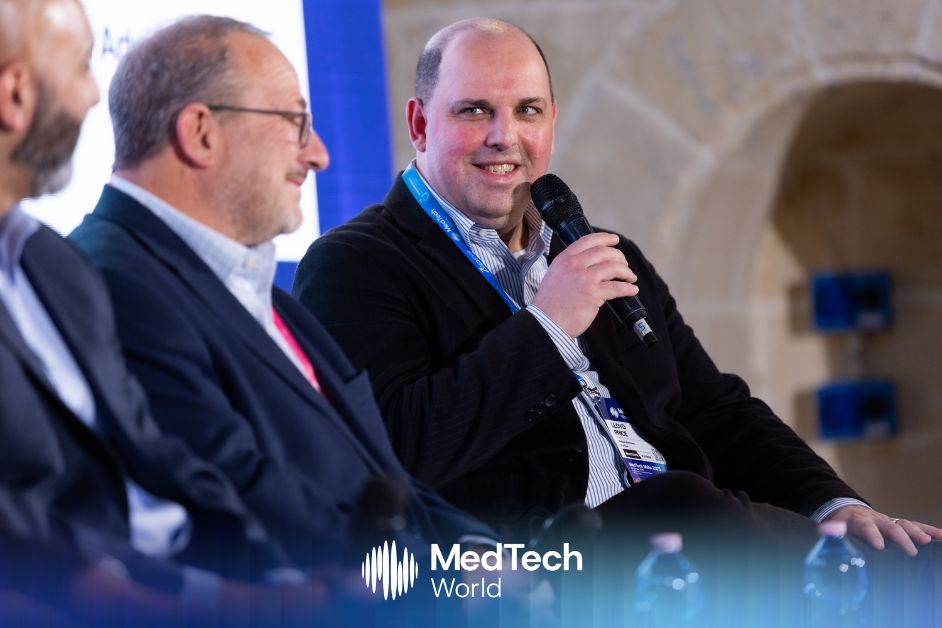
Price described how partnerships take time, especially in Europe’s healthcare systems. “Healthcare is about people and processes. You need patience and credibility. Change doesn’t happen overnight,” he said. He advised working with experts in change management to support new tech adoption.
The panel agreed that partnerships bring more than just funding. Black emphasised the value of mentors and networks, and both Shrivastava and Mir added that hospitals can offer clinical advice, data, and key opinion leaders. David Uffer said investors can open doors and provide vital business help.
Shrivastava discussed how startups can license patents from hospitals or health systems. He pointed out that many patents sit unused, but when startups ask for licenses, institutions take notice. He recommended fair deals that include royalties and clauses to avoid patents being locked away without use.
Throughout the conversation, the panel shared practical wisdom. Shrivastava said he regularly connects with potential acquirers at conferences to keep partnerships alive and aligned, whilst Mir highlighted how early-stage startups can gain value from advisory roles and data collaboration before commercialisation. David Uffer went on to issue a point of caution, warning startups not to focus only on capital but also on strategic guidance and network access. The panel concluded with a memorable comment from Price, who brought the session to a close with, “Delivery is your brand, always deliver what you say. I call it from the board to the ward. What you say in the boardroom, you better deliver in the ward.”

Registration for MedTech World 2026 events is now open. Whether you’re a startup, corporate leader, hospital representative, investor, or clinician, you’re invited to join us as we continue building partnerships that advance healthcare.
Register your interest for MedTech World 2026 and secure your place today.