- Summits
- Sponsorship
- Retreats
- Media Opportunities
- News
- About
For two decades, the prevailing assumption in cardiovascular medicine has been that better outcomes follow better tools: sharper imaging, smarter algorithms, more sensitive sensors. Yet the hardest problem in heart care has never been treatment. It is detection, specifically, when and where meaningful disease first becomes visible to the system.
Consider valvular heart disease. It affects roughly 2.5% of the population and more than 13% of adults over 75, yet most cases are found incidentally, late, or not at all. Untreated severe aortic stenosis carries a one-year mortality approaching 50%. The clinical trajectory, in other words, is largely set at the moment of detection, not of intervention. By the time many patients reach a structural heart program, the most valuable window has already closed.
The instinctive response is to make detection tools more accurate. Accuracy matters, but it is not sufficient on its own. Even a highly accurate signal, generated too late, outside the workflow, or without a clear route into clinical action, has limited system value. Detection only changes outcomes when it is positioned where patients already move, where decisions are already being made, and where the signal can become part of the pathway before the encounter ends.
This points to a more useful frame. Detection improvement is, at its core, a positioning problem rather than a technology problem. The patients who eventually reach diagnostics are not a neutral sample; they are shaped by how and when disease is recognized. That is why late-stage, higher-cost cases often dominate downstream care. Shift that mix even slightly toward earlier-stage, clinically meaningful disease, and the system receives a more useful cohort: patients with a documented signal, higher pretest probability, and a clearer reason to enter cardiovascular evaluation. Better inputs, not only better instruments, drive better system performance.
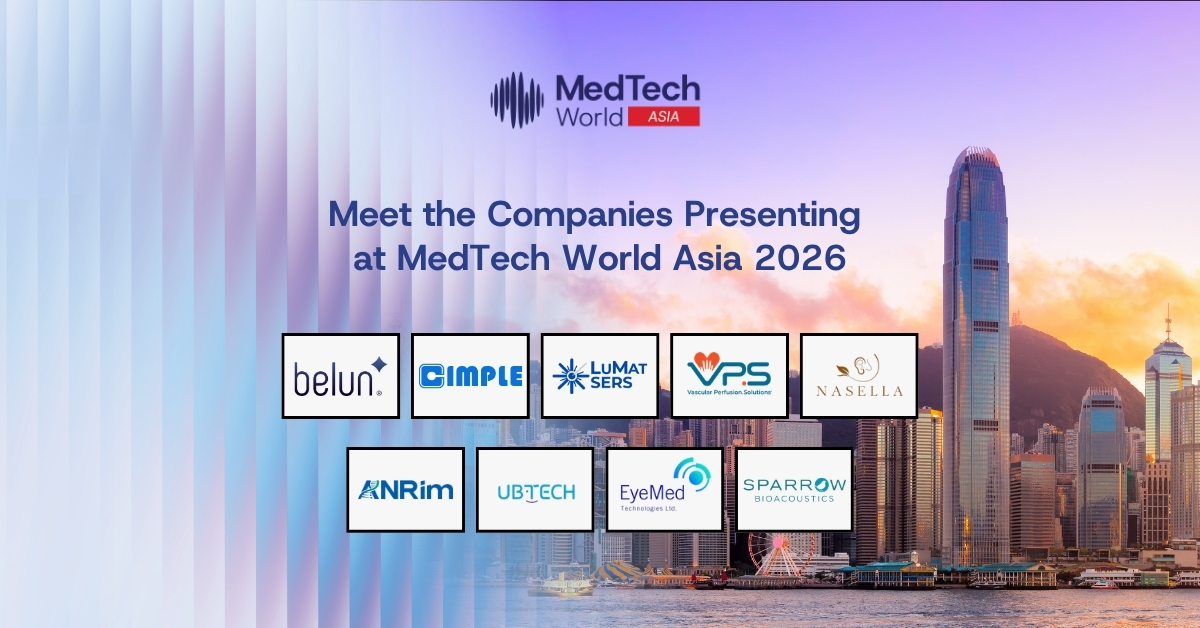
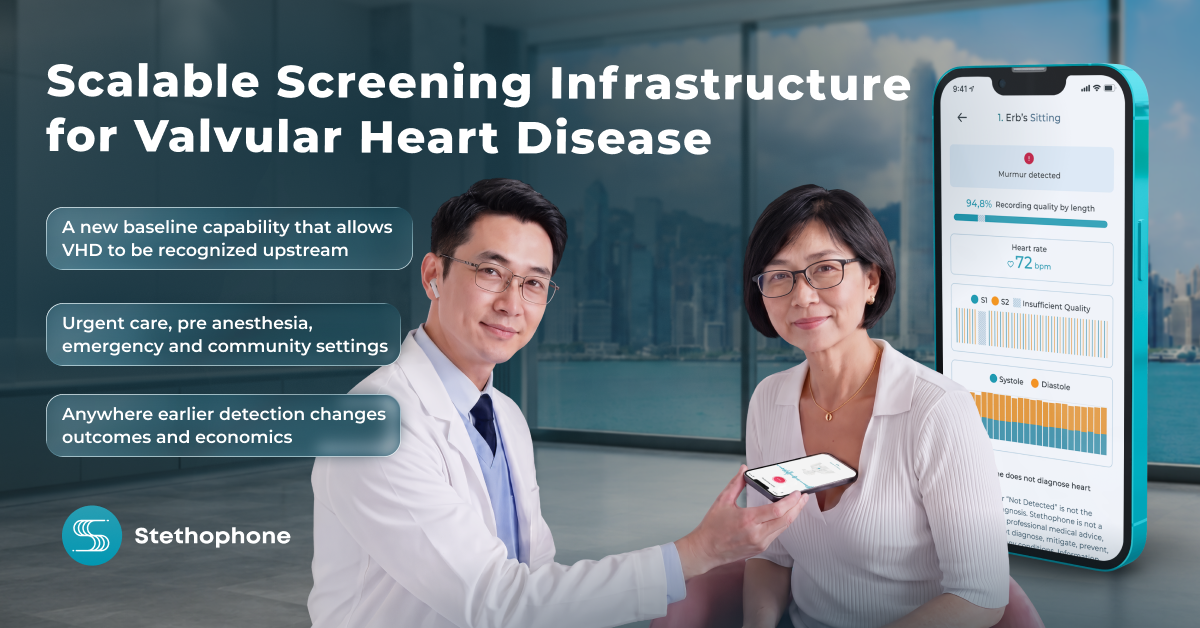
This is the thesis behind Sparrow BioAcoustics’ work. Its flagship product, Stethophone, is the world’s first software-only stethoscope to receive FDA clearance: a regulated Software as a Medical Device, also licensed by Health Canada, that uses a method the company calls AI Phonoscopy to structure cardiac sound captured through an ordinary smartphone microphone, with no added hardware. Crucially, it is designed to sit upstream within the high-volume, noncardiac encounters already taking place every day, from urgent care to preoperative assessment, where routing decisions are made but structured cardiac signals rarely enter the pathway. In that position, it converts passive patient flow into documented findings that clinicians can act on before the encounter ends.
The implication for health systems, in America, Asia and beyond, is strategic. Most institutions have already built sophisticated cardiovascular infrastructure. The opportunity now is not to expand it with more devices, but to feed it the right patients earlier. The organisations that move detection upstream, quietly, at the point patients already touch the system, will define the next phase of cardiovascular care.
The patients are already moving through the system. The only real question is whether they are moving through the program.
As healthcare systems look to strengthen earlier detection and improve patient pathways, these conversations are taking place on a global stage. MedTech World Asia 2026, taking place in Hong Kong from 26 to 28 August, will bring together healthcare leaders, innovators, investors, and clinicians to examine the technologies and strategies shaping the next phase of care delivery. Register now to join the discussion and connect with the people advancing the future of MedTech.